Skip to content

Your cart

Your cart is empty

Article: Reformer Pilates Glute Workout

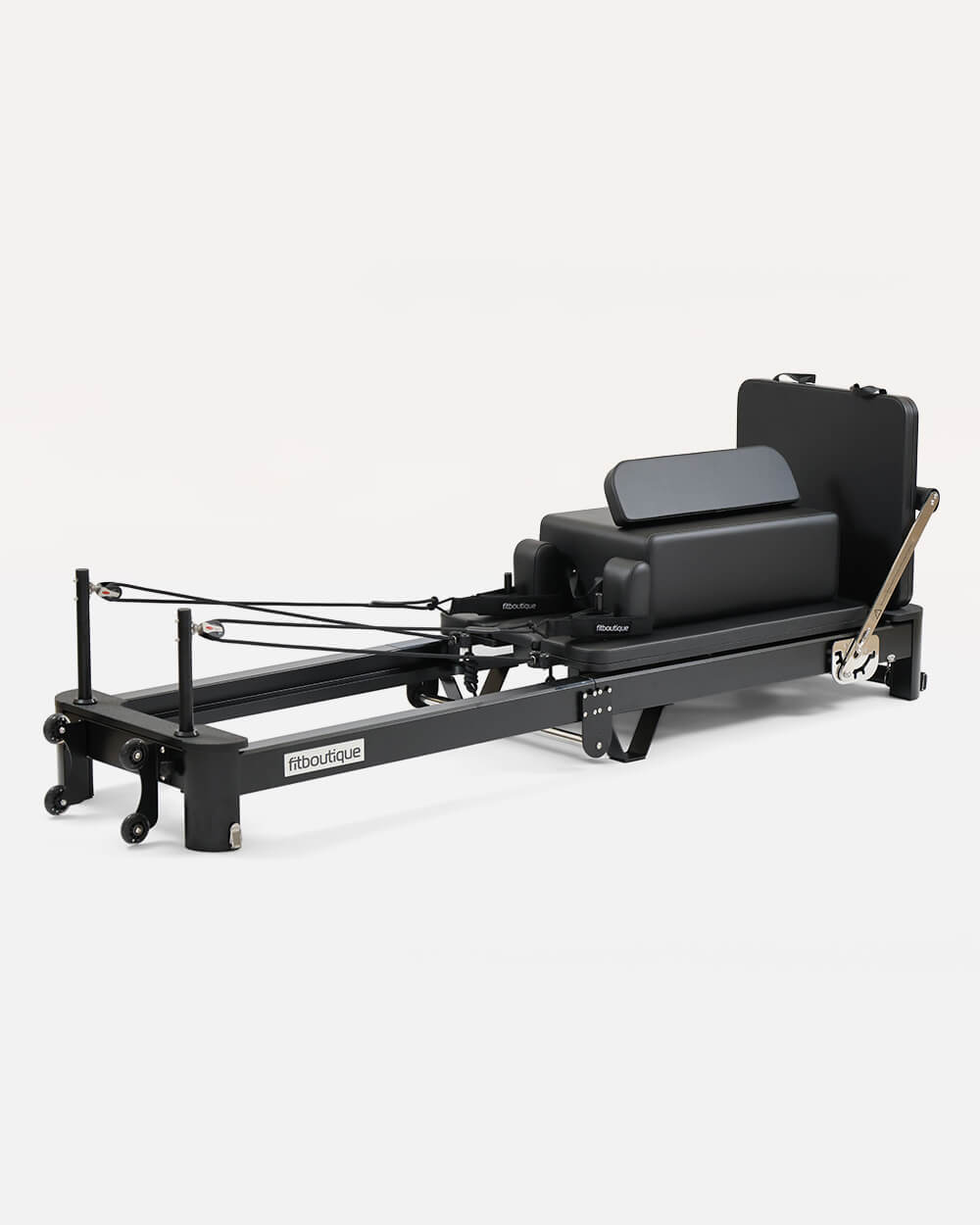
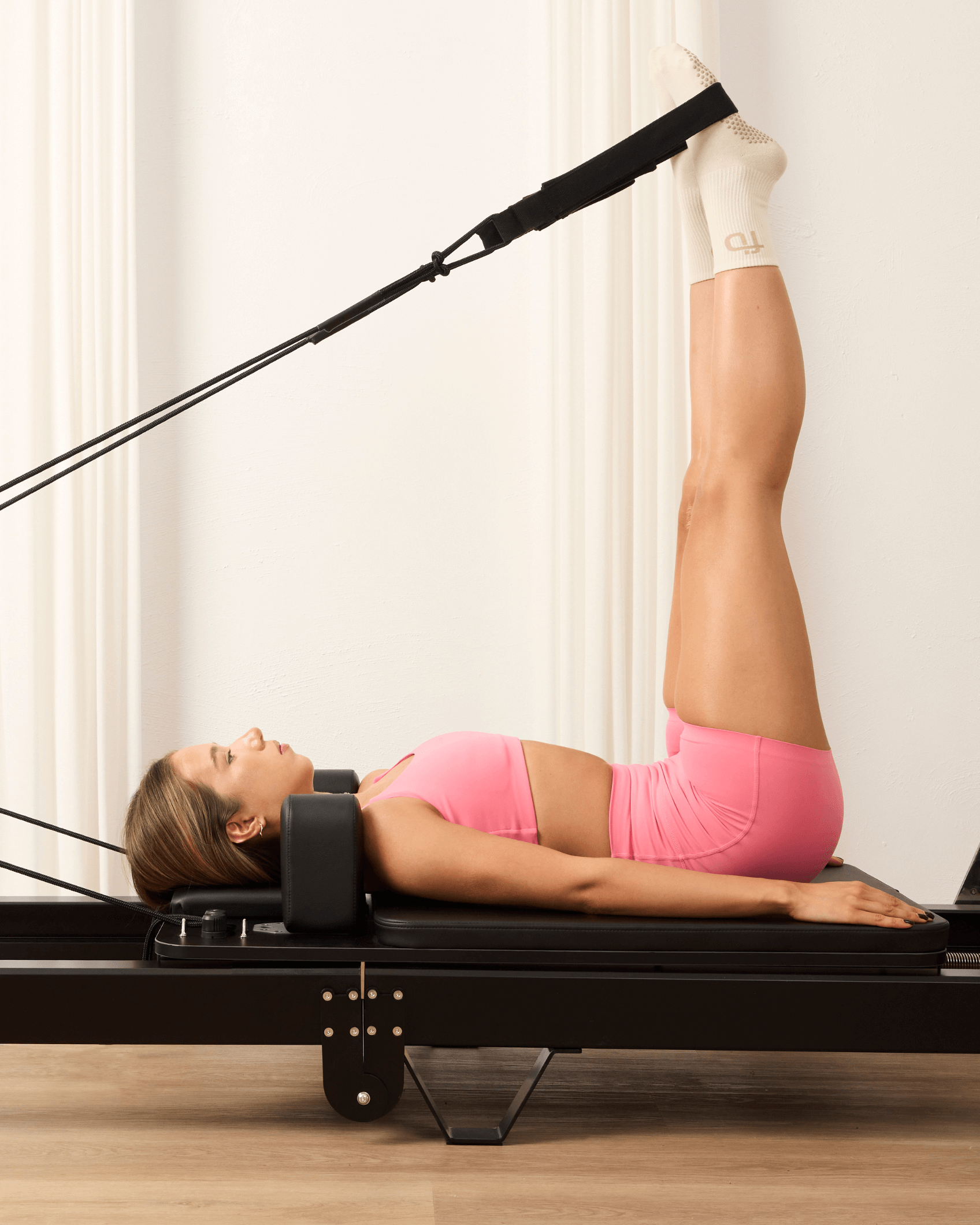
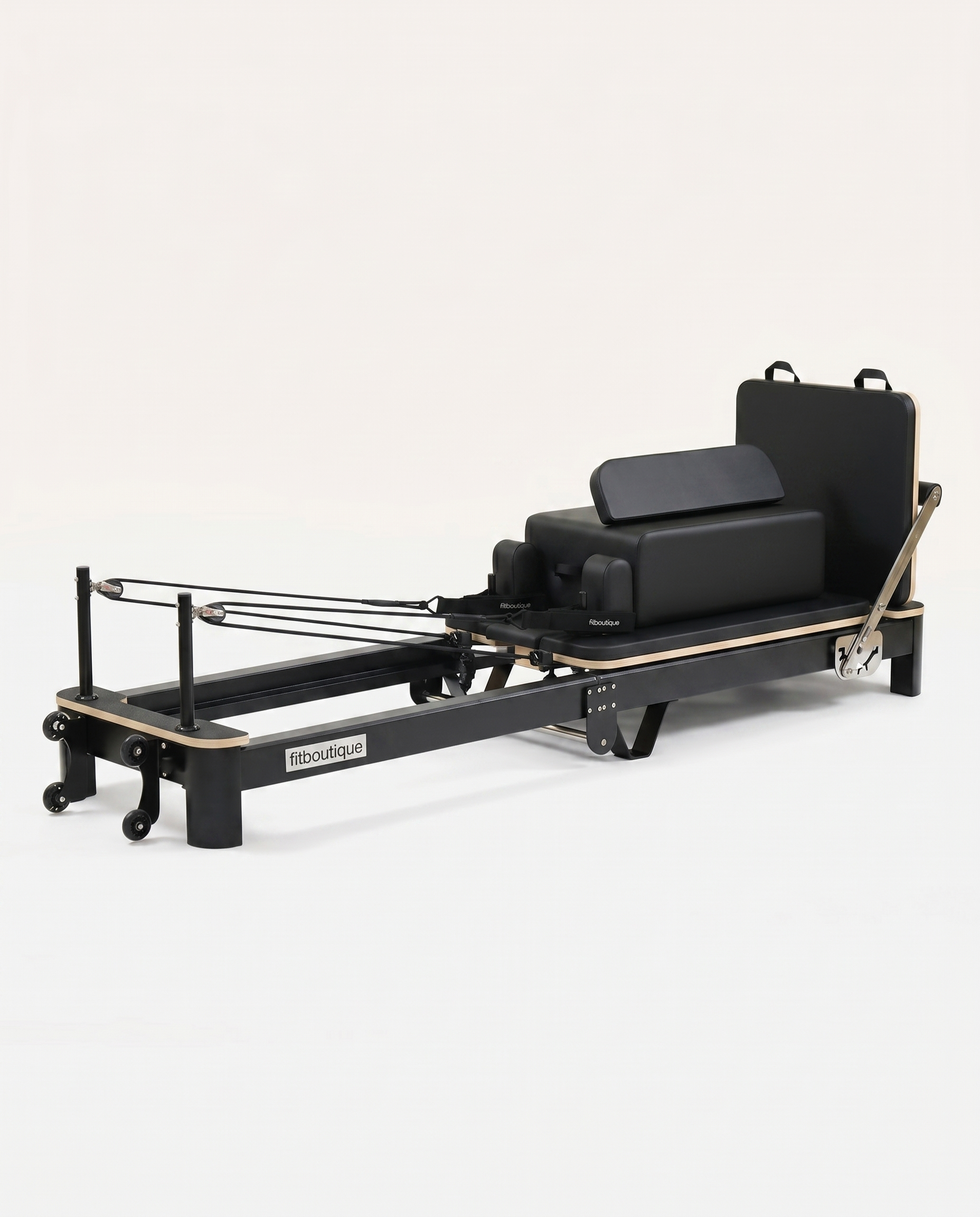
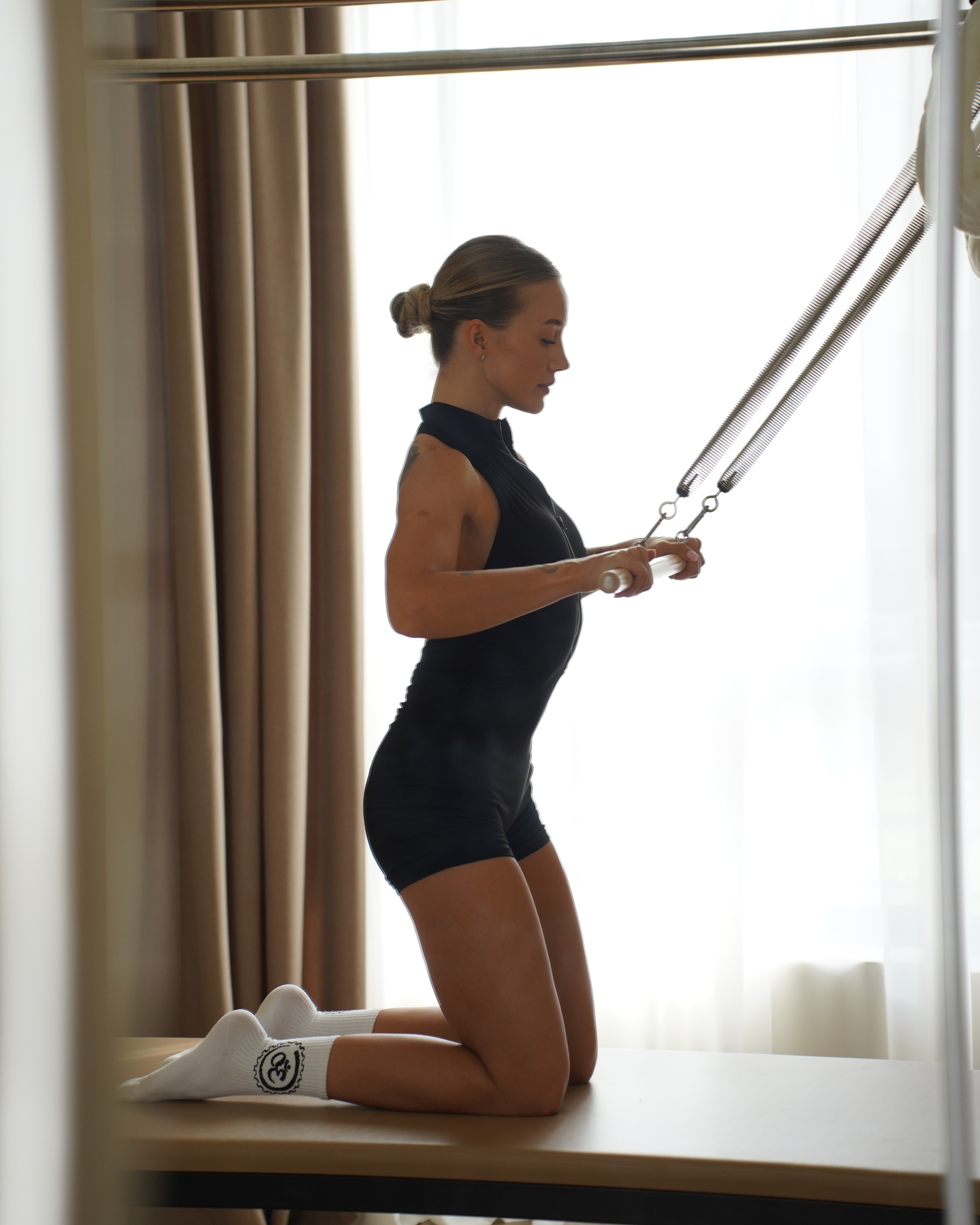
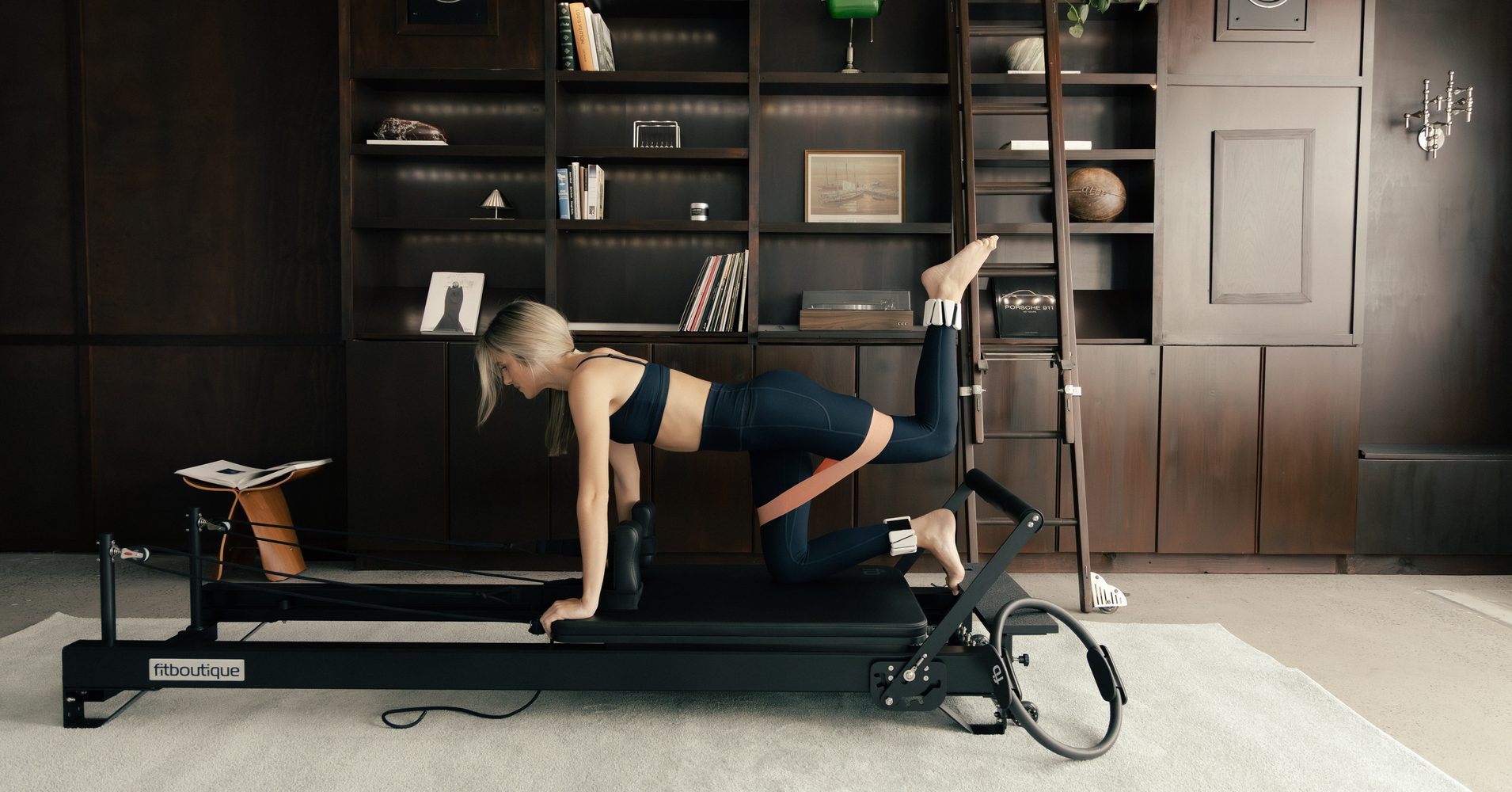
Kneeling glute press on a black FitBoutique reformer
Glute Training

Reformer Pilates Glute Workout

I am going to be honest about what a reformer will and will not do for your glutes, because most articles on this are quietly overpromising and it sets people up to be disappointed at week 8.

The reformer is genuinely excellent for glutes. It is not excellent in the way most people expect, and knowing the difference is what makes the next 3 months worth doing.

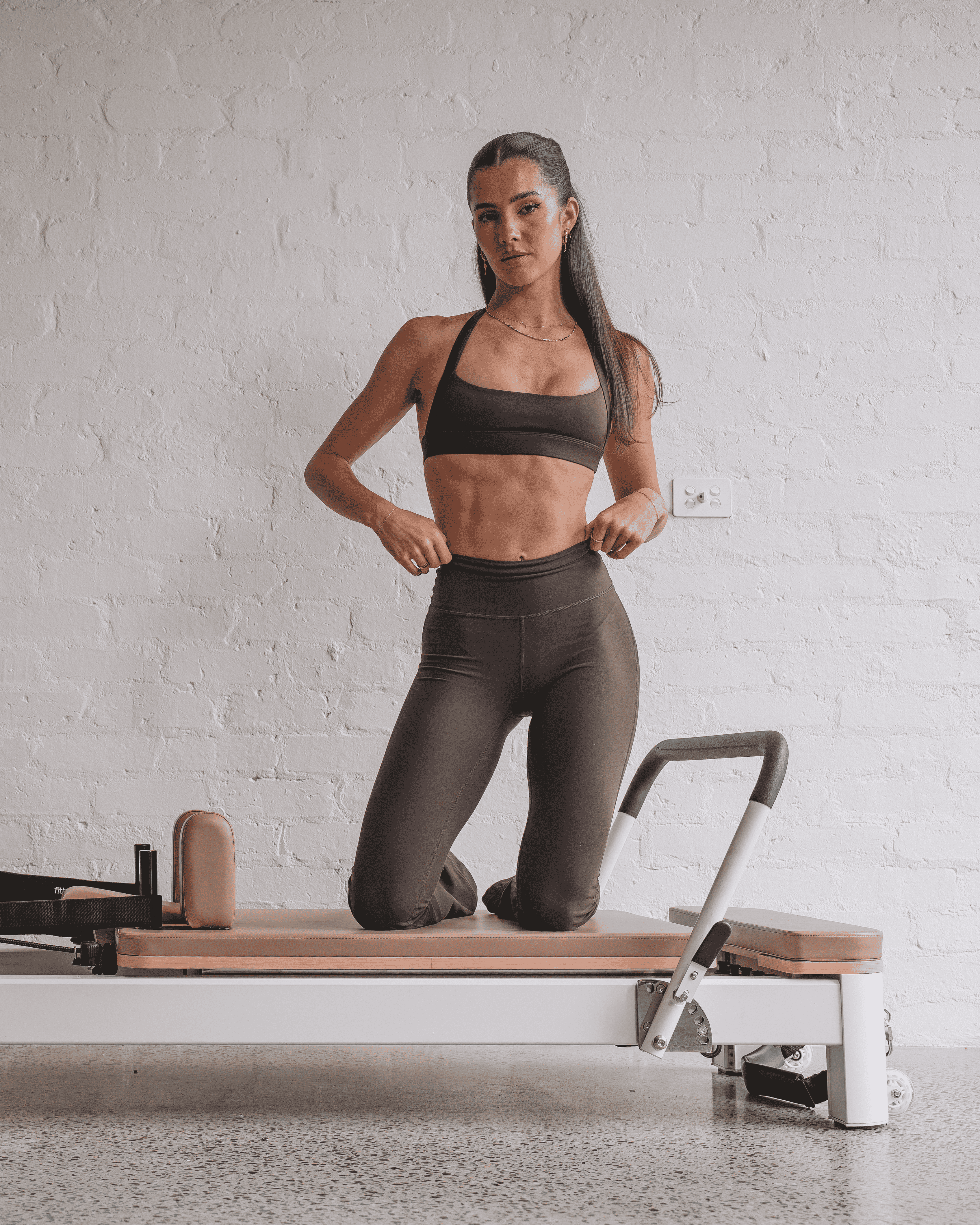
Kneeling position on a FitBoutique reformer during glute work

What the reformer actually does for glutes

Muscle grows in response to progressive load. That is not controversial and it is not different for glutes. To make a muscle meaningfully bigger you need to keep giving it more, and there is a ceiling on how much load a spring system can deliver.

So if your goal is purely size, the reformer alone will get you somewhere and then slow down. I would rather tell you that now than have you conclude at month 4 that you are doing something wrong.

What the reformer does exceptionally well is teach the glutes to actually work. Most people do not have small glutes, they have quiet ones. Years of sitting, and of every leg exercise being quietly taken over by the quads, means the glutes are present but not participating. The reformer fixes that, because the carriage exposes the compensation immediately and you cannot hide from it the way you can on a leg press.

Get that right and 2 things follow. Your glutes start doing their share in everything else you do, which is where the shape change actually comes from. And your other training gets better, because you can finally load a muscle that is switched on.

Most people do not have small glutes. They have quiet ones. The reformer is very good at waking them up and only moderately good at making them bigger.

The 3 glutes, and the one you are missing

Worth separating these, because training all of them is the difference between a stronger backside and just a tired one.

Gluteus maximus is the big one. It extends the hip, which means driving your leg backwards or standing up out of a bend. Bridges, kneeling leg press and lunges all target it and most people can feel it working.

Gluteus medius sits higher and to the side, and its job is holding your pelvis level and taking your leg out to the side. This is the one almost everyone is neglecting. It is also the one responsible for the upper outer shape people are usually chasing, and the reason a single leg exercise feels wobbly rather than heavy.

Gluteus minimus sits underneath medius and does a similar job. You will not isolate it and you do not need to. Train medius properly and minimus comes along.

If you only take one thing from this section, add side lying work and single leg work. Those hit medius, and medius is what is missing from most people's programmes.

The workout

Twelve to 15 repetitions on each, 2 to 3 rounds. Do not rush. Every one of these is better slow, and the return phase matters as much as the push.

  1. Reverse footwork, heels high. Feet on the top of the bar, heels high, toes hanging. Press away driving through the heels. The high foot position takes the quads out of it and biases the glutes and hamstrings. Keep the pelvis still, do not let it tuck at the end of the press.
  2. Kneeling leg press back. On all fours on the carriage, one foot against the shoulder rest, press that leg back against the spring. This is the most direct maximus exercise on the machine. The mistake is arching the lower back to get more range. Stop where your back stays neutral, even if that is shorter than you would like.
  3. Side lying leg work. Lie on your side, bottom foot on the bar or top foot against the rest depending on the variation, and press. This is your medius work and it will feel disproportionately hard compared to how little you are moving. That is the point. Keep your hips stacked and do not let the top hip roll backwards.
  4. Bridge on the foot bar. Feet on the bar, lift the hips, then either hold and press the carriage or lift and lower with control. Push through your heels, not your toes, and think about lifting from underneath rather than pushing the hips up.
  5. Standing lunge. One foot on the carriage, one on the floor or the frame, slide back into a lunge and drive through the front heel to return. Balance is part of the exercise. Go lighter than you think and let it be difficult for the right reason.
  6. Single leg bridge. The progression that makes all of this work. One foot on the bar, the other leg extended, lift and lower. You cannot compensate on one leg, which is exactly why it is the most useful exercise here.

Why you cannot feel them

Almost everyone asks this, and the standard advice, squeeze harder at the top, is the least useful answer available.

Squeezing does not fix a recruitment problem. If your glutes are not initiating the movement, adding a squeeze at the end just adds a squeeze at the end. Here is what actually helps.

Go to one leg. This is the fastest fix by a wide margin, because your body cannot quietly hand the job to the other side or to your lower back. Almost everyone who cannot feel their glutes in a bridge feels them immediately in a single leg bridge.

Reduce the range. Most people chase range and pick up the last third of the movement with their lower back. Stop earlier, keep the pelvis neutral, and the glute has to do the whole thing.

Slow the return. If the spring pulls you back, you have trained half the exercise. Take 3 seconds coming back and it becomes a different piece of work.

And wake them up first. A few minutes of band work before you get on the machine genuinely helps, and it is the one piece of standard advice here that holds up. I have written a full reformer warm up separately.

How to progress

People progress this badly, usually by adding repetitions until a set takes 4 minutes and nothing has got harder.

In rough order of usefulness. Go to one leg first, because it doubles the load without changing anything else. Then slow the tempo, particularly the return. Then add range, but only once your pelvis stays neutral through the range you already have. Then add spring. Then add ankle weights, which are genuinely useful for kickback and side lying work where the spring cannot load you much.

Adding repetitions is last, and honestly it is more of a conditioning change than a strength one.

Quadruped glute kickback on a FitBoutique mat with ankle weights

What to pair it with

A set of resistance bands before you train is the cheapest improvement available. Two minutes of banded side steps and clamshells and the medius is awake before you ask it for anything.

If size is genuinely your goal rather than strength and control, you need heavier hip extension than a spring can give you, and that is what the Hip Thrust Machine is for. It is not a replacement for the reformer work and I would not sell it as one. They do different jobs. The reformer teaches the glutes to fire and trains them through range with control, and heavy hip thrusts load them enough to grow.

The honest programme for most people is 2 reformer sessions a week and one heavier loading session, rather than trying to make either one do everything.

Follow along instead

If reading a list of exercises and then trying to remember it on the machine is not how you want to train, that is exactly why we built the app.

Fit by FitBoutique is live now, with guided reformer workouts including glute focused sessions you can simply press play on. No deciding what to do, no wondering whether your form is right, just follow along. It is on the App Store, on Google Play, and on Apple TV if you would rather have it on the wall in front of you than on a phone balanced on the shoulder rest.

Having the session chosen for you is a bigger deal than it sounds. Deciding what to do while standing next to the machine is one of the most common reasons people drift, which I went into properly in my piece on staying motivated with Pilates at home.

A Note From Ayrah

I spent about a year doing glute exercises with both legs and getting nowhere, and the fix was not a better exercise. It was doing the same exercises on one leg.

What I had not understood is that with 2 legs down, your body has options. If one side is stronger it will take more. If your glutes are slow to fire, your lower back will happily arch and lift you instead, and from the outside it looks like a perfectly good bridge. I was doing perfectly good bridges for a year.

The first time I did a single leg bridge properly I got about 6 repetitions before my glute gave out entirely, on a movement I had been doing 15 of without effort. Nothing had got weaker. I had just stopped being able to cheat.

So if you are doing glute work and not feeling it, before you add springs or buy anything, take a leg away. It is free, it takes one session to find out, and it is the single biggest change I have made to how I train that part of my body.

Frequently Asked Questions

Can reformer Pilates grow your glutes?

It builds strength, endurance and control very effectively, and most people see a visible difference. For substantial size increases you eventually need heavier hip extension than a spring system can provide, so the realistic answer is that the reformer will take you a long way and then benefit from heavier loading alongside it.

Why can I not feel glute exercises in my glutes?

Usually because your body is quietly using something else, most often the lower back or the stronger side. Go to a single leg version, which removes the option, and reduce your range until your pelvis stays neutral. Those 2 changes fix it for most people faster than any amount of squeezing at the top.

How often should I train glutes on a reformer?

Two to 3 sessions a week with a day between the harder ones. Glutes recover reasonably quickly, but the reason to leave space is quality. A tired glute hands the work back to your quads and lower back, which is the exact pattern you are trying to break.

Which glute exercise is the most useful on a reformer?

The single leg bridge, for most people. It loads the maximus properly, demands pelvic control from the medius at the same time, and makes compensation impossible. If you only had time for one, that is the one.

Do I need ankle weights?

Not to start, but they are genuinely useful later for kickback and side lying work, where the spring can only load you so much. They are one of the cheaper ways to keep those exercises progressing once bodyweight and spring have run out.

Should I use heavy or light springs for glutes?

It depends on the exercise. Pressing movements like reverse footwork and kneeling leg press want enough spring to give you something to work against. Side lying and control work want less, because the difficulty there is stability rather than load. If you are wobbling, that is the exercise working.

Is the reformer better than squats for glutes?

Different rather than better. Squats load heavily and build size, and they also let a quad dominant person avoid using their glutes entirely. Reformer work is much better at teaching the glutes to fire and at training them through range with control. Most people benefit from both.

How long until I see a difference?

Strength and how the exercises feel usually change within 3 to 4 weeks. Visible change takes longer and depends on a great deal besides training. The more reliable early signal is functional, such as stairs feeling easier or your lower back complaining less at the end of a day.

Train Glutes On Your Own Reformer

Machines that arrive assembled with 6 German made springs, plus guided glute sessions in the Fit by FitBoutique app. Free delivery Australia wide and a 5 year warranty.

Compare Every Reformer
KEY SUMMARY
A reformer Pilates glute workout with the best exercises to build, lift and strengthen your glutes, plus progressions and an FAQ.

Leave a comment

All comments are moderated before being published.

Read more

Seated on a FitBoutique reformer holding a Pilates ball
Home Workout

15-Minute Reformer Pilates Workout for Busy Days

A quick but effective 15-minute reformer Pilates workout for busy days, with a full-body sequence you can do at home.

Read more
Woman seated on a FitBoutique reformer in a brick loft studio
Best Reformer for Home

I Bought a Reformer Instead of a Studio Membership. Here's What Happened.

I cancelled my boutique reformer membership and bought my own machine. Here's the honest six-month review: the maths, what surprised me, and who should actually do it.

Read more

Frequently Asked Questions