





Pilates Studio Interior Design Ideas
Most Pilates room design advice is really just decorating advice with a reformer in the photo. Neutral palette, some greenery, a candle. All fine, none of it will change what a session feels like.
What I have learned from seeing a lot of these rooms, both studios and spare bedrooms, is that the things which actually matter are unglamorous. The floor. The noise. Where the light comes from. How far apart the machines sit. Get those right and the room can look however you like, and it will still be a good place to train.
In this article
Start with the floor
The floor is the only design decision in the room that is genuinely hard to undo, so it goes first.
You need 3 things from it. It has to be firm enough that a 65kg to 75kg machine does not sink or dent when it sits in one place for a year. It has to have enough grip that the reformer does not creep across the room during fast footwork. And it has to be comfortable enough for the floor work that happens off the machine.
Engineered timber and good quality vinyl planks both do this well and are easy to clean, which matters more in a studio than people expect. Cork is lovely underfoot and forgiving, though it marks. Thick carpet is the one to avoid, because it lets the frame rock very slightly and you feel that through every repetition.
If you are on a hard floor and worried about marking it, a large neutral mat under the machine solves the problem and looks deliberate. In a studio, mats under each reformer also help with the noise, which brings me to the part nobody plans for.
Lighting, and the thing everyone gets wrong
Every Pilates room I walk into has been lit for people who are standing up. Downlights in a grid across the ceiling, aimed at the floor, which is exactly where nobody is looking.
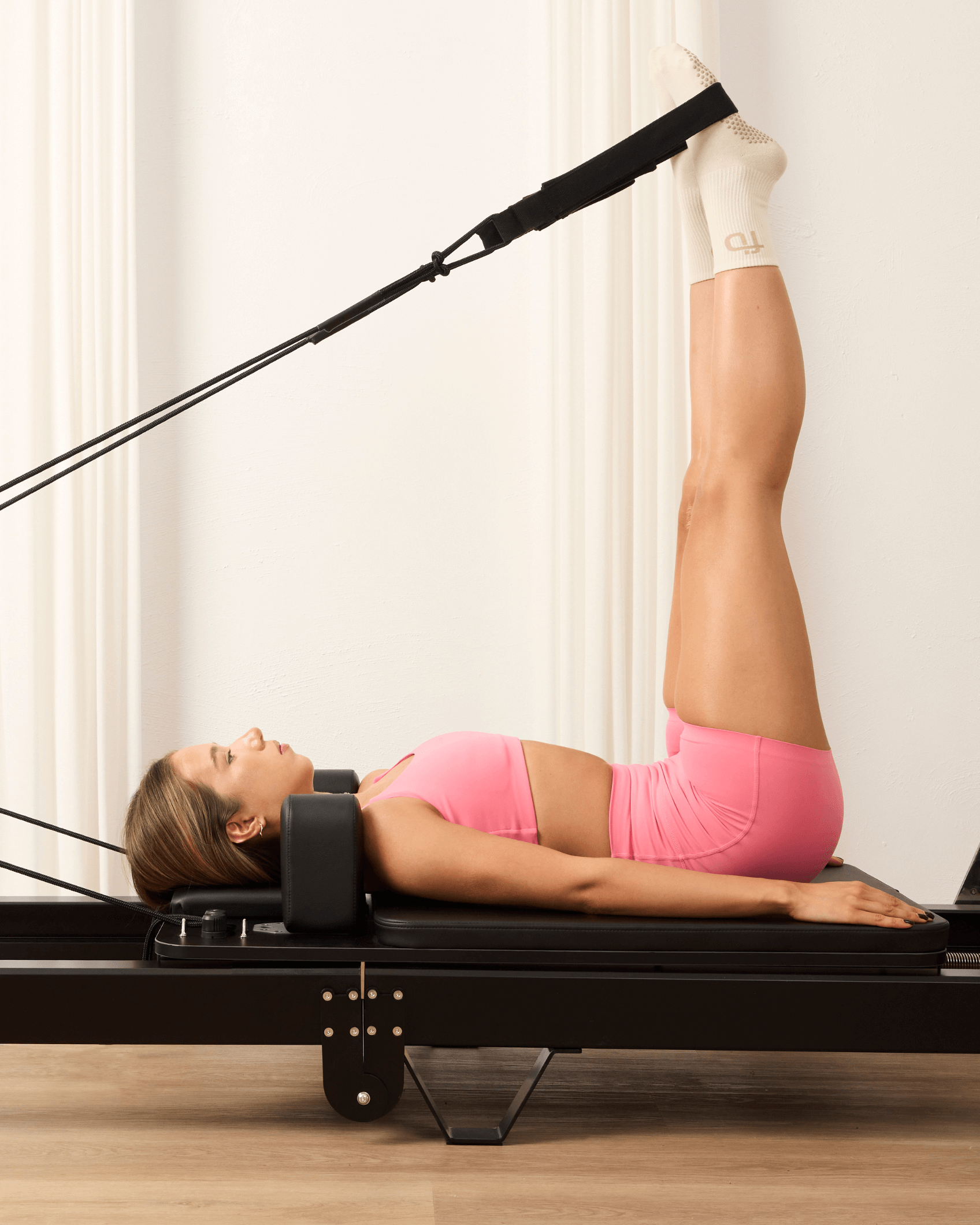
You spend a large part of a reformer session on your back. That means the ceiling is your view for supine footwork, the hundred, leg circles, most of the arm series, and a great deal of the stretching. If there is a bright downlight directly above the carriage, your client is squinting through half the class and will never quite tell you why they did not enjoy it.
Light the walls instead. Wall washers, uplights, a couple of lamps at carriage height, anything that bounces light rather than pointing it down. If you are stuck with existing downlights, put them on a dimmer and place the machines so the carriage travel does not run directly under a fitting.
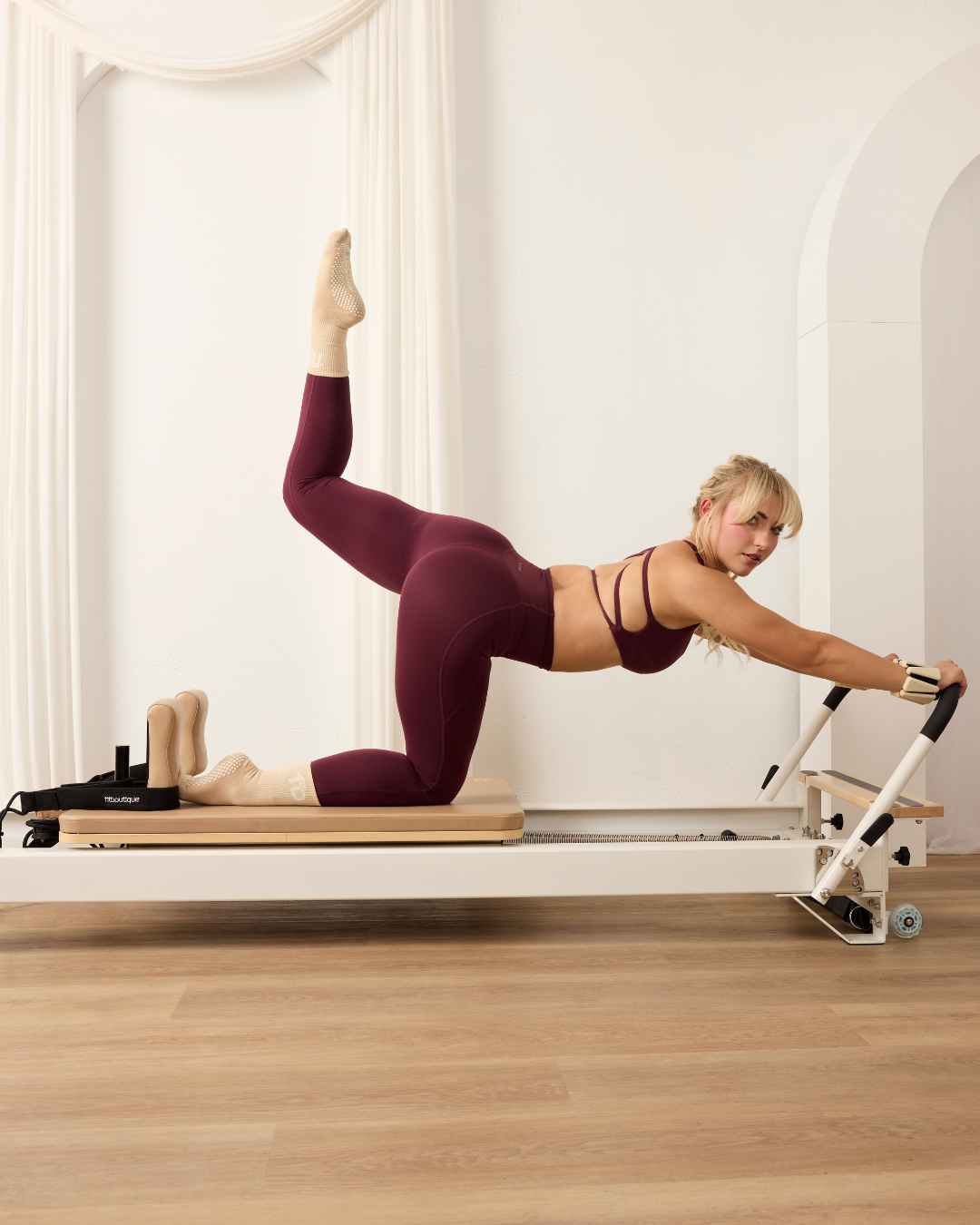
Natural light is worth designing around where you have it. Sheer curtains rather than blinds keep the softness, and a window at the side of the machine is far better than one at the head end, where it becomes a glare source for exactly the same reason.
Sound, the forgotten one
A reformer is not a silent machine. Springs make a noise, the carriage makes a noise, and 6 of them in a hard room with concrete floors and plasterboard walls produces an echo that makes a class feel like a car park.
Soft surfaces fix it. A rug in the walkway, curtains rather than bare glass, acoustic panels if the budget allows, and anything upholstered along one wall. You do not need a recording studio, you need to break up the parallel hard surfaces.
It also matters at home more than people expect, particularly in apartments and particularly if you train early. A mat under the machine and something soft on the nearest wall makes a real difference to what the person downstairs hears.
Colour, and why neutral is not a rule
The default advice is white, grey, soft timber and matte black, and it works. It is calm, it photographs well, and it lets the machine be the object in the room.
But I would push back on treating it as a rule. Neutral rooms are everywhere now, and a studio that looks exactly like every other studio has given up a free piece of differentiation. A deep green wall, a warm terracotta, a properly dark room with warm lighting, all of these can feel more considered than another white box.
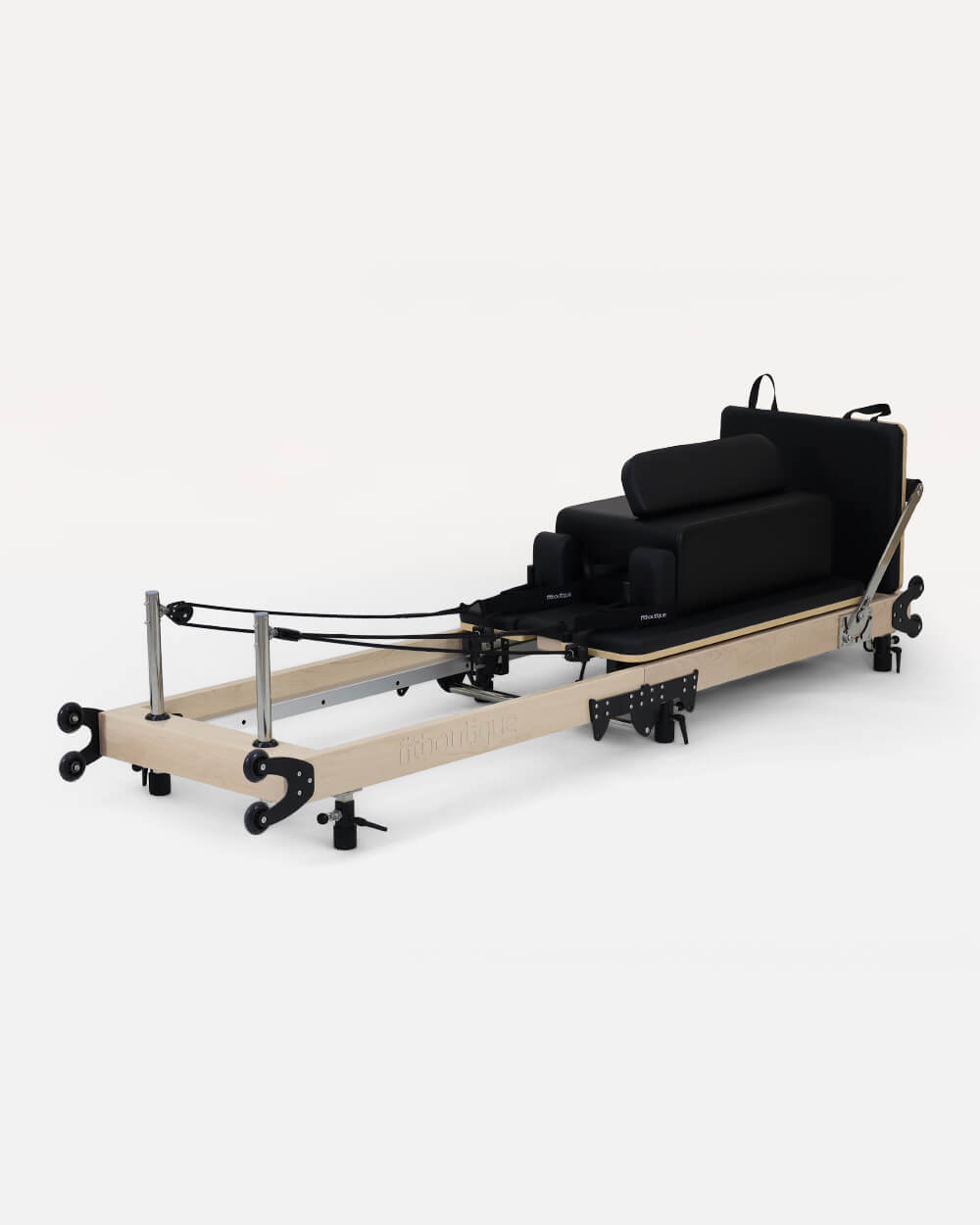
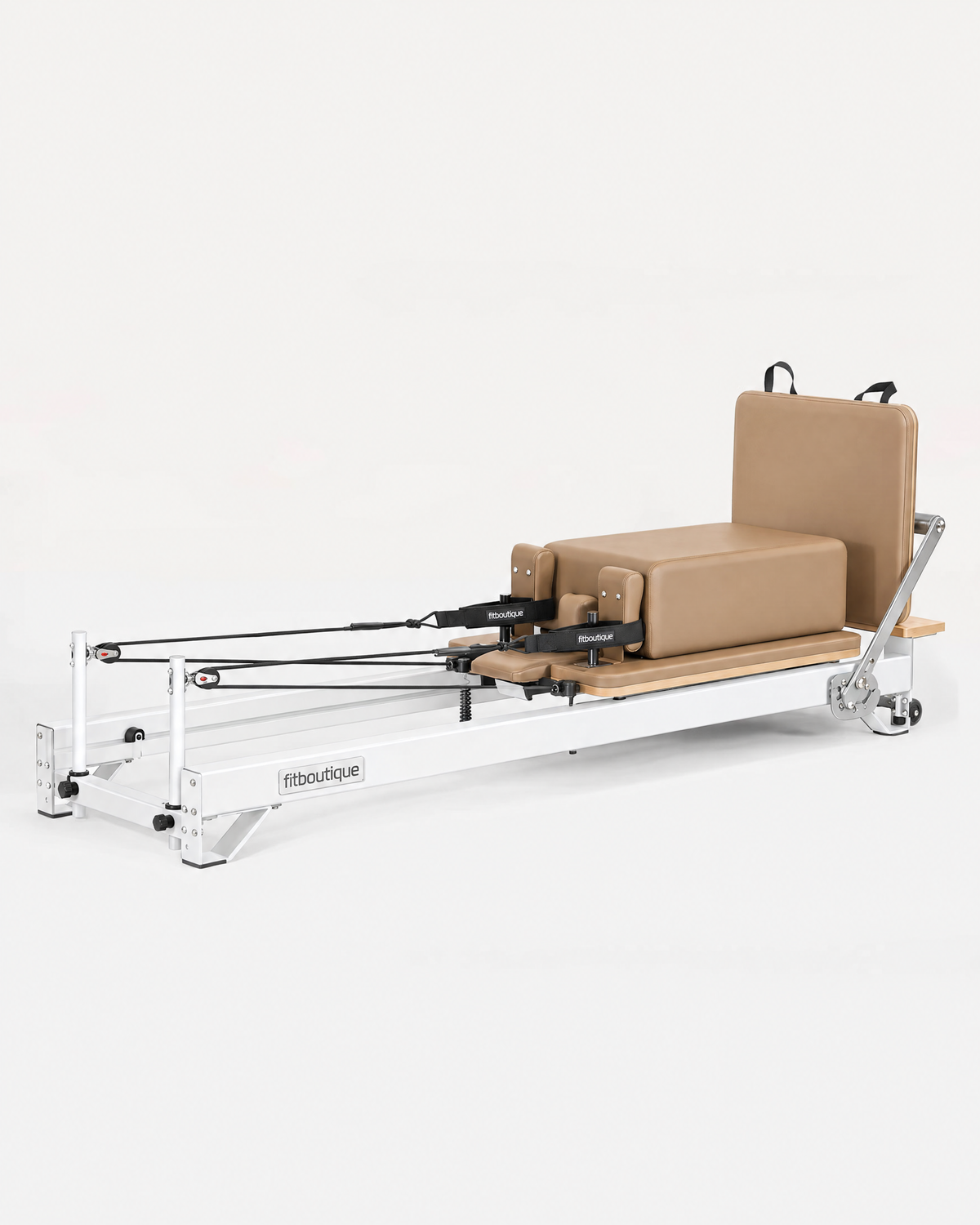
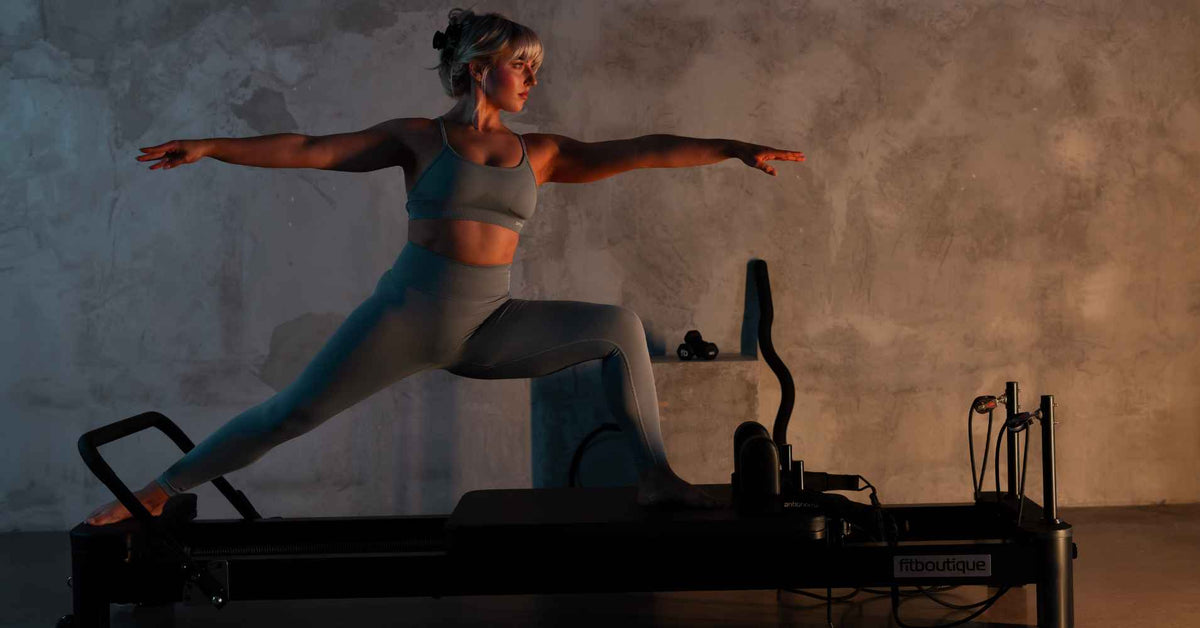
The thing to actually get right is contrast with the machine. A white reformer disappears into a white room, which sounds elegant and reads as flat in photographs. A dark machine against a pale wall, or a timber machine against a deeper colour, gives the room a subject. Since your reformers are the most photographed object in the business, that is a commercial decision as much as an aesthetic one.
Layout and clearance
This is where good looking rooms most often fail in practice.
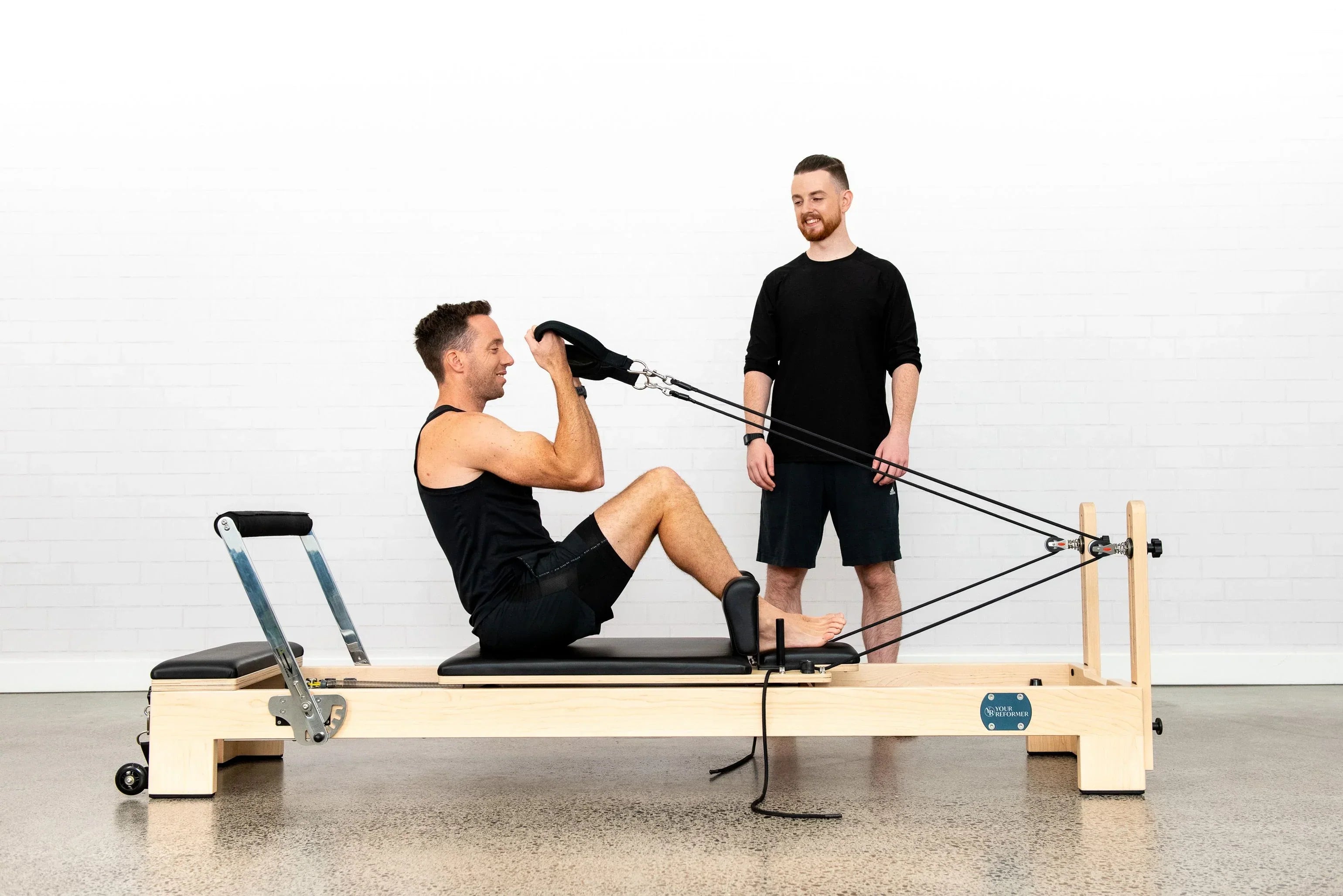
Our foldable machines are 244cm long and 68cm wide, and The Studio Reformer is 244cm by 83cm. Around that you need roughly 60cm clear at each end so someone can stand behind the foot bar and sit up at the shoulder rests without meeting a wall.
In a studio, plan on 1.2m to 1.5m between machines. Less than that and an instructor cannot get between them to adjust a spring, arms in second position start meeting a neighbour, and the room feels crowded even when it is not full. It is tempting to squeeze in one more reformer, and it is the decision studios most often regret, because a cramped class is a class people do not rebook.
Leave a clear entry path that does not run past the head end of an occupied machine. People arriving late walking through someone's eyeline is a small thing that quietly makes a room feel unsettled.
I have set out the full measurements, including footprints and folded dimensions, in my guide to how much space you need for a reformer.
Storage that does not become a shelf of clutter
Bands, ankle weights, grip socks, blocks, a jumpboard and a box all have to live somewhere, and if the answer is a corner then the corner becomes the thing everyone looks at.
Wall mounted racks are the best answer for bands and small equipment, because vertical storage keeps the floor clear and the floor is what makes a room feel calm. Bench seating with lift up storage works well at the entry end. Baskets are fine but they hide things, and hidden things stop being used.
The box that comes with each machine is the awkward one, since it is 69cm by 41cm by 23.5cm and does not disappear. Plan a spot for it rather than discovering it needs one, and if it lives under the reformer, check it is not where you put your feet getting on.
Choosing a machine that suits the room
The finish is the design decision people spend the longest on and it is worth some thought, because the reformer is the largest object in most rooms it goes into.
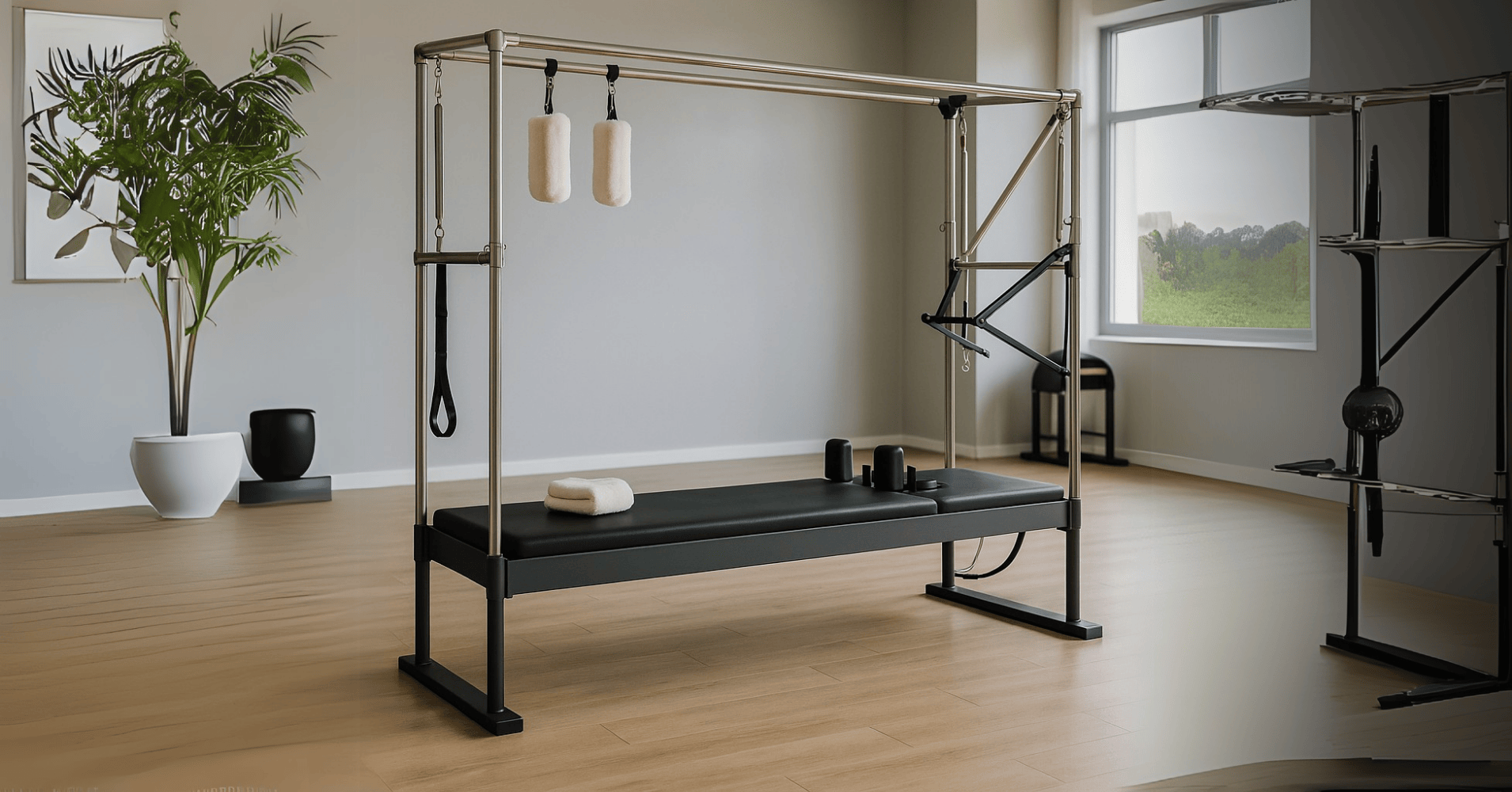
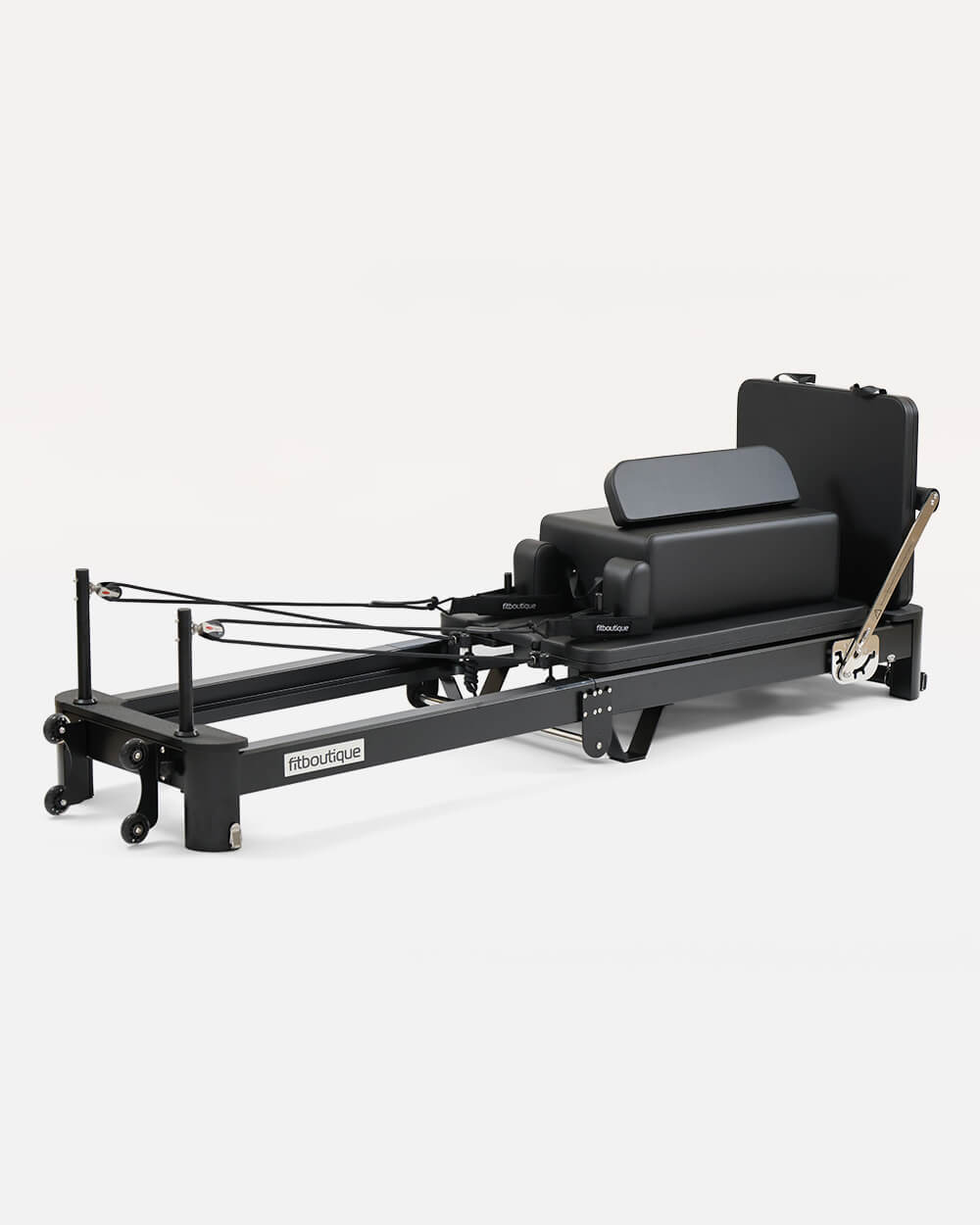
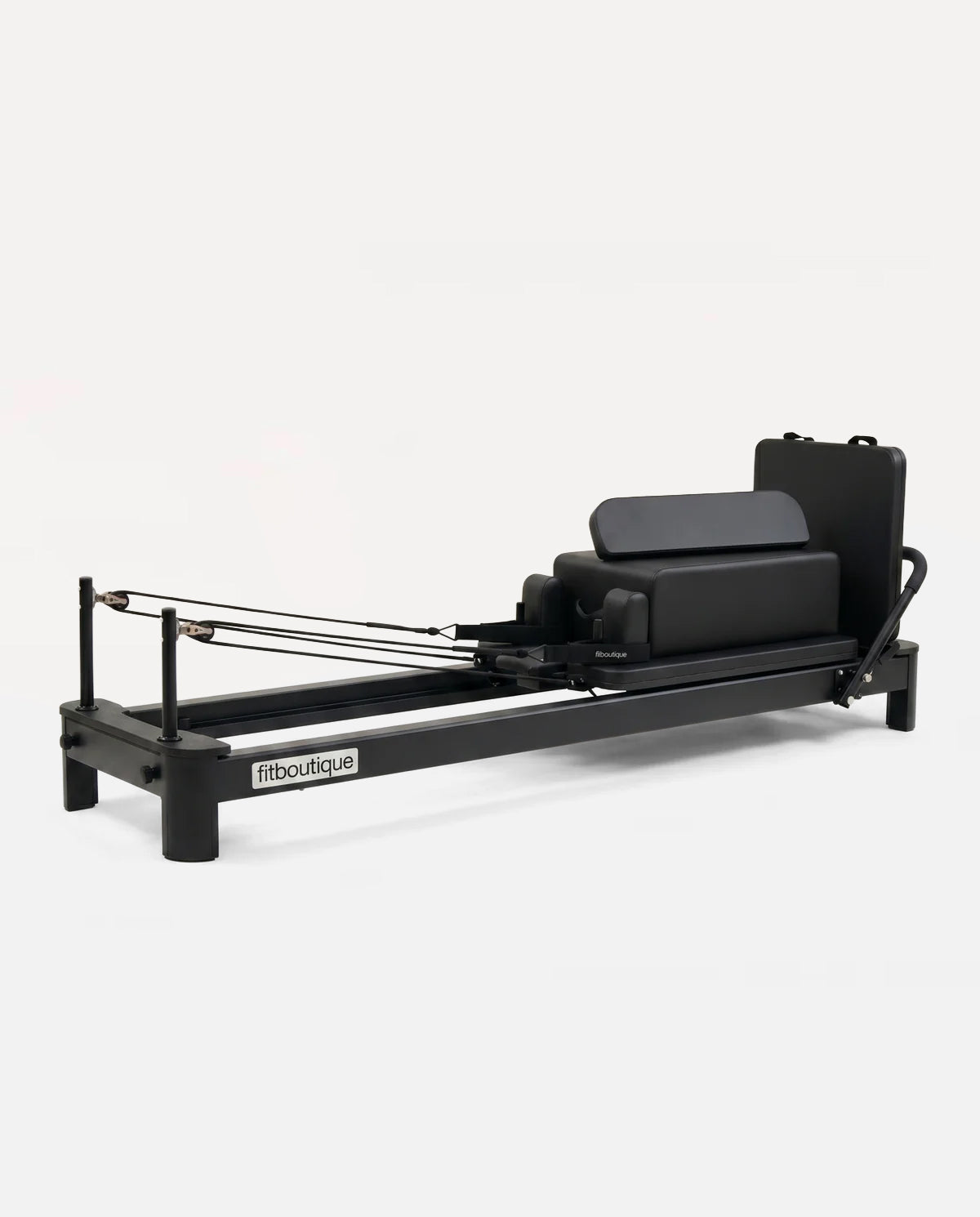
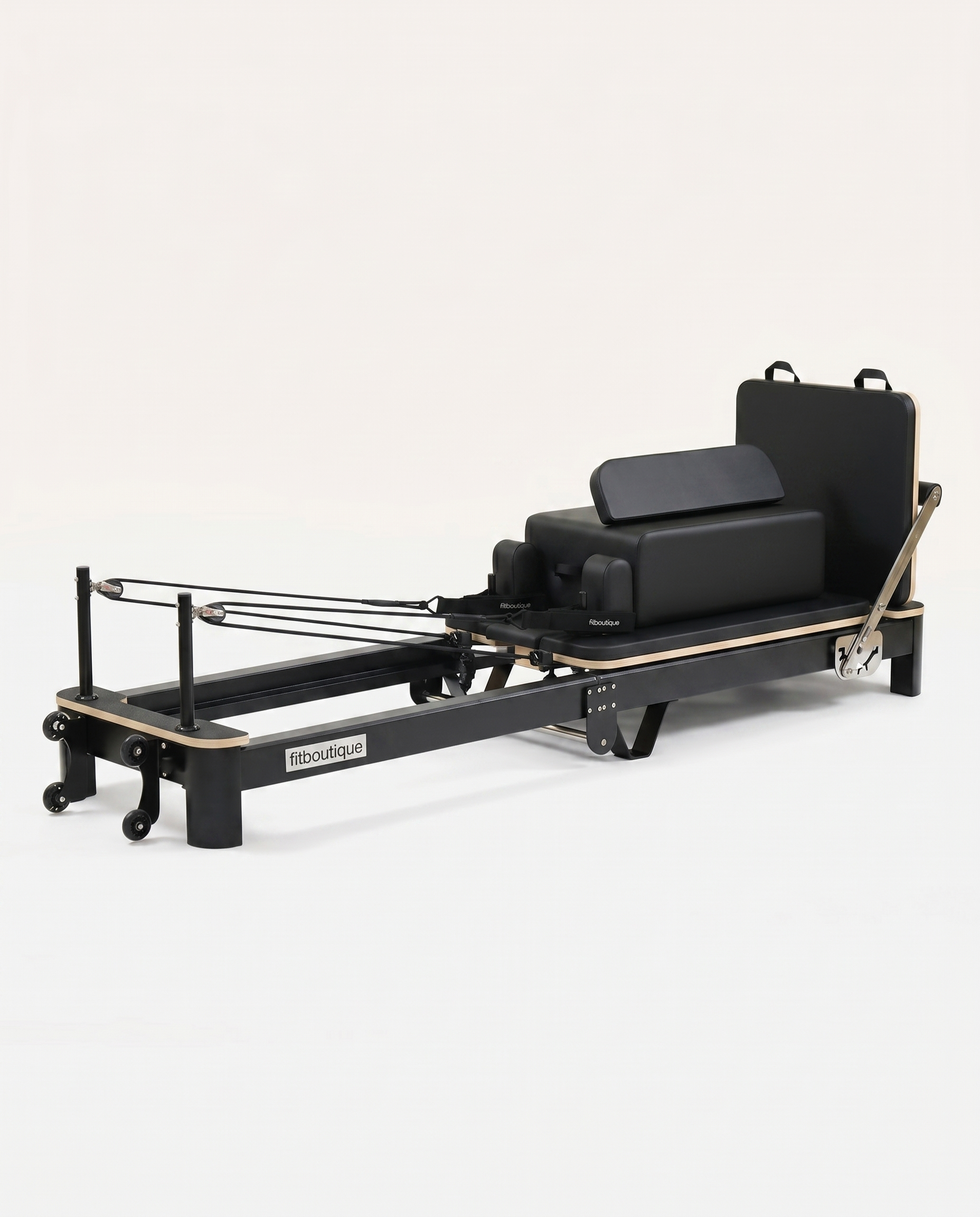
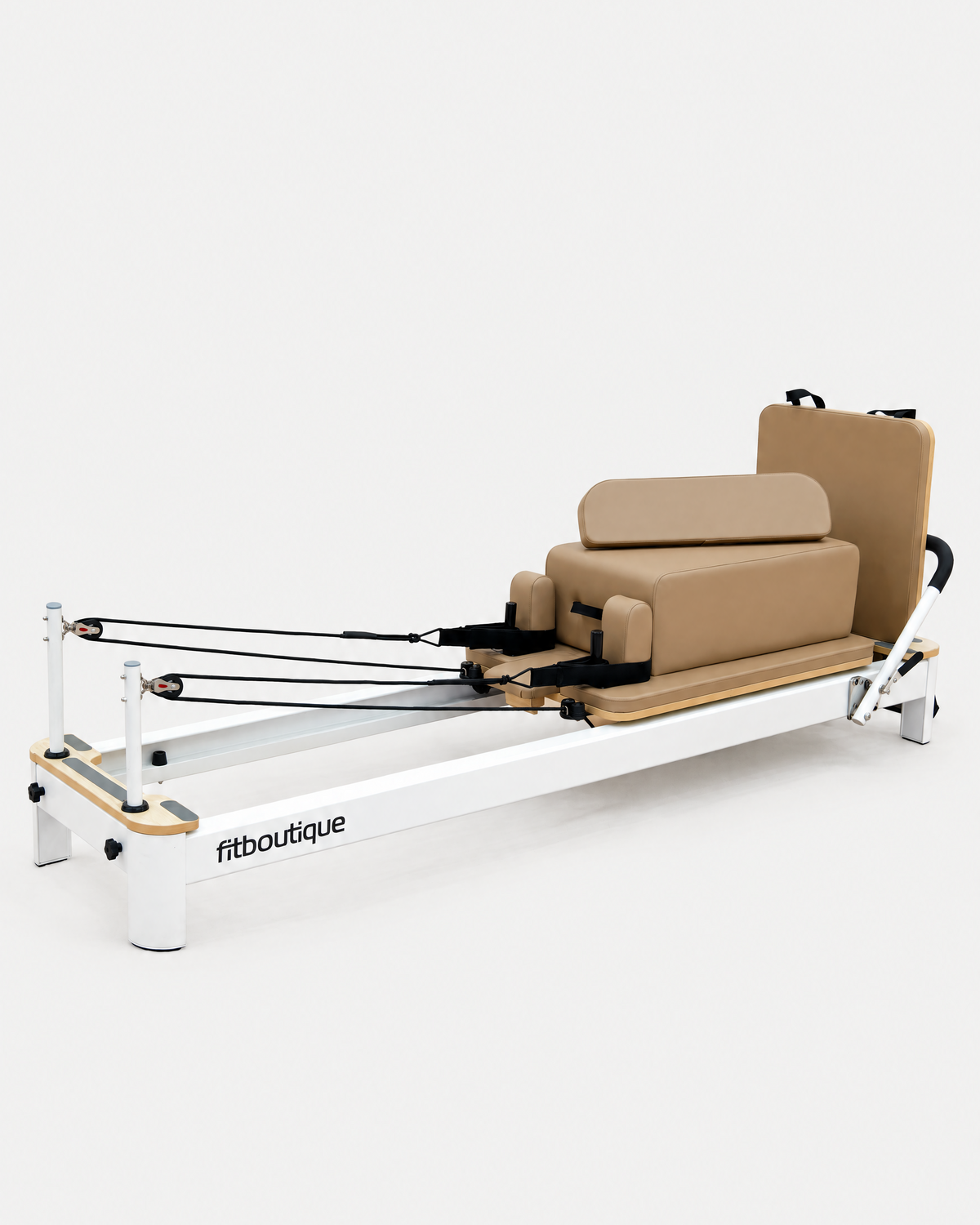
The timber Maple Crest Reformer reads as furniture rather than gym equipment, which makes it the easy answer for a room that is also a living space. The Ivory Reformer and White Edition Reformer suit a pale, light filled room. The Onyx Reformer and Space Black Reformer anchor a darker space, and the Sienna Reformer is the warmer option if black feels severe.
If the room has to convert back into a bedroom or an office, the Onyx Fold Reformer stands upright on its wheels at 130cm tall and 37cm deep, which is roughly a narrow bookcase.
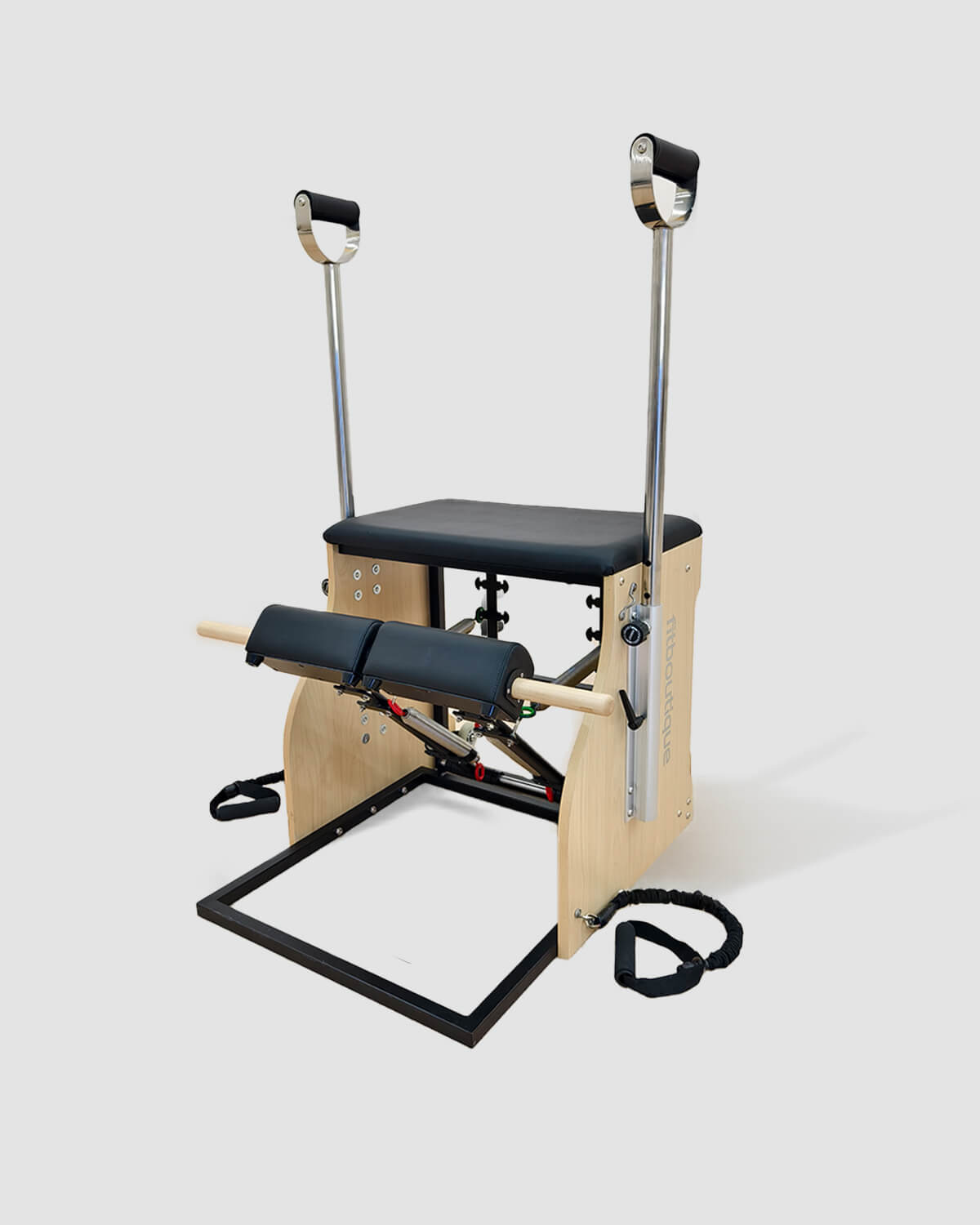
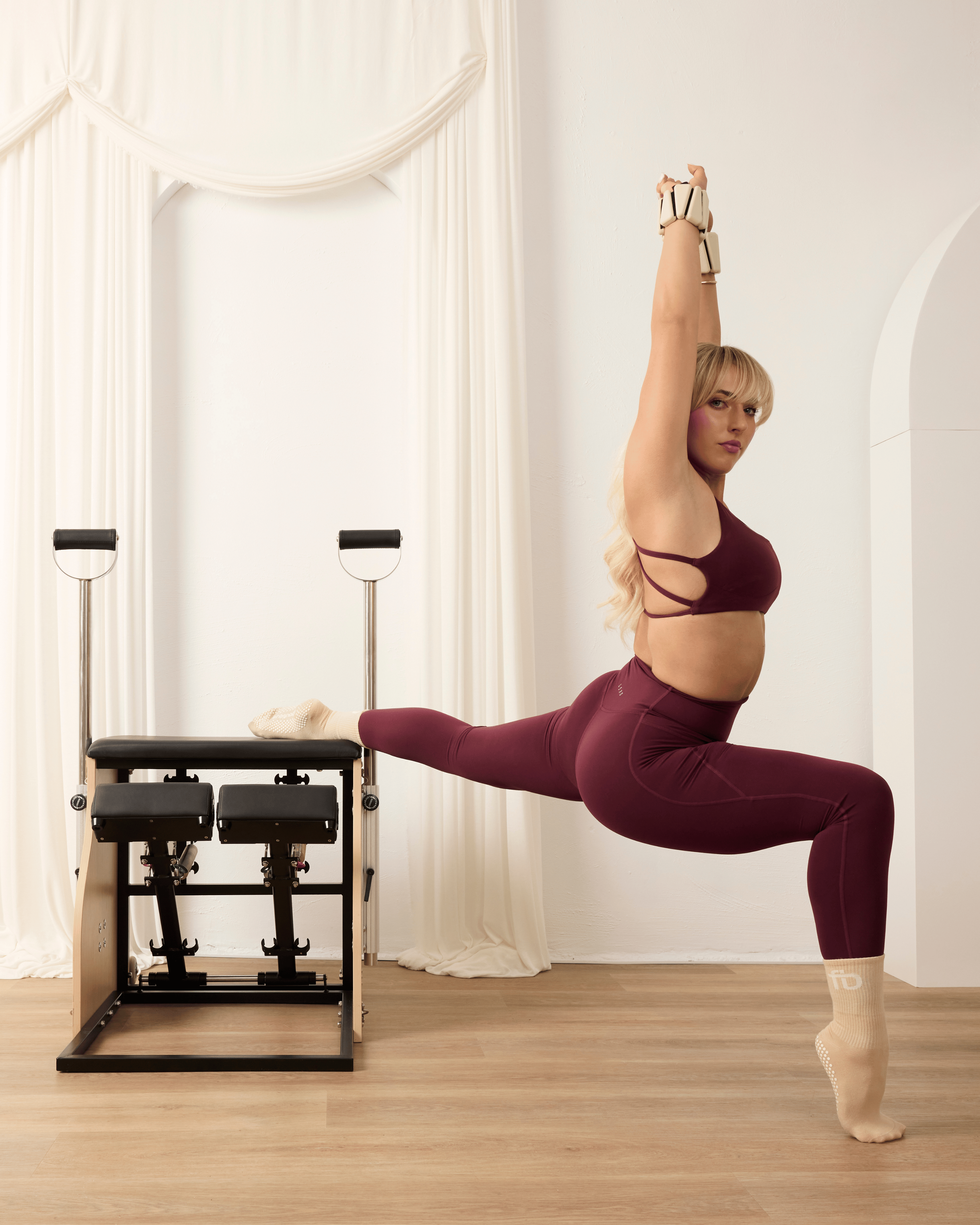
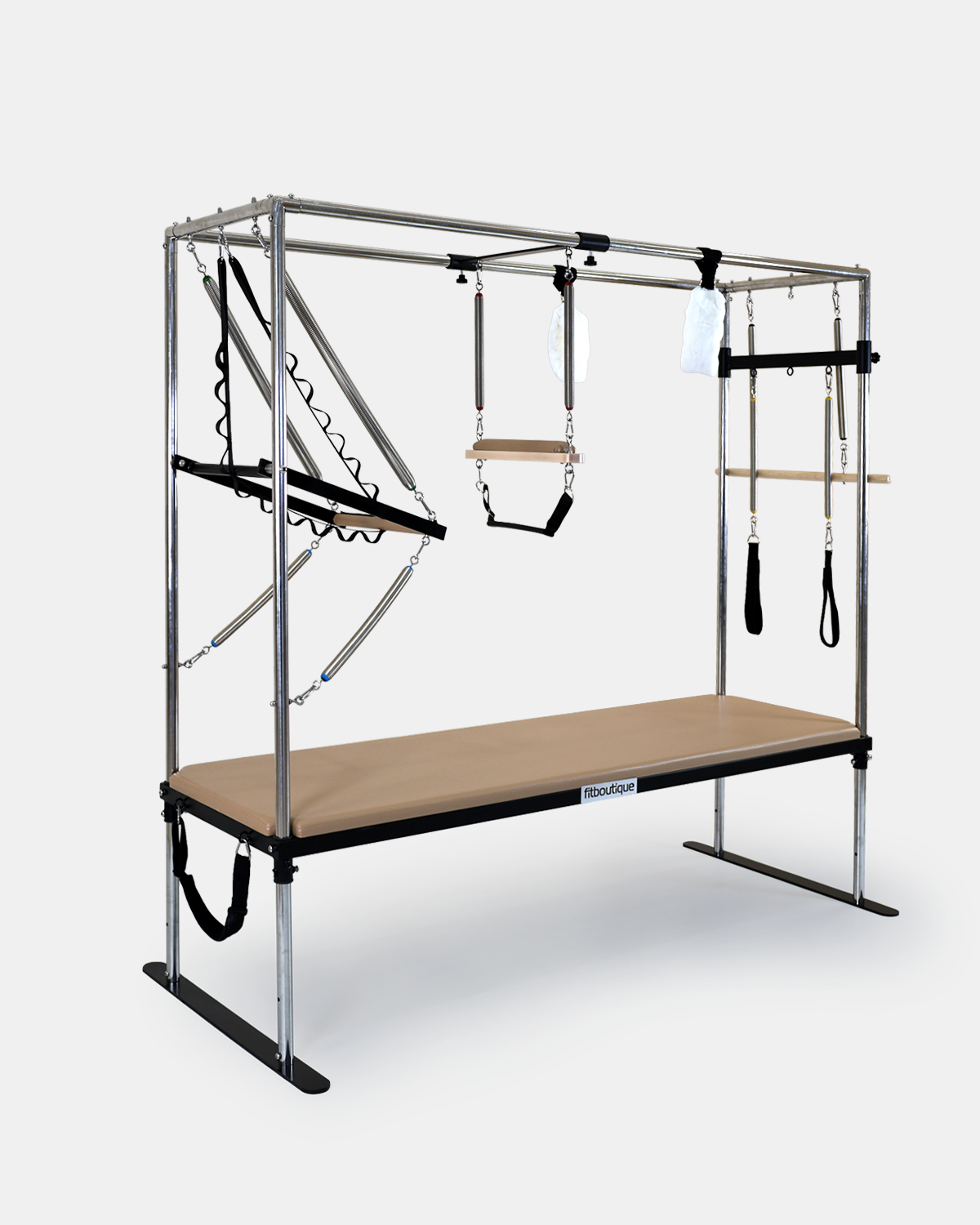
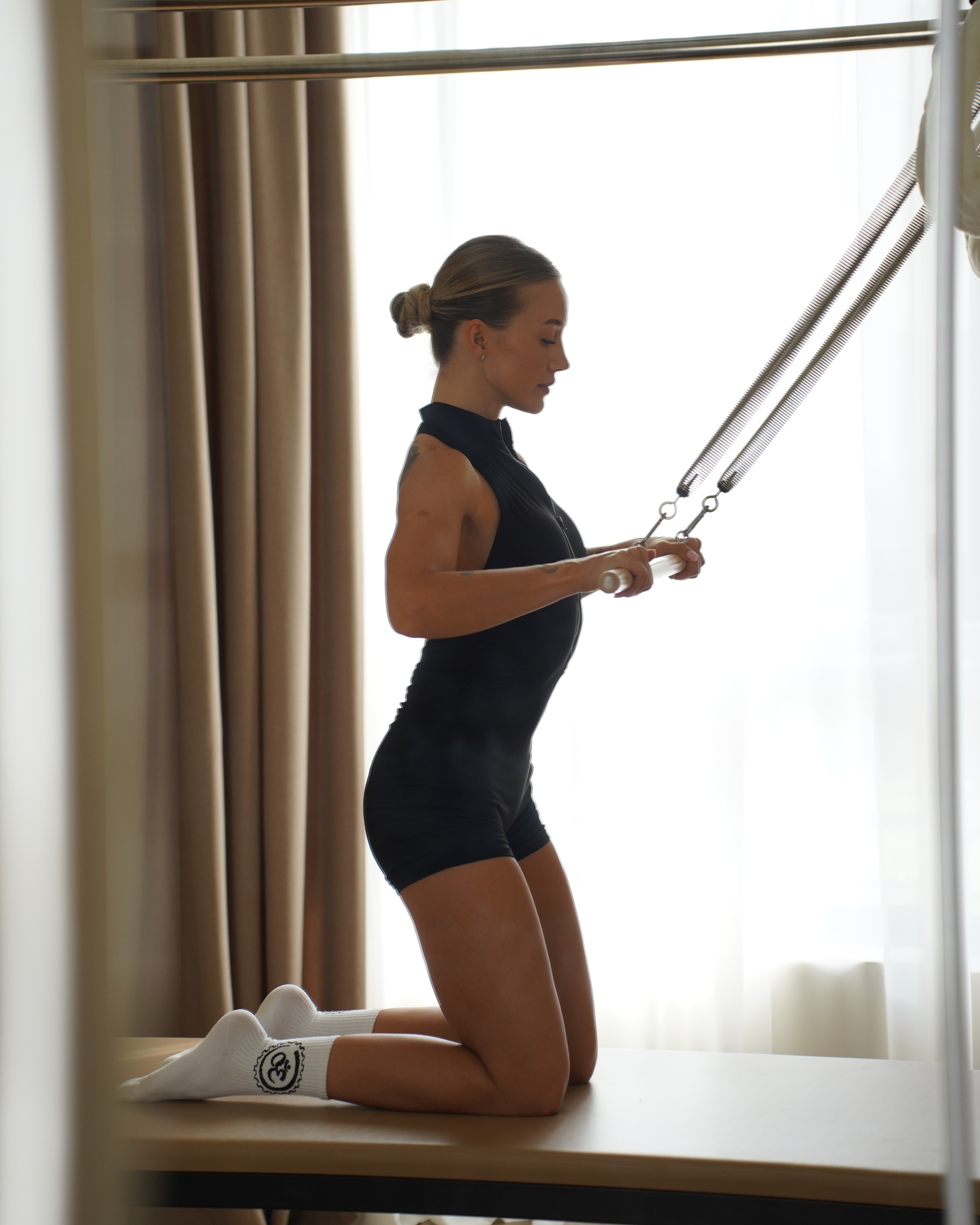
Where studios add other equipment, keep the metal tones and strap colours consistent, because mismatched hardware is what makes a well designed room look assembled from leftovers. The Cadillac Reformer, Pilates Chair and Hip Thrust Machine all sit in the commercial range and are built to look like they belong together.
If this is a room in your house
Almost everything above applies at a smaller scale, with 2 additions.
Do not design a room you have to reset. The single strongest predictor of whether a home reformer gets used is how many steps sit between you and the first exercise, so a room where the machine stays out with the springs on beats a beautiful room that has to be cleared first. I wrote about that properly in my piece on staying motivated with Pilates at home.
And accept that it will be the biggest thing in the room. A 2.4 metre machine is not going to hide behind a plant. Rooms that work are the ones that make the reformer the point rather than trying to disguise it, which is also why the finish is worth caring about.
A Note From Ayrah
The best thing I ever did to my own Pilates room cost about $40 and it was a lamp.
I had spent months on that room. The floor, the colour, where the machine sat relative to the window. And I still did not enjoy morning sessions and could not work out why, which was infuriating because on paper it was exactly the room I had planned.
Then I lay down on the carriage during a footwork series and actually noticed what I had been staring at for weeks. A downlight, directly above my head, the whole time. I had been squinting through every supine exercise and had somehow never registered it as a thing I could change, because you do not think of the ceiling as part of a room you are designing.
I turned the downlights off, put a lamp in the corner and let it bounce off the wall, and the room became a completely different place to train. Same floor, same machine, same everything else.
So before you finalise a Pilates room, lie down where your head will be and look up. Whatever is there, you are going to be looking at it for years.
Frequently Asked Questions
What flooring is best for a Pilates studio?
Engineered timber or good quality vinyl planks. Both are firm enough that a reformer will not sink or slide, comfortable enough for floor work, and easy to clean. Avoid thick carpet, which lets the frame rock slightly, and add a neutral mat under each machine if you want to protect a hard floor and cut the noise.
How much space should I leave between reformers?
Between 1.2m and 1.5m in a studio. That is enough for an instructor to move between machines and adjust springs, and enough that arms in second position are not meeting a neighbour. Squeezing in one extra reformer is the layout decision studios most often regret.
How should I light a Pilates room?
Light the walls rather than the floor, using wall washers, uplights or lamps at around carriage height. Clients spend much of a session on their back, so a downlight directly above the machine means squinting through half the class. If you have fixed downlights, dim them and position the machines away from directly underneath.
Do I need mirrors in a Pilates studio?
They are useful for checking alignment and they make a small room feel larger, but they are not essential. If you use them, put them opposite the light source rather than at the head end of a machine, where they turn into a glare source. Some instructors deliberately go without so clients work by feel.
What colours work best in a Pilates studio?
Calm tones work, but neutral is not a rule and every studio being white is its own problem. What matters more is contrast with the machine, since a white reformer in a white room reads as flat in photographs. Pick a wall colour that gives your equipment a backdrop rather than absorbing it.
How do I stop the room echoing?
Break up the hard parallel surfaces. A rug in the walkway, curtains instead of bare glass, something upholstered along one wall, and mats under the machines. Reformers are not silent, and several of them in a room with concrete and plasterboard makes a class sound like a car park.
Can I set up a Pilates studio in a spare bedroom?
Easily. You need roughly 3.6m by 1.8m for a full length machine with clearance at both ends, and one long side kept open. The more important consideration is that the room lets the reformer stay set up, since a machine that has to be unfolded and rigged first gets used considerably less.
How do I store Pilates accessories neatly?
Wall mounted racks for bands and small equipment, and bench seating with storage under it near the entry. Vertical storage keeps the floor clear, which is what actually makes a room feel calm. Plan a spot for the box that comes with the machine, since at 69cm by 41cm by 23.5cm it does not tuck away easily.
Which reformer looks best in a home living space?
The timber Maple Crest Reformer, in most cases, because it reads as furniture rather than gym equipment and is the narrowest frame we make. If the room has to convert back to another use, the Onyx Fold Reformer stands upright on its wheels at about the footprint of a narrow bookcase.
Build The Room Around The Machine
Reformers in timber, ivory, white and black to suit the space you are designing. Free delivery Australia wide, spare parts in Melbourne, 5 year warranty.
Compare Every ReformerWritten by Ayrah Yuso
I'm part of the FitBoutique team and have a solid passion (and love) for all things exercise related, including Reformer Pilates

















Leave a comment