





Pilates Reformer Spring Settings
Springs are the single most important setting on a reformer and the one almost nobody gets taught properly. Most people pick a spring in their first class because an instructor called it out, then use roughly that same setting for the next 2 years.
This is the whole thing explained. What the springs are actually doing, a starting setting for every common exercise, how to tell when yours is wrong, and why heavier is not always harder.

In this article
What the springs actually do
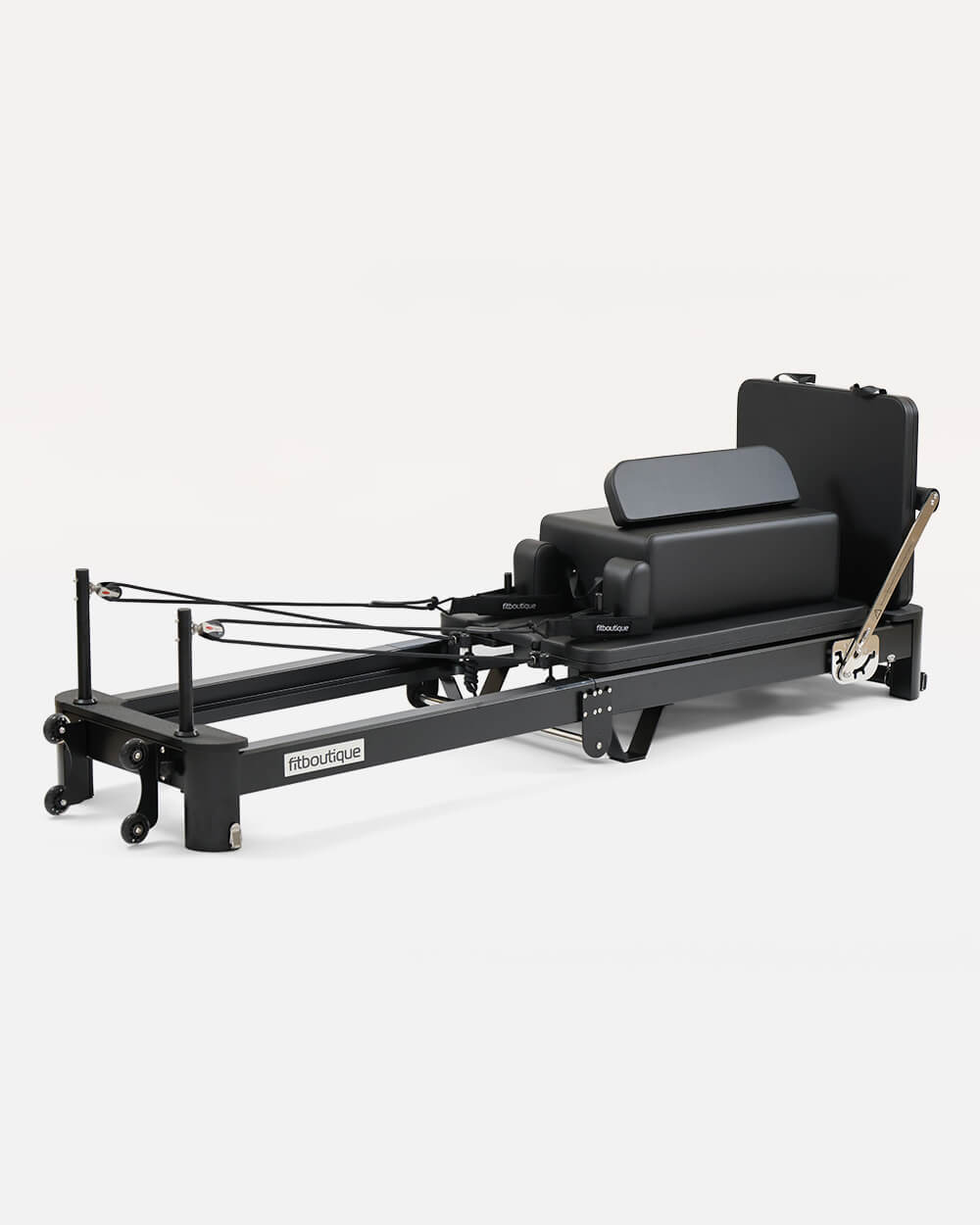
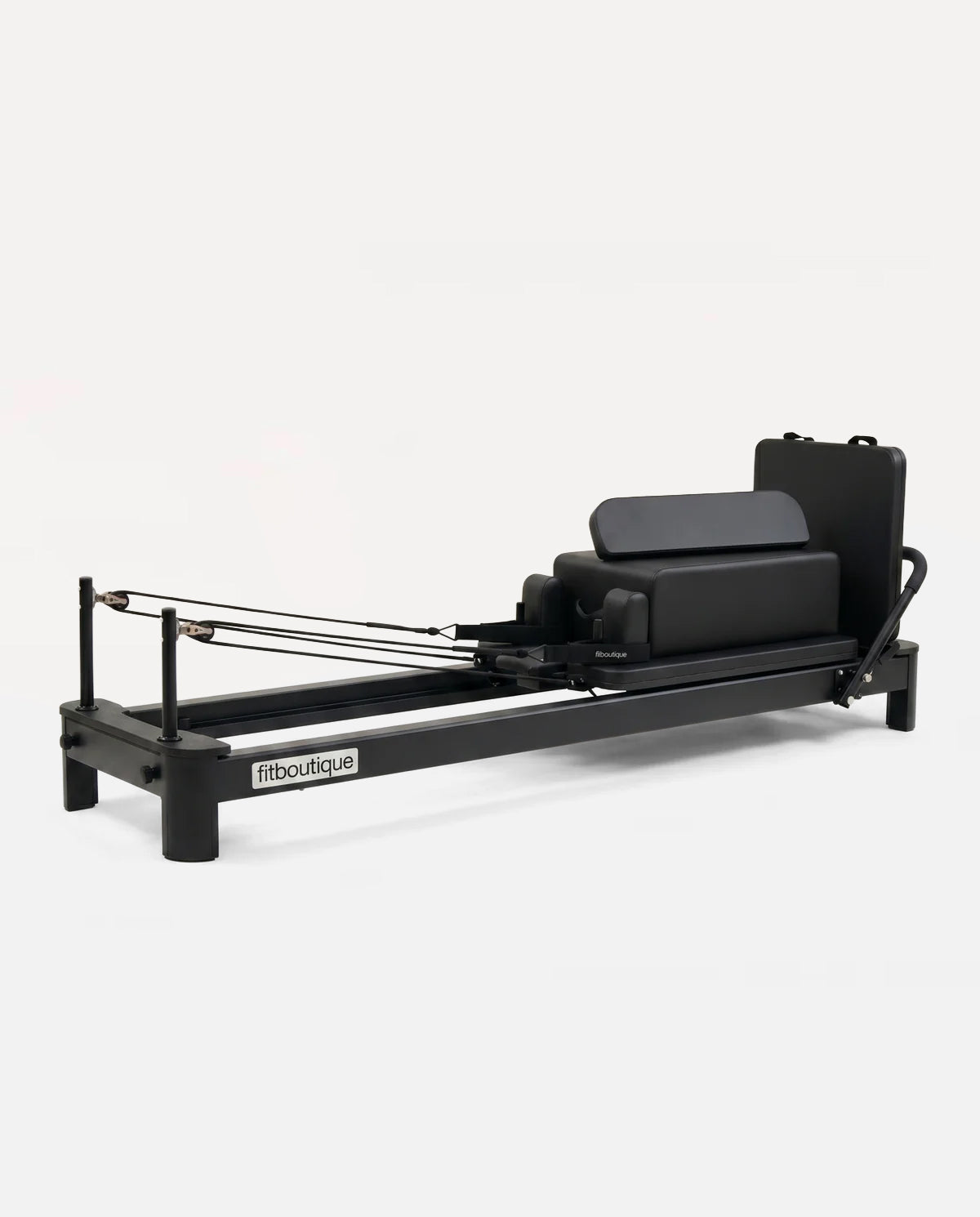
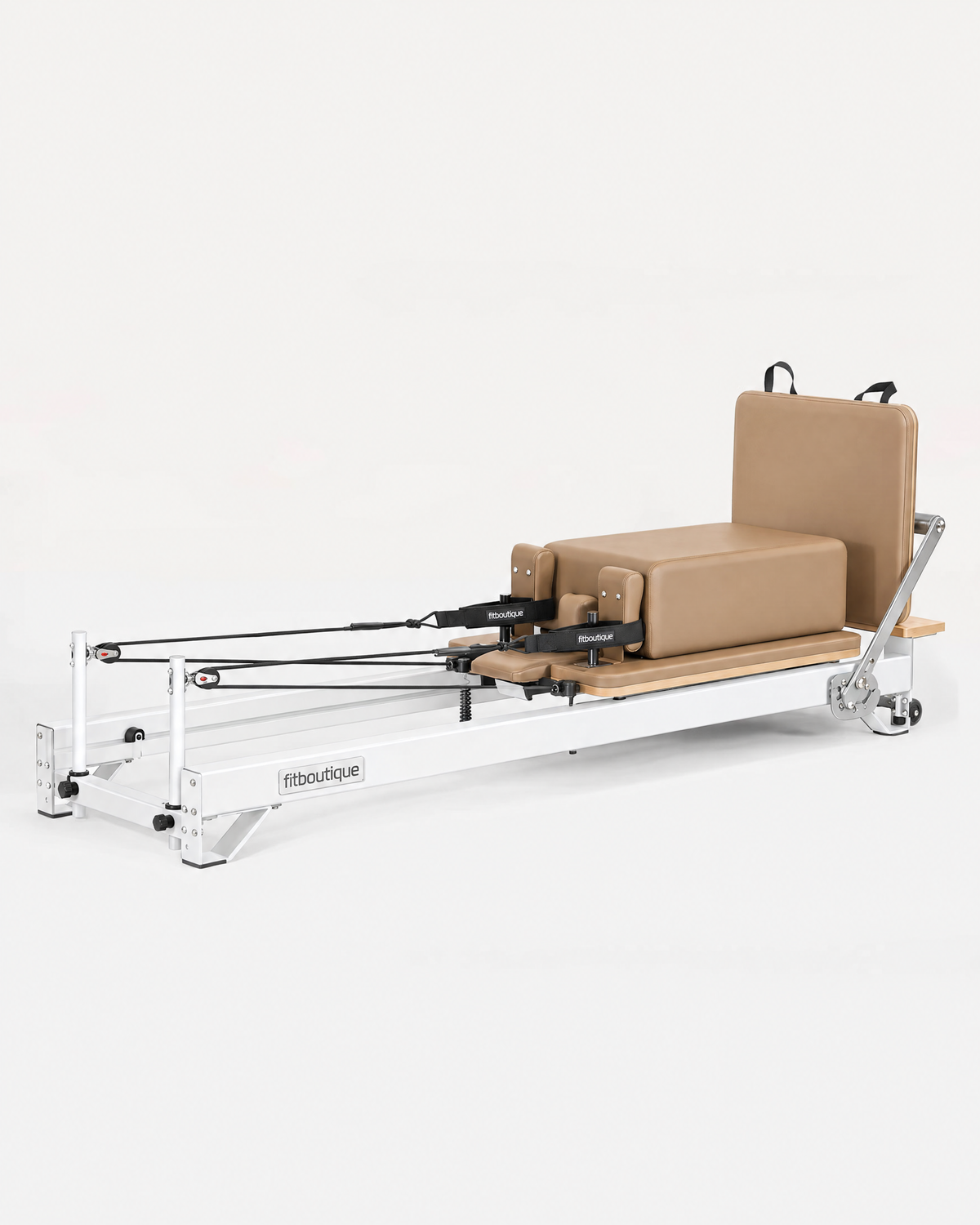
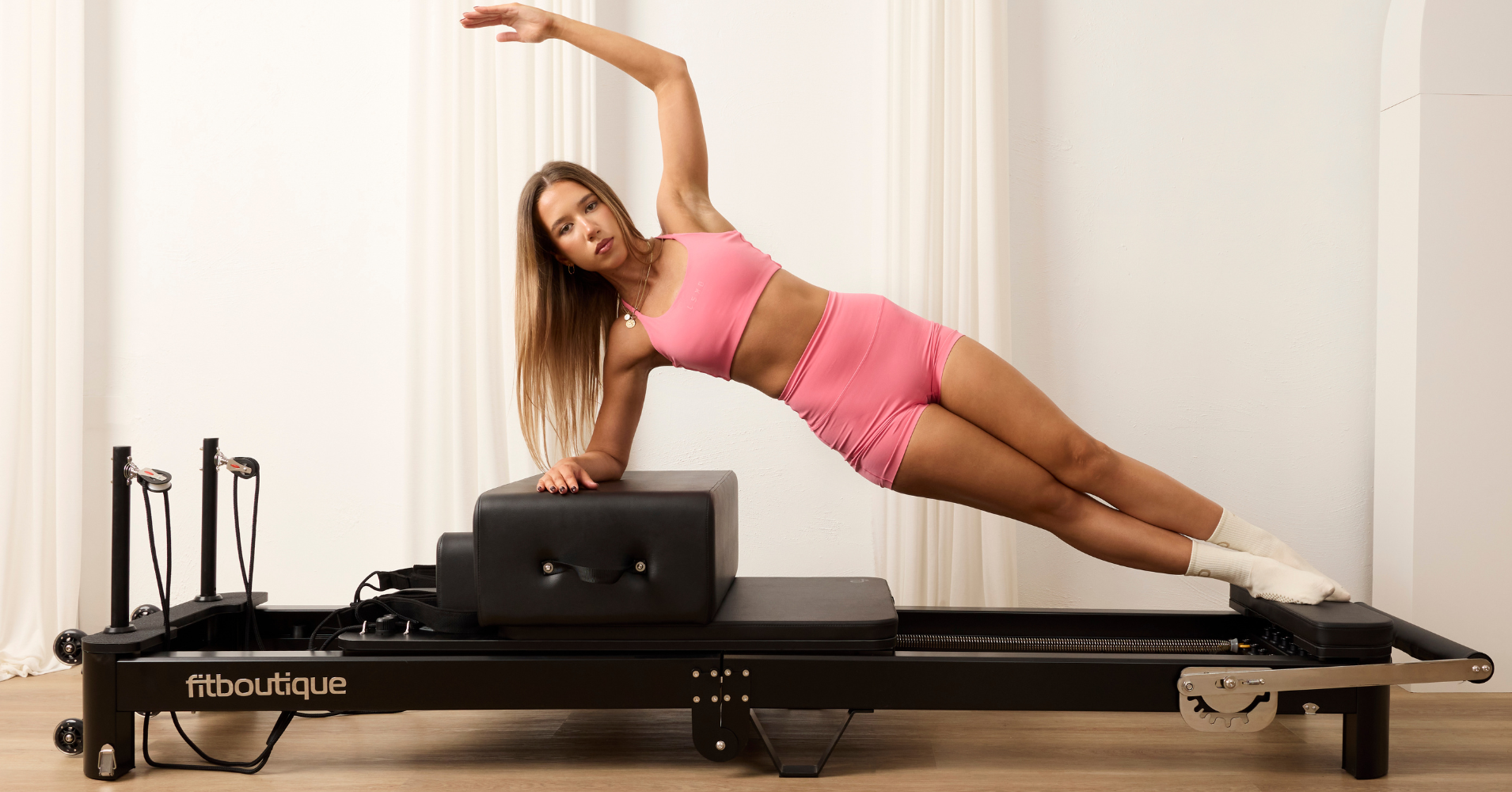
The springs connect the carriage to the frame at the foot end. That one detail explains everything else.
When you push the carriage away from the springs, they stretch and resist you. That is the part everyone understands. Add springs and pushing gets harder.
The part people miss is what happens on the way back. The springs are pulling the carriage home the entire time, which means on any exercise where you are trying to stop the carriage from returning, the springs are helping you. Add springs there and the exercise gets easier.
So a reformer spring is not a weight. A dumbbell is heavy in every direction. A spring resists you in one direction and assists you in the other, and which one is happening depends entirely on where you are standing or lying relative to the spring bar.
Why colours mean nothing across brands
There is no industry standard for spring colours. A red spring on one machine can be the heaviest in the set and close to the lightest on another, which is why an online spring chart from a different brand will quietly mislead you.
What is consistent is that a good machine gives you a graduated set rather than several identical springs. Every FitBoutique reformer ships with 6 German made springs in graduated tensions, heavy through to light, and the Mega XL runs 8. That range is the point, because it is what lets you keep making an exercise harder in small steps for years instead of running out of load in month 6.
So before you use any setting in this article, do one thing. Take 30 seconds, hook each spring on its own, and push the carriage out with your feet. You will feel the order immediately, and from then on you can think in heavy, medium and light rather than in colours.
Starting settings by exercise
These are starting points, not rules. They assume a full graduated set and an average build, and the whole purpose of the next section is teaching you to adjust them for yourself.
Footwork. Heavy. Three to 4 springs for most people. This is your legs pressing against the full load and it should feel like work from the first repetition.
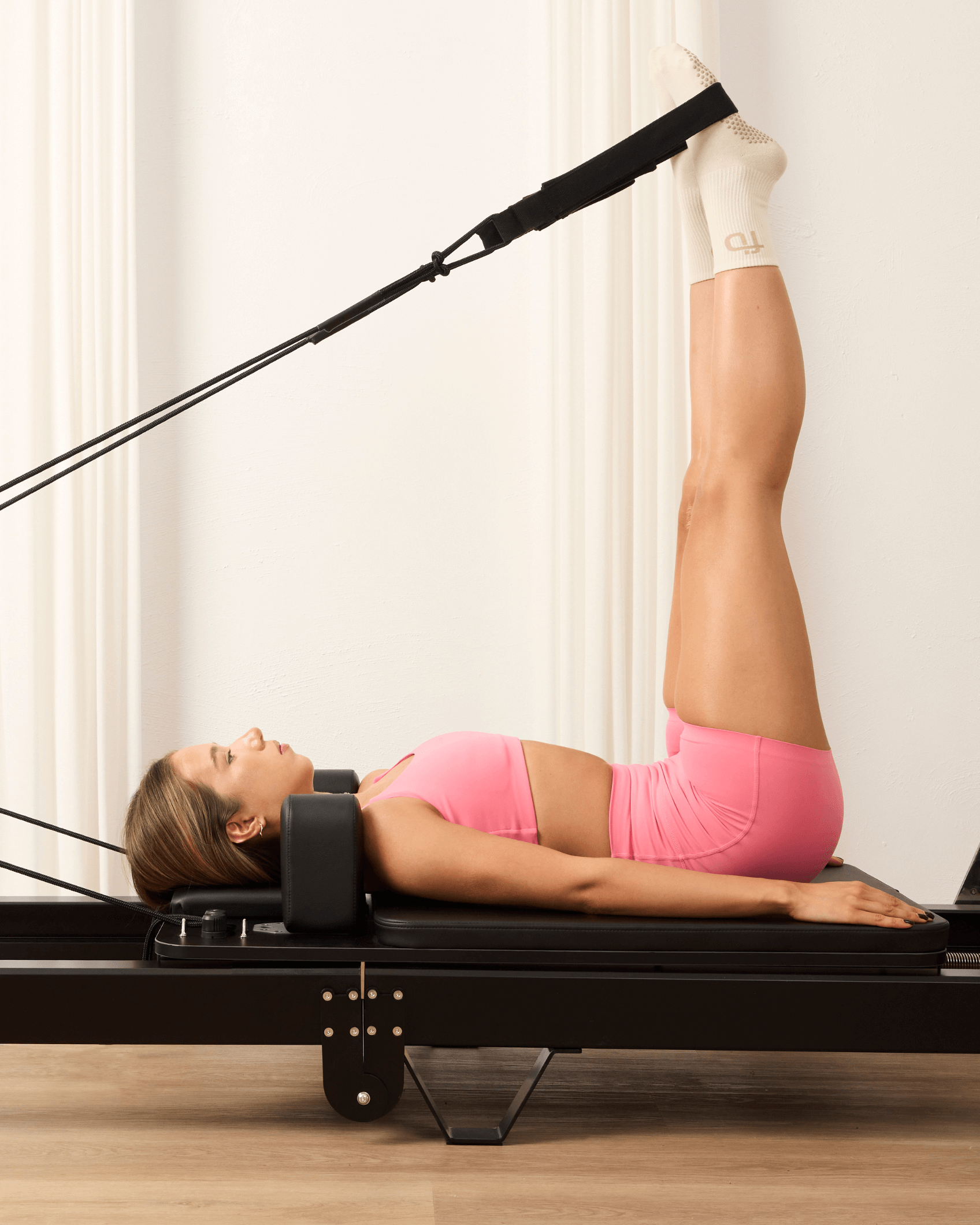
Feet in straps, leg circles and frogs. Light to medium. One to 2 springs. Your legs are strong enough for more, but the job here is your core keeping the carriage still, and heavy springs let your legs bully the movement.
Arm work through the straps, lying. Light. One spring, often the lightest you own. Shoulders are small muscles working at a long lever, and this is the most commonly overloaded exercise on the machine.
The hundred. Light to medium. One to 2 springs, enough for the straps to have something to pull against without pulling your shoulders off the carriage.
Long stretch series, plank and pike. Light to medium. One to 2 springs. Here you are holding the carriage still against the spring, so lighter is harder. Start with 2 and work down to 1.
Elephant and knee stretches. Medium to heavy. Two to 3 springs. The springs stabilise the carriage under you, which is what lets you work your back and hips rather than fighting to stay on.
Short box. Heavy. Two to 3 springs. This is anchoring rather than resisting, and a loose carriage under a short box is genuinely unsafe.
Side splits and standing work. Light to medium. One to 2 springs. You are controlling your own body weight, and heavy springs here take the work away from your inner thighs and give it to the machine.
Long spine and short spine. Medium. Two springs. Enough to support the roll without the carriage running away underneath you.
Kneeling arm work and mermaid. Light. One spring. Unstable positions punish heavy springs.
How to tell your setting is wrong
Your body and the machine both tell you. These are the signals, in the order they usually show up.
- The carriage makes a noise. A clunk at the end of the push or a thud on the return means you lost control of the movement. Usually too heavy, occasionally too fast.
- You are gripping the footbar. White knuckles mean your shoulders and neck have taken over from your legs and core. Drop a spring.
- You feel it in the wrong place. Neck in an abdominal exercise, low back in leg work, forearms in arm work. Almost always too heavy.
- You cannot slow the return down. If you can push out with control but the carriage drags you home, the spring is beyond you. Drop one.
- You can hold a conversation through the whole set. Too light. This is the one people never self diagnose, because too light feels pleasant.
- Nothing changes for a month. Not a form problem, a progression problem, and the next section deals with it.

Why heavier is not always harder
This is the thing that separates people who understand the machine from people who follow instructions on it.
Take a plank on the carriage. On 2 springs the carriage is fairly anchored and your job is mostly holding a shape. Take a spring off and the carriage now wants to drift, so your shoulders and deep core have to stop it. Lighter, and considerably harder.
Same with side splits. Heavy springs push your legs back together for you. Light springs make your inner thighs do it. The lighter setting looks easier on paper and will have you shaking in 20 seconds.
So when an instructor tells you to take a spring off and the exercise gets harder, nothing has gone wrong. You have just moved from an exercise where the spring was the load to one where the spring was the safety net.
A practical way to hold this in your head: if the springs are behind you doing the work, more is harder. If the springs are the only reason the carriage is not running away, more is easier.
How to progress your springs
Progression on a reformer is a spring change, and it is the whole advantage the machine has over a mat. But you cannot progress what you do not record.
Write down what you used. A note on your phone with the exercise and the setting is the entire system, and without it you will train at the same load for 6 months and conclude the machine has stopped working.
Then change one thing at a time, in this order. Slow the tempo first, because a 3 second return at the same spring is genuinely harder than a fast one and costs you nothing. Extend your range next. Only then change the spring.
The trigger is simple. When an exercise has felt controlled through its full range for 3 sessions running, change something. And remember the direction depends on the exercise, which is what the section above was for.
If you want the broader picture on how often to train and what that produces, I wrote that in how many times a week you should do reformer Pilates, and the machine basics in how to use a Pilates reformer.
When springs need replacing
Springs are a consumable on a machine that gets used, and nobody tells you that at the point of sale.
The signs are a spring that no longer returns to its original length when unhooked, a set where one spring feels obviously softer than its twin, visible rust or coating damage, or a permanent kink anywhere along the coil. Any of those and it comes off the machine.
How long they last depends entirely on quality and use. A commercial grade spring in a home setting will go years. A cheap spring under daily studio load will not, and the failure mode is not dramatic, it is slow. The tension drops gradually, and because it drops gradually you assume you are getting stronger when the machine is simply getting weaker.
That is the real argument for a good spring set, and it is also why we hold replacement reformer springs in stock in Melbourne rather than shipping them from overseas. I wrote about the quality side in why commercial grade springs make a difference.
If you are unsure whether a spring on your machine is finished, send us a photo and we will tell you honestly.
A Note From Ayrah
For about a year I used the same 2 springs for everything, because that is what was on the machine when I finished my first class and nobody told me otherwise.
What finally changed it was an instructor watching my footwork and asking why I was on a medium load. I said that is what I always use. She asked what I used for arm work. Same thing. She asked what I used for planks. Same thing.
Three completely different demands, one setting, for a year.
The week I started setting the springs per exercise rather than per session, footwork became genuinely hard for the first time and my arm work stopped hurting my neck. Nothing about my body changed. I had just stopped asking one setting to do 3 jobs.
If you take one thing from this article, let it be that the spring bar is meant to be touched between exercises. It is not a set and forget.
Frequently Asked Questions
How do I know which spring setting to use?
Start from the exercise. Footwork and short box are heavy, 3 to 4 springs and 2 to 3 respectively. Feet in straps, the hundred and long stretch are light to medium at 1 to 2. Arm work through the straps and kneeling work are light, often a single spring. Then adjust using how it feels rather than sticking to the chart.
Do more springs always mean a harder exercise?
No, and this is the most common misunderstanding. If you are pushing the carriage away from the springs, more springs is harder. If you are trying to stop the carriage returning, more springs is easier because they stabilise it. A plank or side split gets harder as you remove springs.
What do the spring colours mean?
Nothing standard. There is no industry convention, so a colour that is heaviest on one brand can be near lightest on another, and spring charts from other manufacturers will mislead you. Hook each spring on its own and push the carriage out to learn your own order, then think in heavy, medium and light.
How do I increase the resistance on a reformer?
Add a spring, but only after 2 cheaper changes. Slow the return down to about 3 seconds first, since a slower repetition is harder at the same load, then extend your range through the full movement. Change the spring when both of those feel controlled for 3 sessions in a row.
How many springs should a beginner use?
Medium for footwork and leg work, light for anything through the straps with your arms. If you are unsure, start lighter than you think and add one, rather than starting heavy and fighting the machine for a month.
Why does my neck hurt during arm work?
Almost always too much spring. Arms work at a long lever with small muscles, and the moment the load exceeds what your shoulders can control, your neck takes over. Drop to a single light spring and the problem usually disappears in one session.
How many springs does a reformer need?
Enough of a graduated range that you can keep progressing for years rather than topping out. Every FitBoutique reformer comes with 6 German made springs in graduated tensions, and the Mega XL runs 8. A machine with several identical springs gives you far fewer usable settings than the count suggests.
When should reformer springs be replaced?
When a spring no longer returns to its original length once unhooked, when one feels noticeably softer than its pair, or when there is rust, coating damage or a kink in the coil. Tension fades gradually rather than failing suddenly, which is why people mistake a tiring spring for their own progress.
Six Springs, Not One Setting
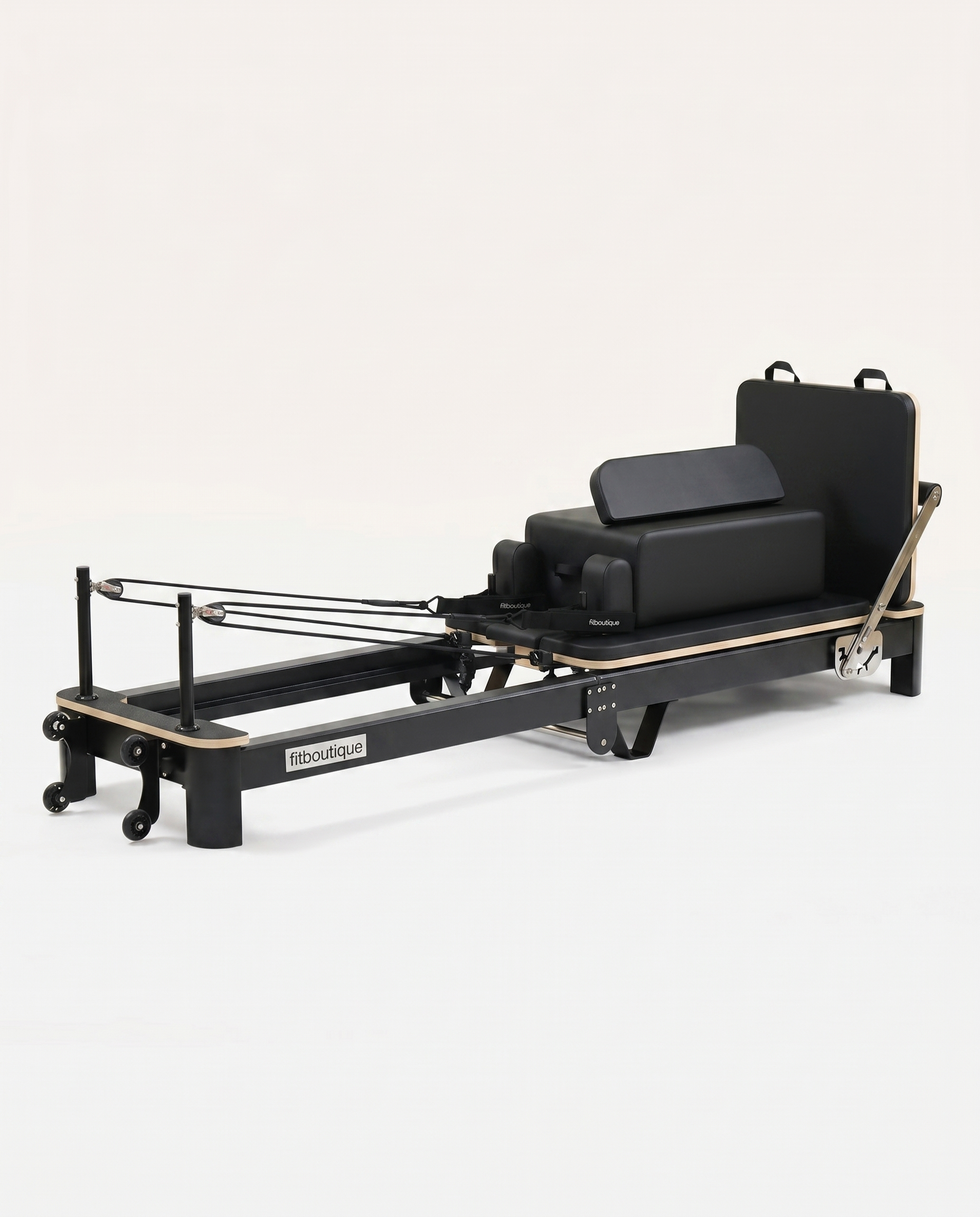
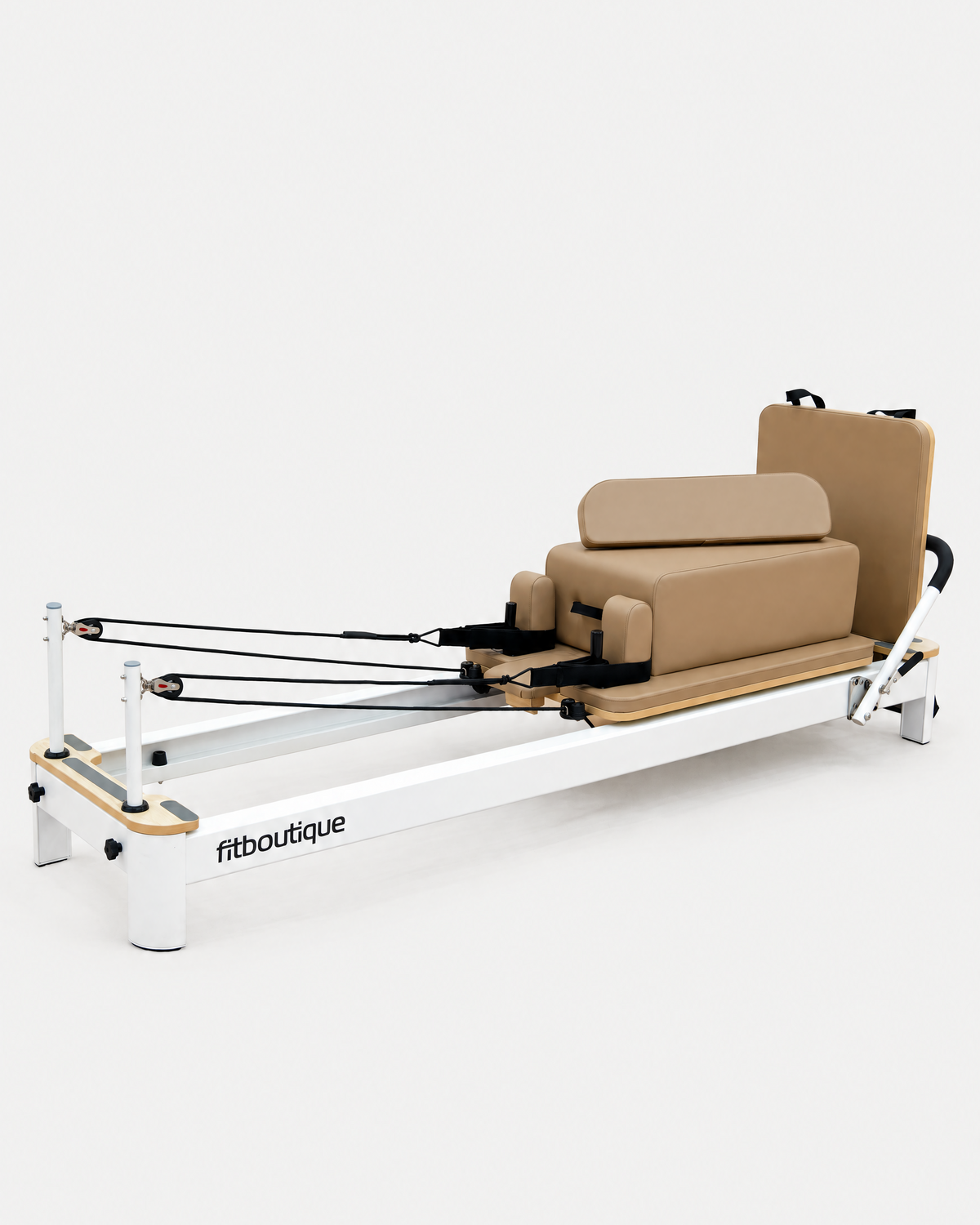
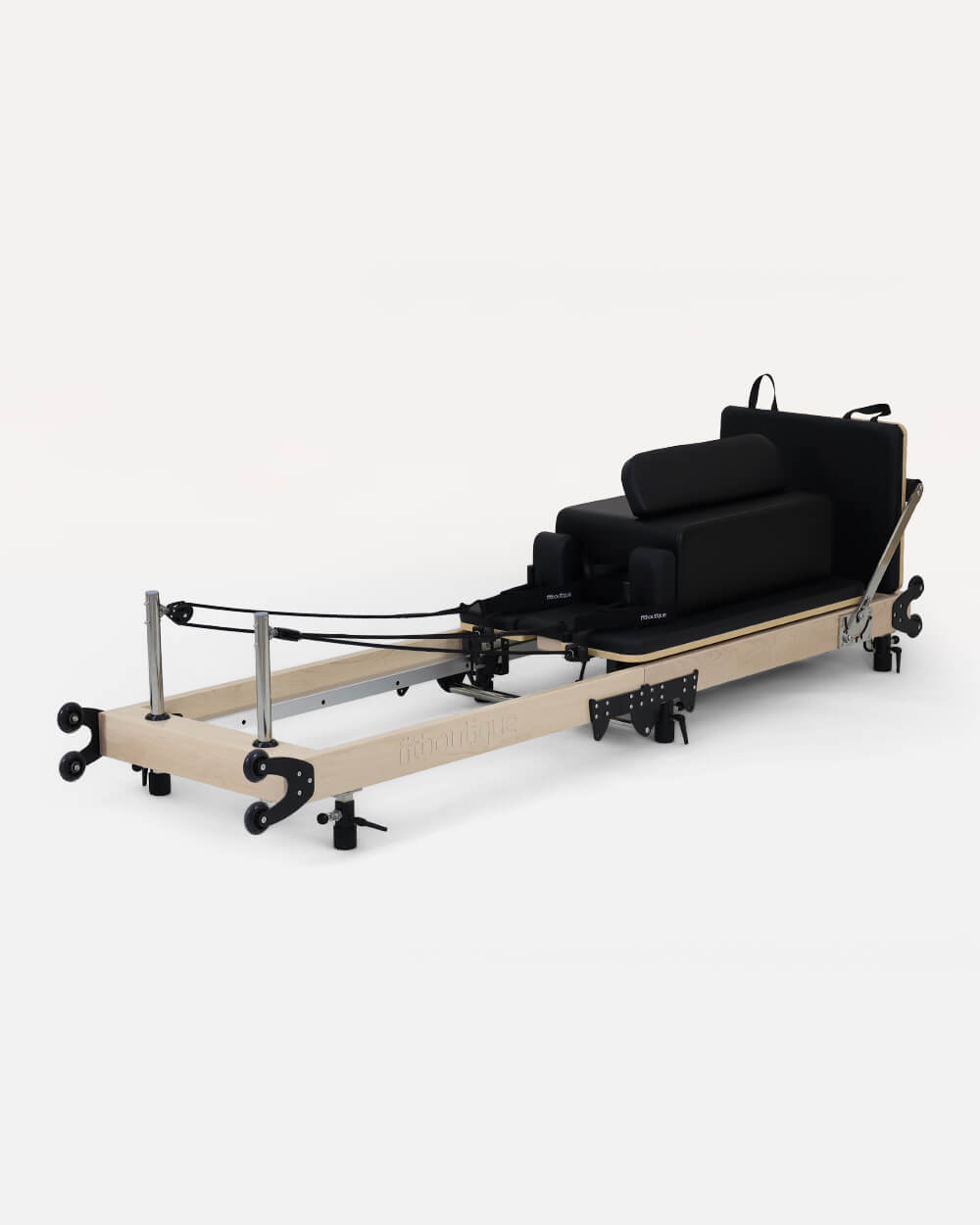
Every FitBoutique reformer arrives assembled with 6 German made springs in graduated tensions, a jumpboard and box included, free delivery Australia wide and a 5 year warranty.
Compare Every Reformer
Written by Ayrah Yuso
I'm part of the FitBoutique team and have a solid passion (and love) for all things exercise related, including Reformer Pilates

















1 comment
I cannot find anywhere a video/description that adequately shows/describes how to adjust the springs on my new sienna reformer- perhaps you can help?
Came with all springs attached to lower bar and is impossible to move
Also what is the second row of attachments for?
Helen
Leave a comment