




How Much Space Do You Need for a Reformer
The number one reason people talk themselves out of a reformer is space, and in my experience they are wrong about it roughly half the time. Not because reformers are small, they are not, but because people measure the machine and forget to measure how they will move around it. So here are the real dimensions of the machines we build, the clearance you genuinely need on each side, and the tape on the floor trick that has saved more than a few customers from ordering the wrong thing.
In this article
The actual numbers, no rounding
These are the real published dimensions of the machines we make, rather than an industry average.
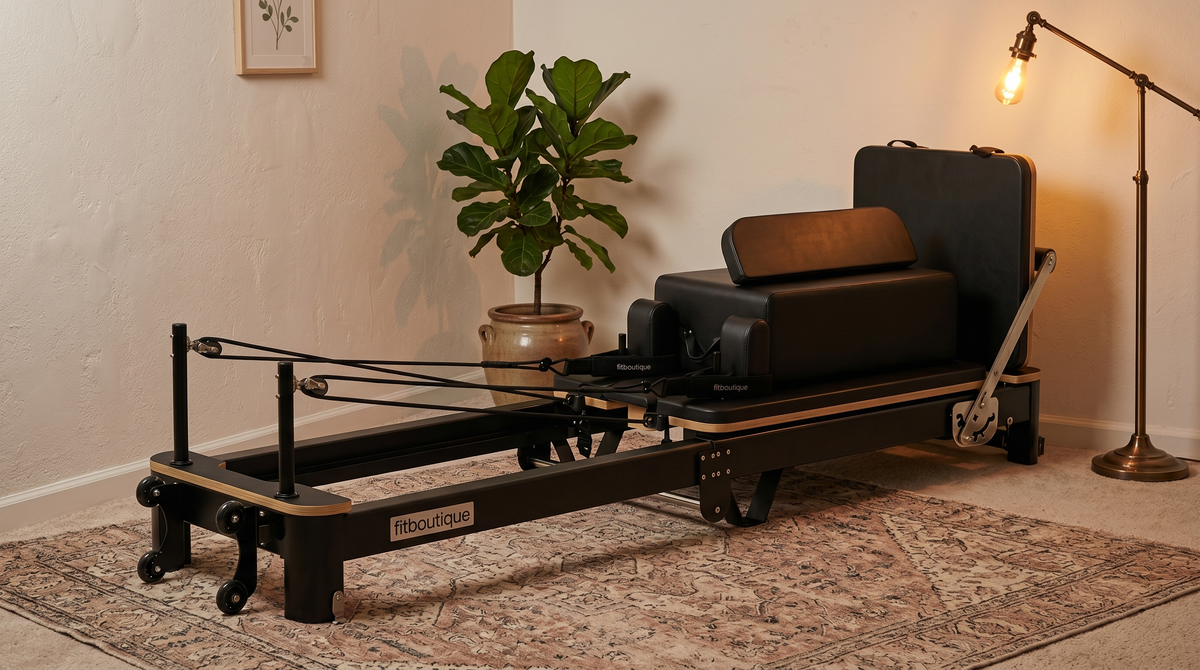
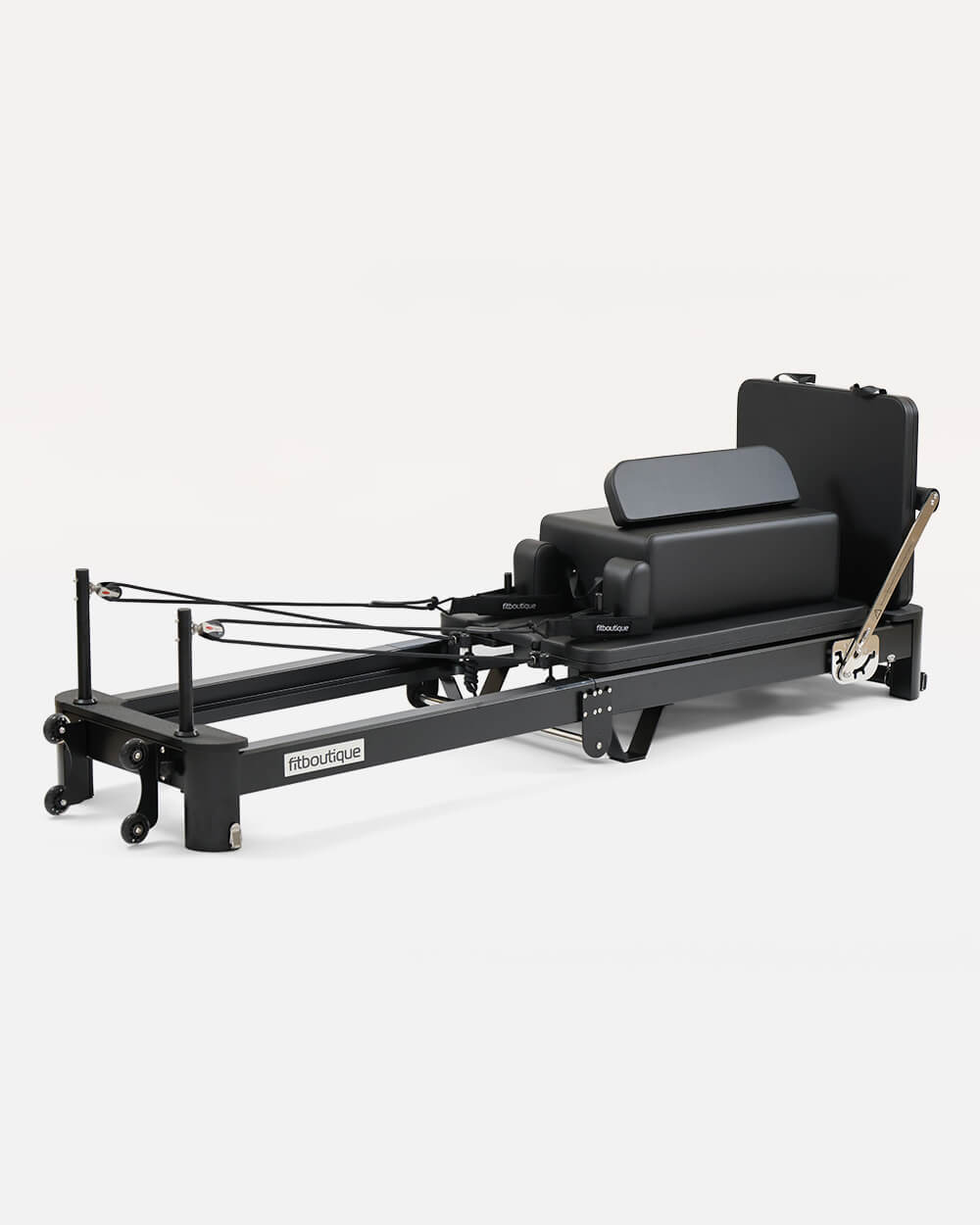
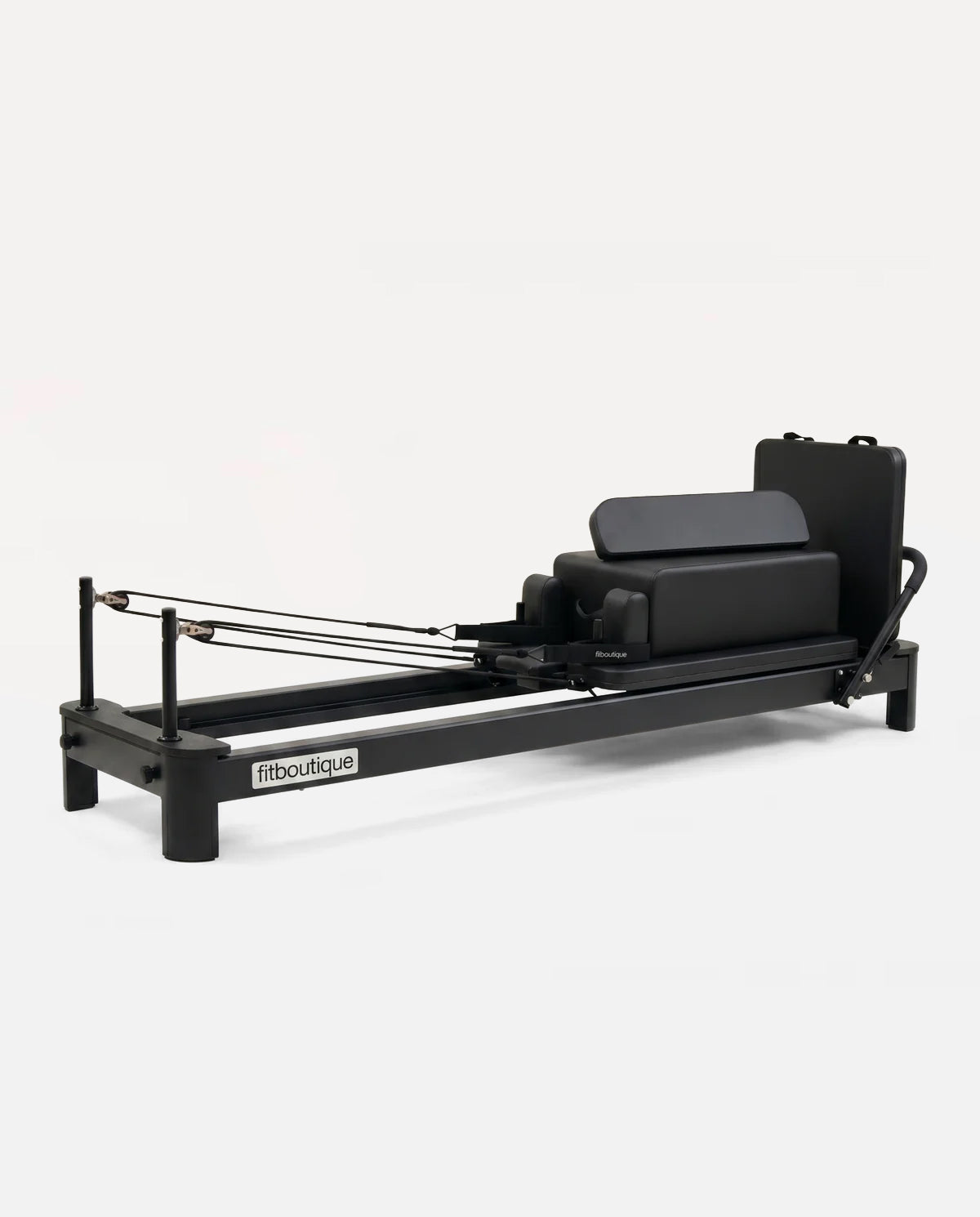
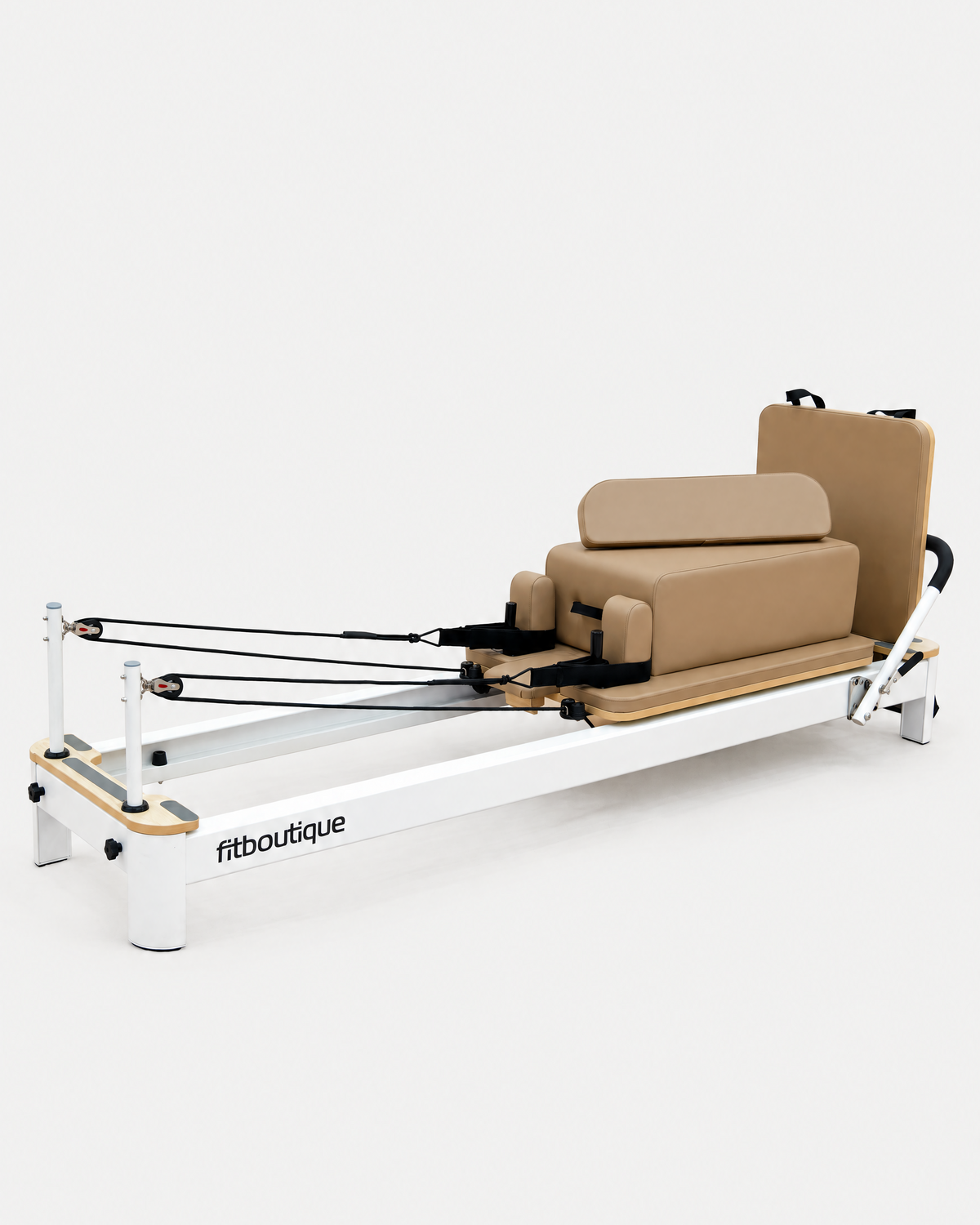
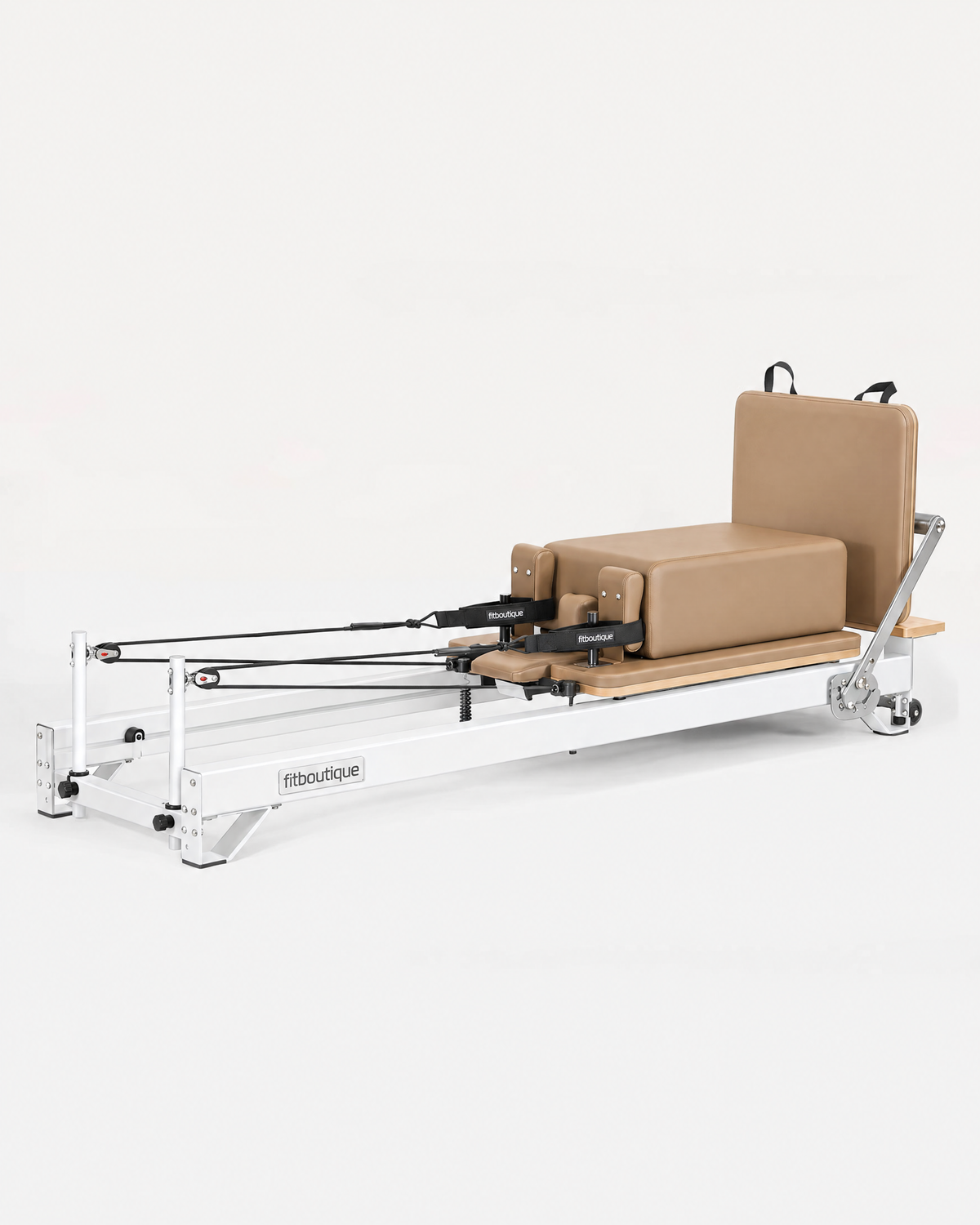
The foldable aluminium models, meaning the Ivory Reformer, the Onyx Fold Reformer and the White Edition Reformer, are 244cm long, 68cm wide and 28cm high. Folded they come down to 130cm by 68cm by 37cm. They weigh 65kg and take a user up to 150kg.
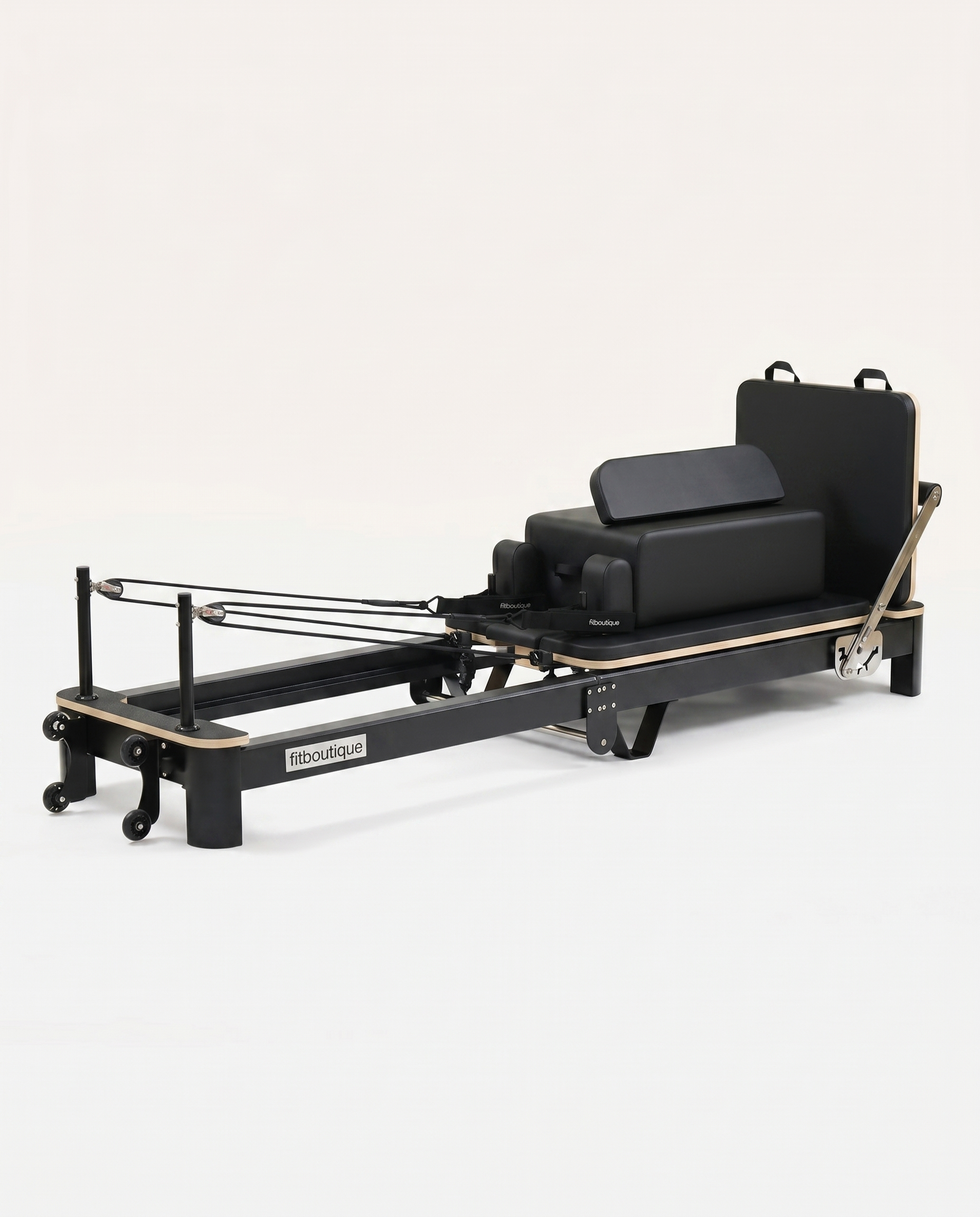
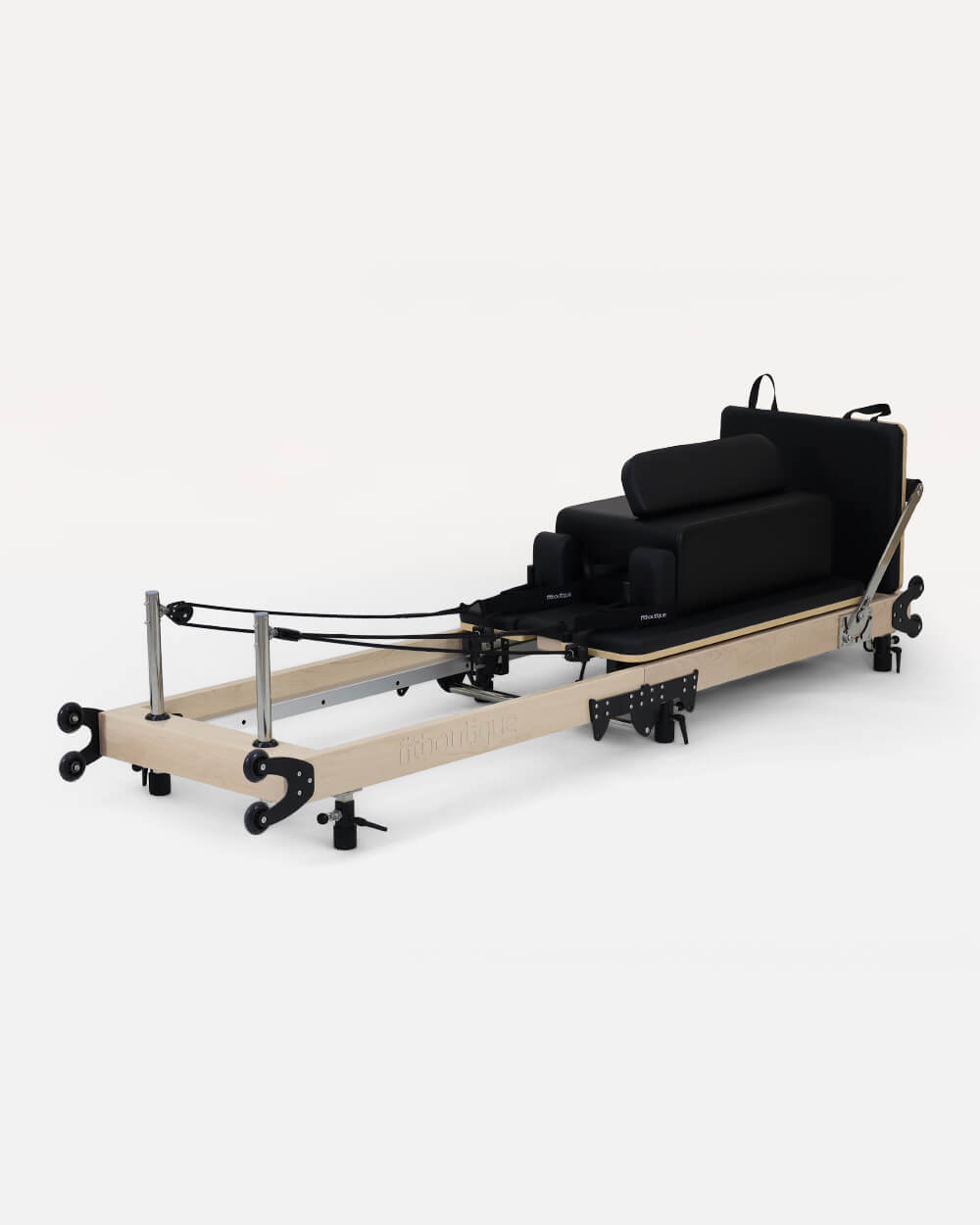
The timber Maple Crest Reformer is 234cm by 63cm by 26.5cm, or 255cm if you measure right across the wheels, which you should. Folded it is 129cm by 66cm by 45cm.
The non folding studio machines are wider, and this is the detail people miss. The Studio Reformer is 244cm by 83cm by 27cm. That extra 15cm of width over the foldable models is a deliberate design choice for commercial use, and it is enough to matter in a narrow room.
The Mega XL Reformer is the longest machine we make with an extended rail and an 8 spring system. If you are considering that one, ask us for the exact figures rather than working off the range above, because it does not fit the same envelope.
Why clearance matters more than length
Here is the mistake I see constantly. Somebody measures their spare room, finds they have 250cm of length, and orders. The machine fits. The workout does not.
You do not just occupy the frame. You reach past the end of it, you step off the sides, your arms travel wide in the strap work, and you need to get to the spring bar without climbing over anything. So plan for 60 to 90cm of clear space on each side, and about 50cm clear at the foot end.
For a foldable model at 68cm wide, that means a working footprint of roughly 3 metres by 1.9 to 2.5 metres. For The Studio Reformer at 83cm, add that extra width on top.
If you can only manage clearance on one side and one end, it is still workable, you just want the open side to be the side you mount and dismount from. Against a wall on one side is fine. Against a wall on both sides is not.
The measurement everyone forgets
Ceiling height, and it catches people out in two very different ways.
For the machine itself, 2.4 metres is a sensible minimum. Most Australian homes clear that comfortably. The exercises that need the height are the ones where you are sitting tall on the carriage with arms overhead, and low ceilings become genuinely limiting there.
The second one is the real trap. If your reformer folds and stores upright, check the folded height against the space you are storing it in. A folded Maple Crest Reformer stands 45cm deep, which sounds tiny until you try to slide it into a wardrobe with a shelf at the wrong height, or under a staircase with a slope. Measure the storage spot, not just the training spot.
Also worth checking, ceiling fans and pendant lights. I have had more than one customer discover this the entertaining way.

If space is genuinely tight, fold it
Folding is the answer for apartments, shared rooms and anywhere the reformer cannot own the floor permanently.
Folded, the aluminium models drop from 244cm to 130cm and stand upright on their wheels, so the footprint roughly halves and the machine tucks against a wall or behind a door. The important thing to understand is that folding costs you nothing in performance. The Ivory Reformer, Onyx Fold Reformer and White Edition Reformer are built to identical specifications to the non folding commercial models, with the same 6 spring system and the same carriage. Only the finish differs between them. The foldable frame includes a centre support bar precisely so nothing is given up structurally.
That said, I will be honest about the tradeoff, and it is not structural. It is behavioural. Every minute between deciding to train and being ready to train is a minute you might not train. If you can leave it out, leave it out. Fold it because you must, not because it seems tidier.
You can compare every folding model in the foldable reformer range.
Studio layouts, plan for flow not just fit
Fitting out a studio is a different problem. You are not solving for whether the machines fit, you are solving for what the room feels like with eight people in it.
Allow 2.5 to 3 metres between reformers front to back, and about 1.5 metres side to side so an instructor can reach any client without asking somebody to move. That side spacing is the one people cut to squeeze in an extra machine, and it is the one clients feel most.
Keep at least one clear walkway that runs the full length of the room. Not for comfort, for safety, because in a full class you need to be able to reach anybody quickly.
The things that lift a room beyond the machines are mirrors on one wall rather than all of them, natural light where you can get it, and something on the ceiling or walls to kill the echo. A hard surfaced room with eight carriages moving is louder than people anticipate. If you are fitting out a business, the commercial reformer range is built for back to back daily classes.

Do not forget where the accessories live
Every reformer we make arrives with a jumpboard and a box, and both need somewhere to go.
The box is 69cm by 41cm by 23.5cm and the jumpboard is 60cm by 70cm by 5cm. The jumpboard slides flat behind a door or under a bed easily. The box is the awkward one, because it is bulky, it is not flat, and it ends up in the middle of the room if you have not planned for it. A lot of people end up using it as a seat, which is fine, just decide that deliberately.
Add space for a mat, resistance bands and rings if you use them. Wall hooks are the cheapest possible fix and they keep the room looking like a room rather than a storage area.
One more practical thing, put a rubber mat under the machine. It protects flooring, particularly timber, and it stops any creep during heavy spring work.
How to measure before you buy
This takes ten minutes and it settles the question completely.
- Tape out the machine. Painter's tape on the floor at the exact dimensions of the model you are considering. Use 244cm by 68cm for the aluminium foldables, 255cm by 63cm for the Maple Crest Reformer including wheels, 244cm by 83cm for The Studio Reformer.
- Tape out the clearance. Another rectangle 60 to 90cm wider on each side and 50cm longer at the foot end. This second rectangle is your real footprint.
- Stand in it and move. Lie down where the carriage would be. Reach overhead. Step off both sides. Walk to where the spring bar sits. This is where people discover the door swings into the space or the radiator is exactly where their head goes.
- Measure the ceiling and the storage spot. 2.4 metres minimum overhead. If it folds, check the folded dimensions against wherever it is going to live.
- Check the path in. Doorway widths, stair turns, lift dimensions. The machine arrives fully assembled in a crate, which is a gift on setup day and a consideration on delivery day.
If your tape rectangle does not work, message us before you decide it is impossible. There is usually a model or a layout that solves it, and we would rather have that conversation before you order than after. Get in touch through the contact page.
A Note From Ayrah
The question I get asked is always about square metres, and the thing that actually determines whether a home setup works is something else entirely. It is which wall the machine points at.
I have watched people put a reformer into a beautifully sized room, facing a blank wall or a cupboard, and quietly stop using it inside two months. I have also seen people cram one into a space that is technically too narrow, facing a window, and train on it for years.
You spend a lot of a reformer session lying on your back looking straight up, and a lot of it sitting upright looking straight ahead. If straight ahead is a wardrobe door, the room feels like a cupboard you exercise in. If it is a window, or even just an open sightline through to another room, it feels like a space.
So when you are taping out your rectangle, do it in two or three orientations before you settle. Same room, same machine, same square metres, completely different experience. It costs nothing to get right at the planning stage and it is genuinely difficult to fix afterwards, because by then the machine is in and you have stopped questioning it.
Frequently Asked Questions
How much space do I actually need for a reformer at home?
Plan for roughly 3 metres by 2 metres of working space and 2.4 metres of ceiling height. The machine itself is 244cm by 68cm for the foldable aluminium models, and the rest is the clearance you need to get on and off, reach overhead and access the spring bar.
What are the exact dimensions of your reformers?
The Ivory Reformer, Onyx Fold Reformer and White Edition Reformer are 244cm by 68cm by 28cm, folding down to 130cm by 68cm by 37cm. The Maple Crest Reformer is 234cm by 63cm by 26.5cm, or 255cm across the wheels, folding to 129cm by 66cm by 45cm. The Studio Reformer is 244cm by 83cm by 27cm and does not fold.
Can a reformer fit in an apartment?
In most cases yes, with a foldable model. Folded, the aluminium machines come down to 130cm long and stand upright on their wheels against a wall or behind a door. The thing to check carefully is not the training space but the delivery path, since doorway widths, stair turns and lift sizes are what cause problems in apartments.
Does a foldable reformer perform as well as a fixed one?
Yes. The Ivory Reformer, Onyx Fold Reformer and White Edition Reformer are built to identical specifications with the same 6 spring system and the same carriage, and the foldable frame includes a centre support bar so nothing is compromised structurally. The only difference between those three is colour and finish.
Can I put a reformer against a wall?
Against a wall on one long side is fine, and plenty of home setups work that way. Make sure the open side is the side you get on and off from, and keep the foot end clear. What does not work is a machine hemmed in on both long sides, because you cannot reach the spring bar or dismount safely.
What ceiling height do I need?
2.4 metres is a sensible minimum for the seated and overhead work. Also check for ceiling fans and low pendant lights over the machine, and if your reformer folds for storage, measure the folded height against wherever you plan to store it.
How much space between reformers in a studio?
2.5 to 3 metres front to back and about 1.5 metres side to side. The side spacing is what lets an instructor reach any client without disrupting the class, and it is the measurement most often cut to fit one more machine in. Keep one walkway clear along the full length of the room.
Do I need space for accessories?
Yes, and people forget this. Every reformer comes with a jumpboard at 60cm by 70cm by 5cm and a box at 69cm by 41cm by 23.5cm. The jumpboard stores flat easily. The box is bulky and will end up in the middle of the room unless you give it a home.
Find The One That Fits Your Room
Foldable, timber and studio grade reformers with published dimensions on every product page. Free delivery Australia wide and a 5 year warranty.
Compare Every Reformer
Written by Ayrah Yuso
I'm part of the FitBoutique team and have a solid passion (and love) for all things exercise related, including Reformer Pilates

















Leave a comment