





Best Pilates Reformers for Studios
A studio reformer has a different job from a home reformer, and most buying guides do not say so. A home machine does 3 or 4 sessions a week. A studio machine does 6 or 8 classes a day, 6 days a week, with a different body on it every 50 minutes and nobody checking the springs between them. A machine that is perfectly good at home can be a liability on a studio floor, and after 5 years supplying studios across Australia I have watched that play out more than once.
This is the guide I wish someone had handed me before I fitted out my first room. It covers which of our reformers suit a studio and why, what a fleet actually costs in floor space, and the handful of decisions that separate studios that are still running the same machines 5 years later from the ones replacing them in 18 months.
In this article
- What makes a studio reformer different
- Fixed frame or foldable
- The Studio Reformer and Space Black
- Onyx and Onyx Fold
- Ivory and Sienna, the light finishes
- Maple Crest and Perlino, the timber machines
- Mega XL, for tall clients and athletes
- How many machines fit in your room
- Building the fleet
- What running a fleet actually costs
- Frequently asked questions
What makes a studio reformer different
Three things, and only one of them is obvious.
The obvious one is durability. A studio machine sees more use in a month than a home machine sees in 2 years, so every part that moves, the carriage wheels, the springs, the rope and strap hardware, the footbar adjustment, is being asked to survive thousands of cycles rather than hundreds. The question to ask is not whether a machine is well built, it is whether the wear parts are available in Australia when they eventually need replacing. Ours are held in Melbourne, which matters more than any spec on the page.
The second is consistency across machines. In a class of 8, every reformer needs to feel the same, or the instructor spends the class explaining why the person on machine 4 finds the footwork harder. That means the same spring set, the same carriage travel and the same footbar positions on every unit, which is an argument for buying one model rather than a mix.
The third is what the machines say about the room. Clients photograph reformers. A fleet that matches your finish becomes your marketing, and a fleet that does not match becomes the thing you notice in every photo. It sounds superficial until you have paid for an interior designer and then filled the room with 3 different machines.
Fixed frame or foldable
This is the first decision and it is mostly decided by your room.
A fixed frame reformer sits lower and wider, has no hinge in the rails, and is the more stable platform under fast, loaded movement. If your machines are never going to move, a fixed frame is the better studio machine and there is no argument for a foldable.
A foldable earns its place when the room does more than one job. Yoga in the evening, mat work on Sundays, a hall you hire rather than own. Our foldables fold to 130 centimetres long and stand on their end, so 8 of them clear a room in about 10 minutes. The compromise is a hinge, and a hinge is one more thing to check. In practice ours hold up fine under studio use, but if you do not need to fold, do not.
The Studio Reformer and Space Black
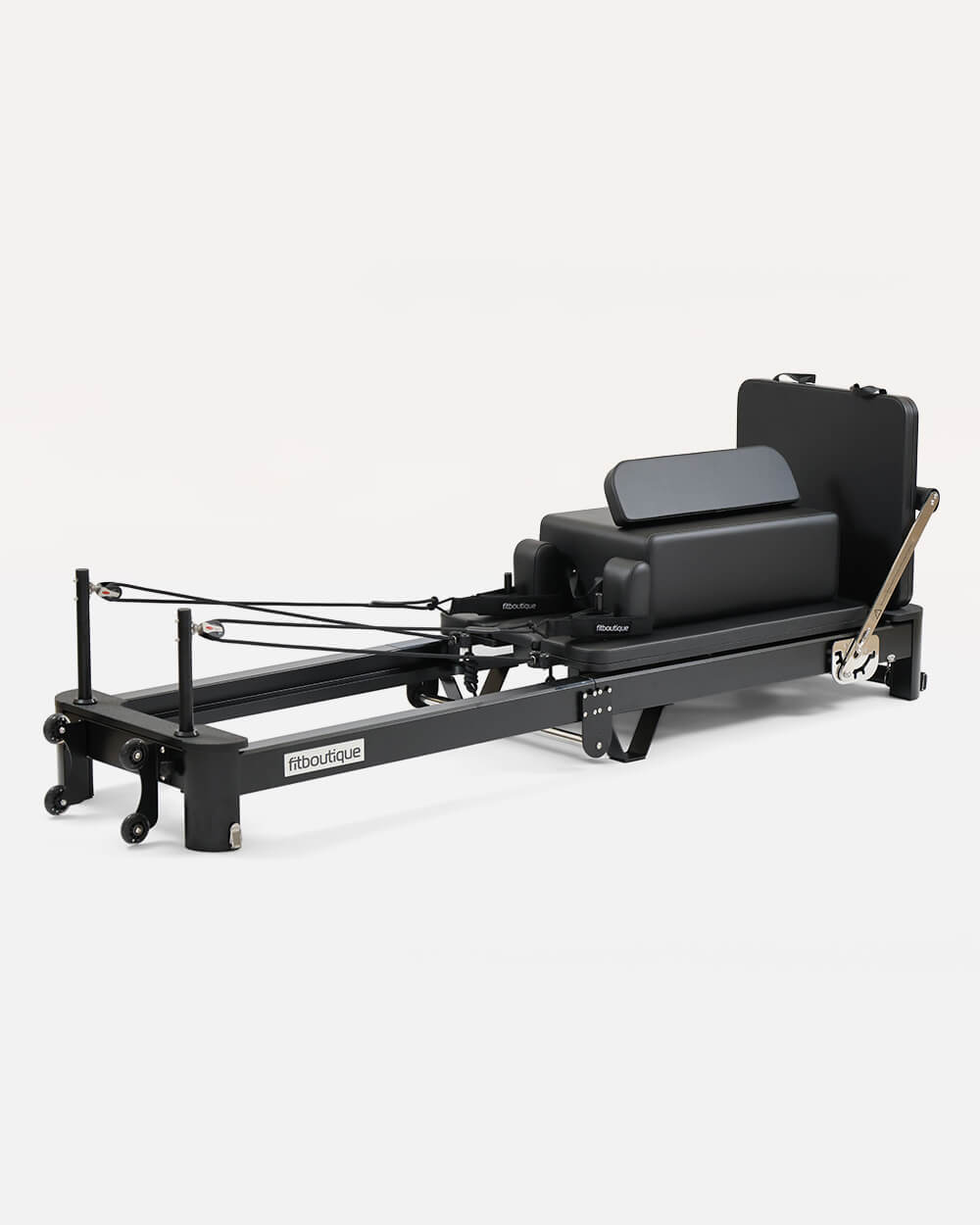
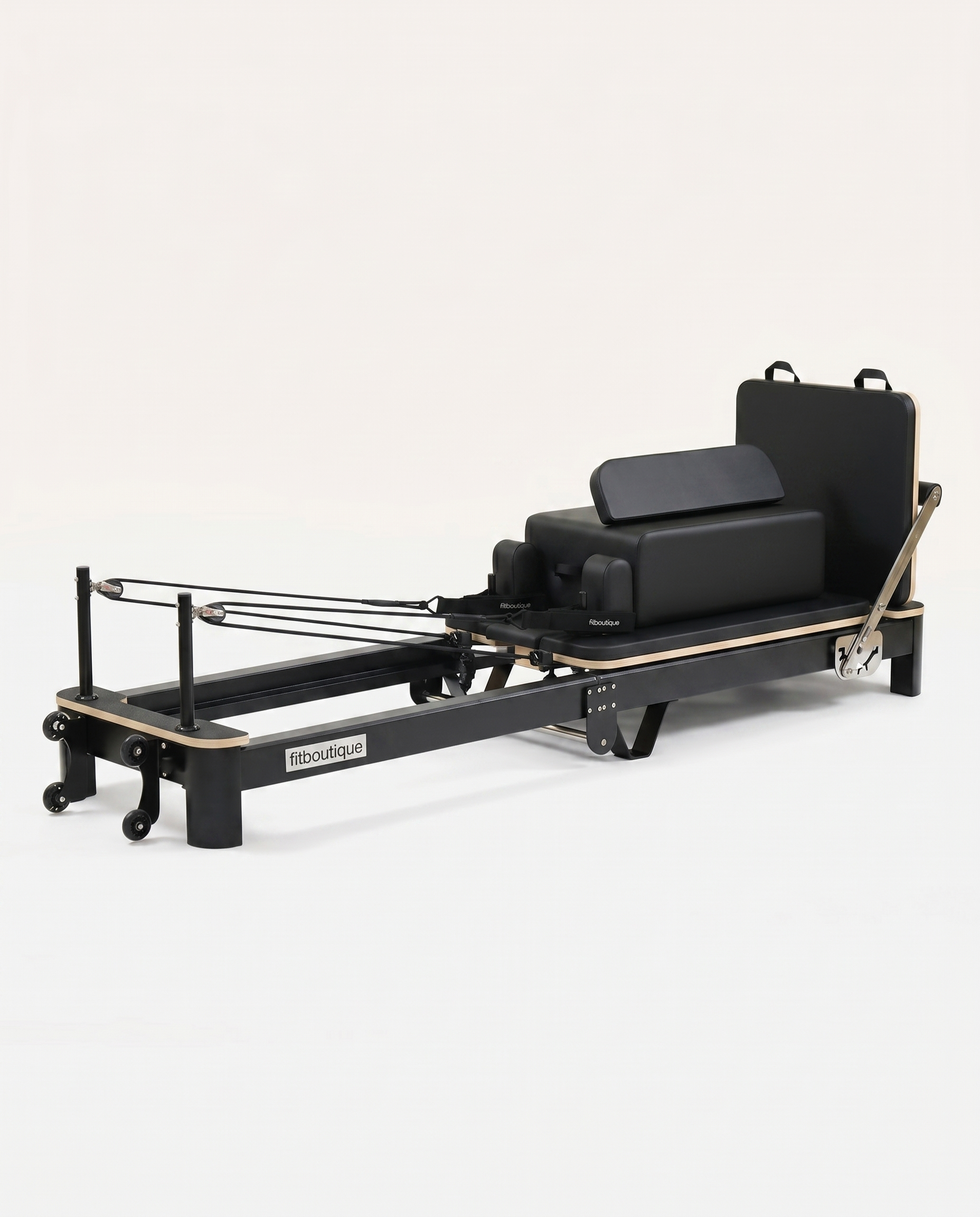
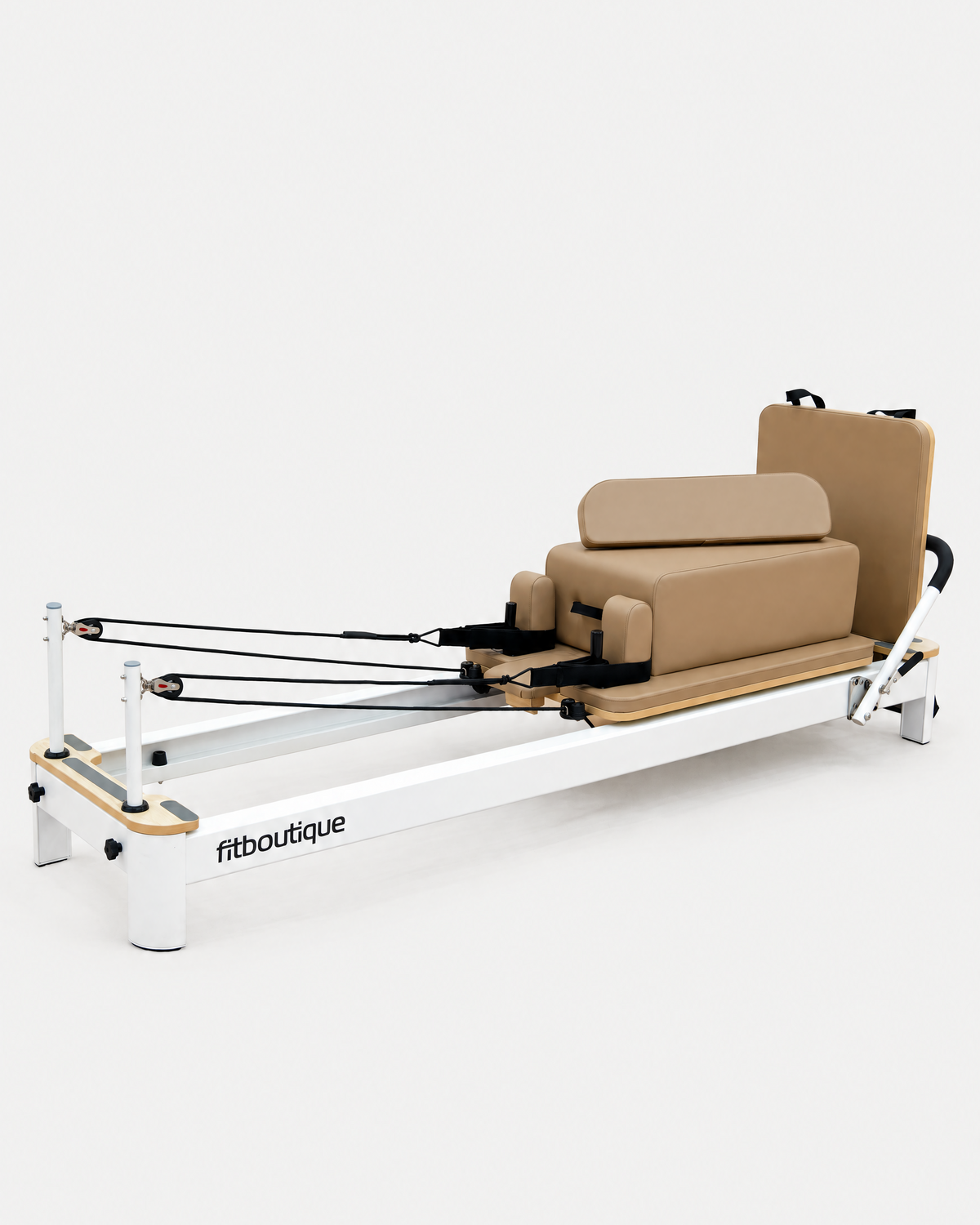
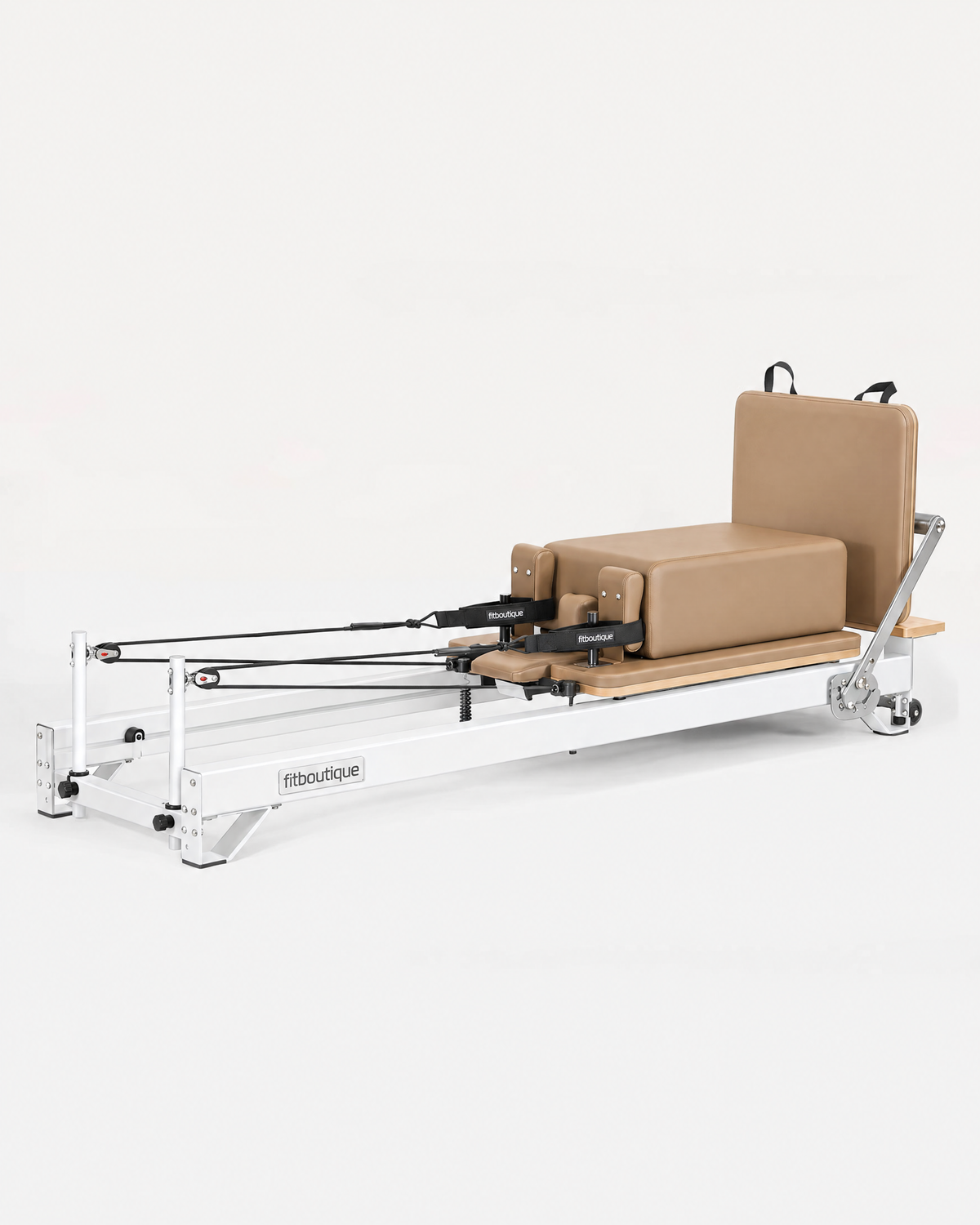
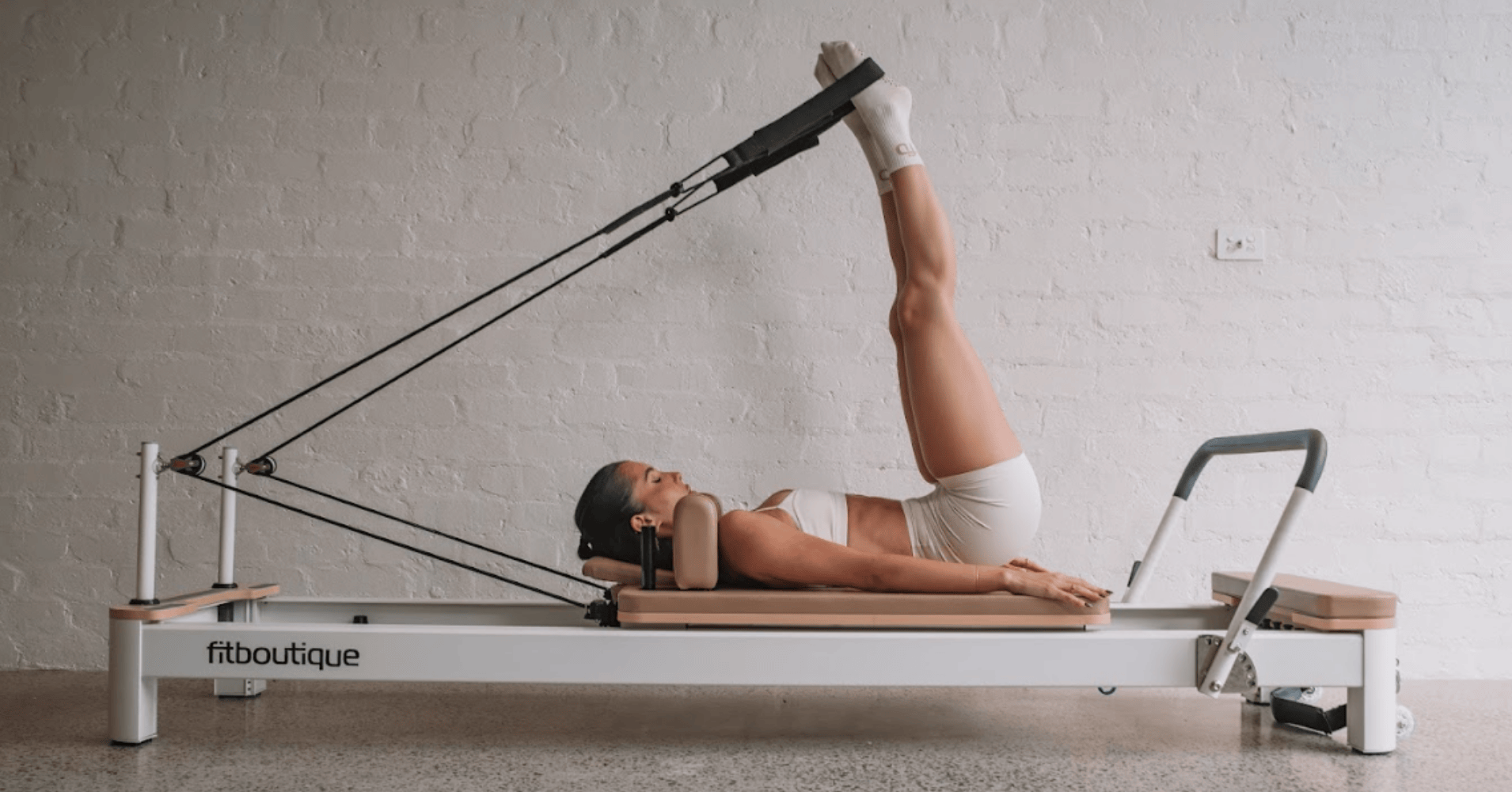
The Studio Reformer and Space Black are the same commercial machine in 2 finishes, white frame with beige upholstery or black throughout, and both are $2,999. They use our widest frame, 244 centimetres long and 83 wide, sitting 27 centimetres off the floor, with the full 6 spring system. The width is the point. A wider, lower platform is steadier under jumpboard work and side lying work, which is where a narrow machine gives itself away in a busy class.
This is a permanent setup machine. It does not fold, it is not meant to move, and it is the one I point studios to when they tell me they run back to back classes all day. Space Black in particular hides wear and reads premium in photos, and a room of 8 of them looks like a serious studio. The Studio Reformer in white and beige does the same job for a brighter room.
If you want one machine for a dedicated studio floor and do not want to think about it again, this is it.

Onyx and Onyx Fold
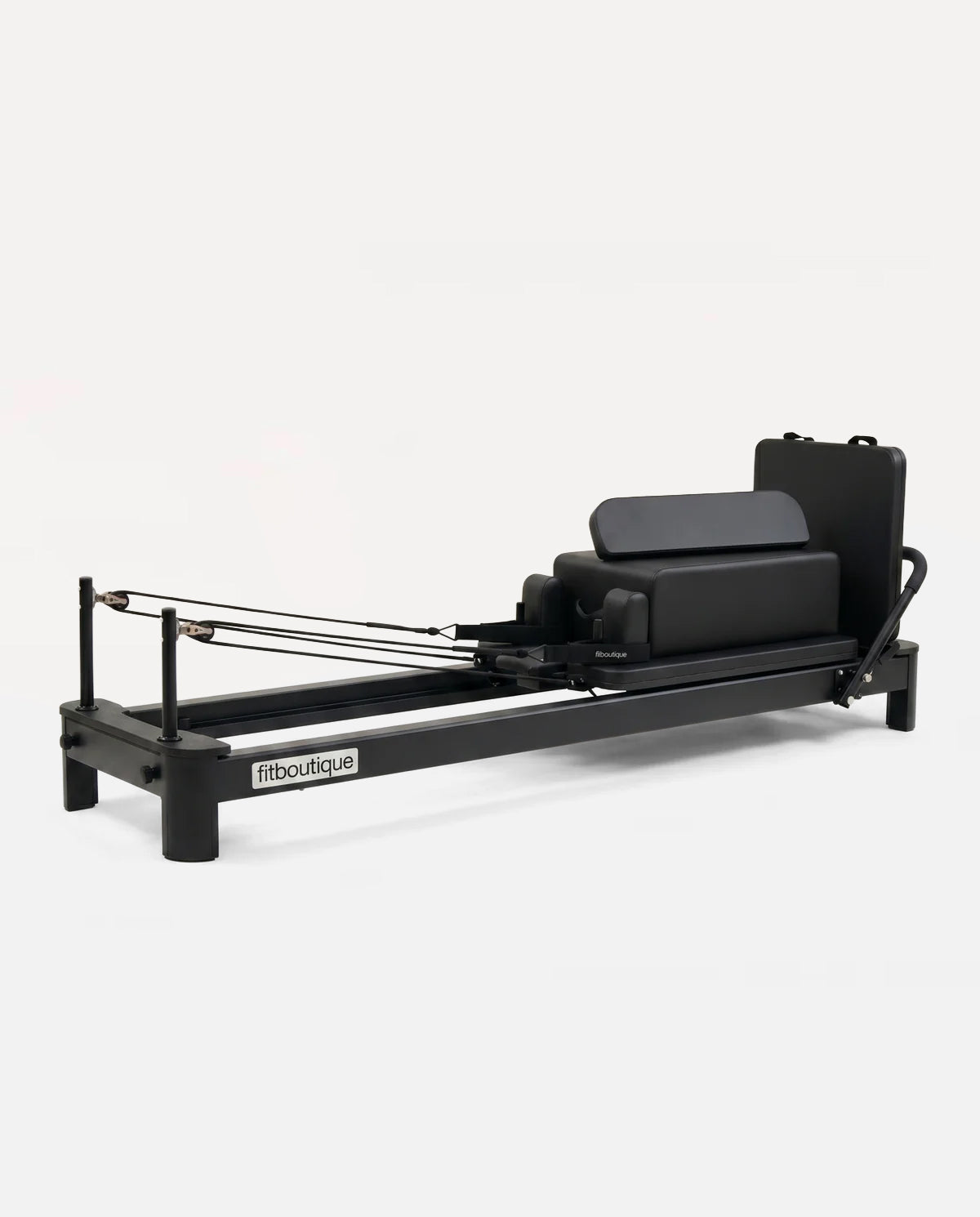
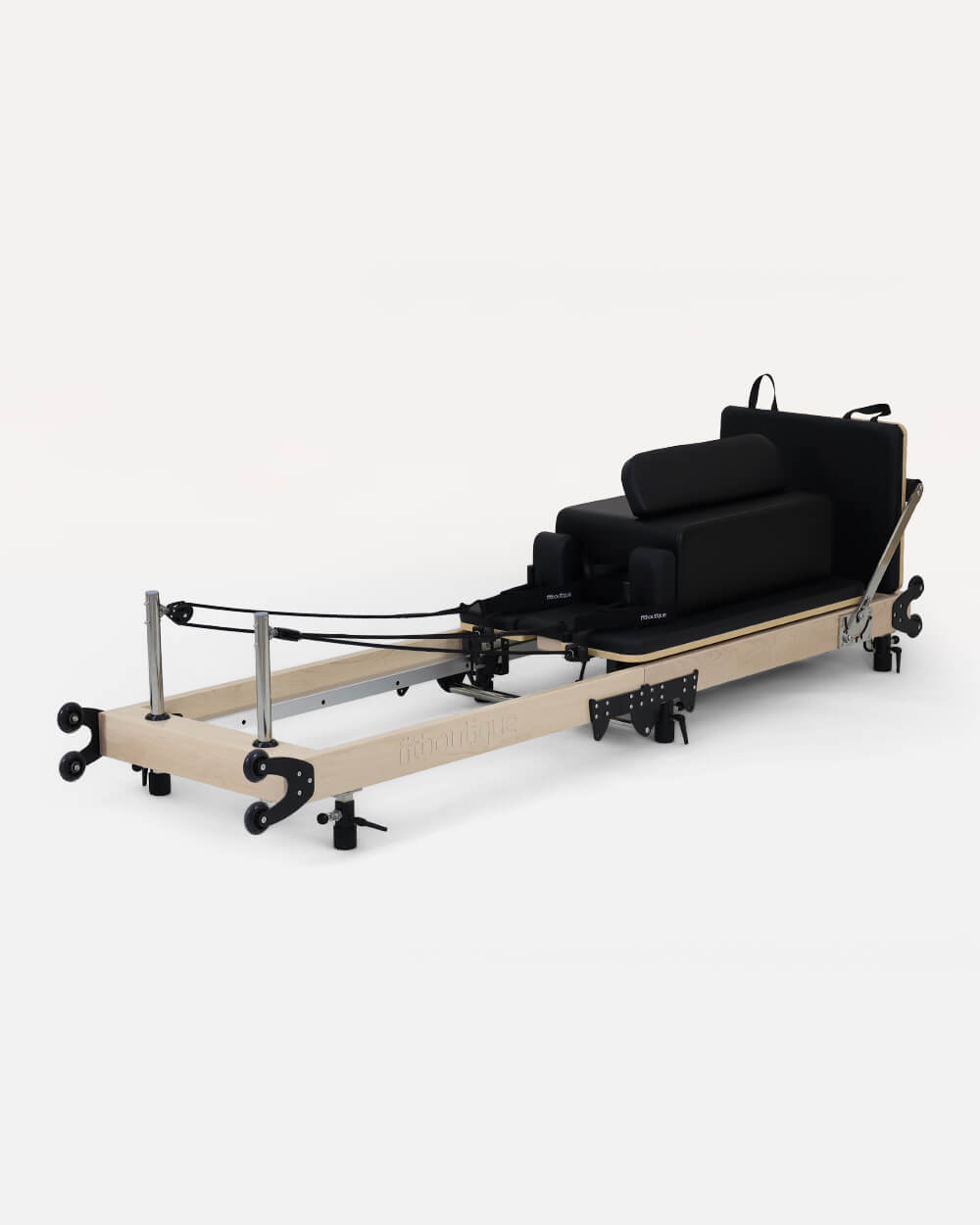
The Onyx Reformer, $2,799, is the fixed frame machine most of our studios run, and it is the one I would call the workhorse. All black, 6 German made springs, a smooth carriage, and a frame that has been on studio floors long enough for me to be confident about how it ages. It is narrower than the Studio Reformer, which is exactly why some studios prefer it, because a narrower machine means one more reformer in the same room.

The Onyx Fold Reformer, $2,499, is the same look with a folding frame. It is 244 by 68 by 28 centimetres open and 130 by 68 by 37 folded, and it weighs 65 kilograms, which one person can tip and wheel. For a multi purpose room that runs reformer classes 3 mornings a week and something else the rest of the time, it is the machine that makes the business model work. It is also the one I own at home.

Ivory and Sienna, the light finishes
If black would make your room feel heavy, these are the 2 machines to look at, and they map directly onto the 2 above.
The Ivory Reformer, $2,499, is the Onyx Fold in an ivory finish. Same folding aluminium frame, same dimensions, same 6 spring system, same centre support bar and wheels for upright storage. A fleet of Ivories in a white room is the look half the boutique studios in Melbourne are going for right now, and it is a good look.
The Sienna Reformer, $2,799, is the Onyx in a white frame with beige upholstery. Fixed frame, full aluminium, 6 springs, built for a permanent setup. If you want the workhorse but the room is light and bright, this is the same machine in the colour that suits it.
The trade off with any light finish is that it shows marks a black frame hides. It wipes clean, but you will be wiping. If your clients arrive in fake tan on a Saturday morning, think about that before you order 8 of them.

Maple Crest and Perlino, the timber machines
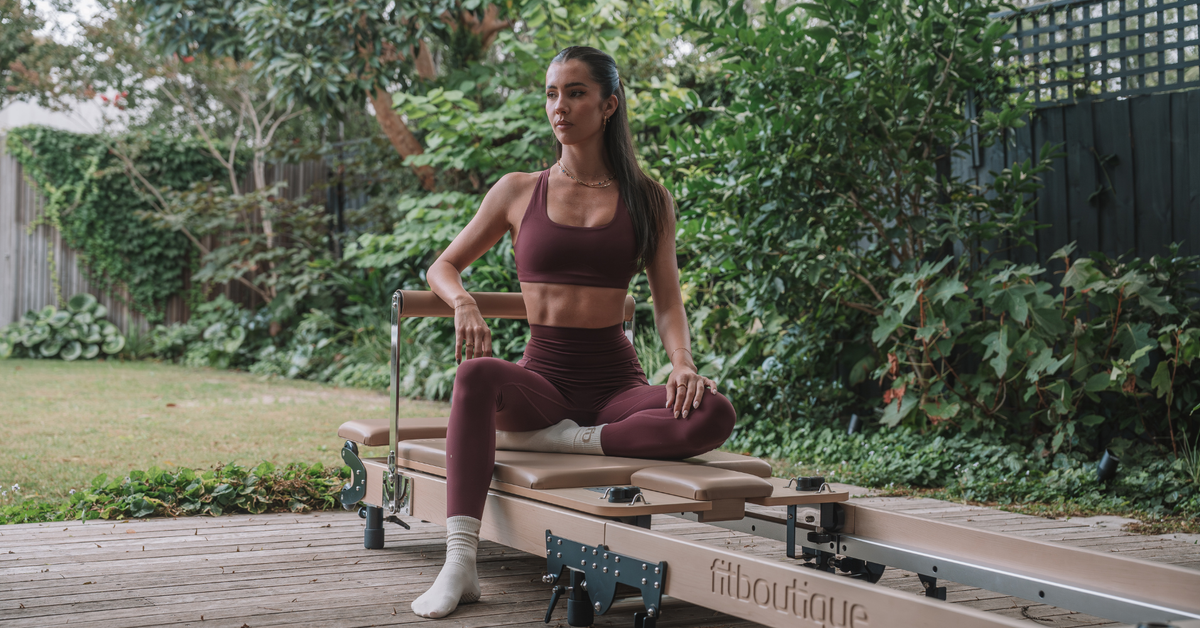
These are the machines clients photograph, and if your brand leans warm and natural rather than clinical, timber sets the tone of a room in a way an aluminium frame never will.
The Maple Crest Reformer, $2,199, is a foldable reformer in full maple timber, 234 centimetres long and 63 wide, with 5 commercial grade springs rather than 6, and it folds to 129 centimetres for upright storage. Upholstery comes in black or beige. It is the most affordable reformer in the range and the one people assume is the most expensive when they walk in, which is a useful combination for a studio.
The Perlino Reformer, $3,399, is our newest design, a full maple frame built around the Max Pro spring system developed specifically for it. It has the most grounded, solid feel of anything we make and the most refined finish, and it is the machine for a studio that wants the best looking room on the street and is prepared to pay for it.
A word of caution on timber and light finishes in a studio: they are beautiful and they are more work to keep beautiful. If you have the staff to wipe machines between classes, they reward it. If you do not, go Onyx or Space Black. You can see the timber options together in the maple wood range.

Mega XL, for tall clients and athletes
The Mega XL Reformer is a different category. It is the longest reformer we make, built in aluminium and steel with an 8 spring system, and it exists because standard reformers are too short for tall clients and for advanced athletic work. If your studio trains footballers, rowers, or anyone over about 190 centimetres, one Mega XL in the room solves a problem you will otherwise hear about every week. It is $11,499, so it is not a fleet machine for most studios. It is the one machine in the corner that lets you say yes to clients other studios have to turn away.
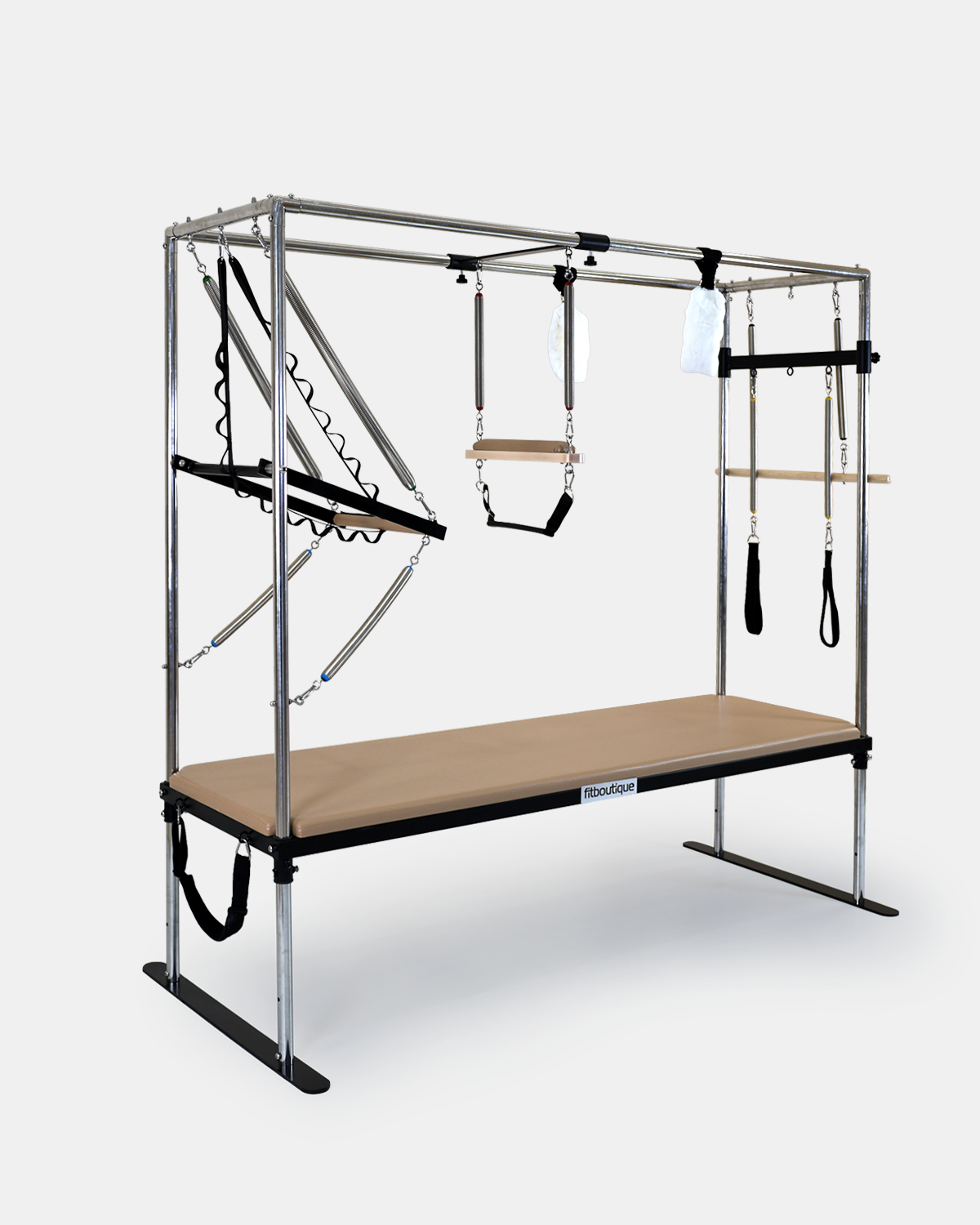
If you run rehabilitation or clinical Pilates, the Cadillac is the natural companion piece, but that is a tower rather than a reformer and deserves its own article.
How many machines fit in your room
Allow a 2 by 3 metre zone per reformer. That gives you the machine, room to get on and off from the side, and space for the instructor to move between rows. You can squeeze it, and plenty of studios do, but under 2 metres of width per machine your instructors cannot correct someone without climbing over the next client.
So a 6 by 8 metre room takes 8 machines comfortably in 2 rows of 4. A 5 by 6 metre room takes 6 with a bit of care. Most boutique studios in Australia run 6 to 8 reformers, which is not a coincidence. It is the number that fits in the room a boutique studio can afford to lease, and it is also the class size where one instructor can still see everyone.
Two practical notes. Reformers have wheels at one end, so plan the layout with the wheel end towards the wall you will never need access to. And leave a full metre at the head end of at least one row, because that is where the jumpboards and boxes live between classes, and nobody plans storage for them until the first week.

Building the fleet
- Decide fixed or foldable from the room, not the price. If the machines never move, fixed frame. If the room does 2 jobs, foldable. The price difference is small compared with the cost of getting this wrong.
- Pick one model and one finish. Matching machines mean matching springs, matching carriage feel and photos that look like a studio rather than a garage sale. Add a Mega XL in the corner if you need one, but keep the fleet uniform.
- Order one first. Run it for a month in the actual room with actual clients before you order the other 7. You will learn something about spacing, storage or finish that you cannot learn from a product page.
- Count the accessories. Every one of our reformers arrives with a jumpboard and box included. Decide where 8 boxes go when they are not on the machines.
- Use the finance if it helps cash flow. Interest free plans are available, and for a new studio, spreading the fleet cost across the first year of memberships is often the difference between opening with 8 machines and opening with 4.
- Buy a spare spring set. A set of Pro Springs is $249 and it means a snapped spring on a Saturday morning is a 5 minute fix rather than a cancelled class.
What running a fleet actually costs
The purchase is the part everyone budgets for. Here is the part they do not.
Springs are the main wear item on any reformer, and on a studio machine they should be inspected monthly and replaced on a schedule rather than when one fails. German made springs, which all of ours use, last far longer than the cheap alternatives, but nothing under daily load lasts forever. Budget for a full set per machine every couple of years under heavy use and you will never be surprised.
Upholstery is the second. Wipe machines between classes, not at the end of the day, and it will last years. Leave sweat on it and it will not. This is the honest reason I steer busy studios towards darker finishes.
Every FitBoutique reformer comes with a 5 year warranty, free delivery Australia wide, and arrives fully assembled, which for a studio means 8 machines on the floor and ready the day they arrive rather than a weekend with an Allen key. Spare parts are held in Melbourne. If you are comparing us with an imported machine at a similar price, ask the other supplier where their spares are and how long they take to arrive. That answer will tell you more than the spec sheet.
Browse the commercial reformer range built for daily classes, or see every model in the full reformer collection. If you would like help planning a room, get in touch with your dimensions and I will tell you honestly how many machines fit and which ones I would put in it.
A Note From Ayrah
The best studio fit out I have been part of started with one machine.
The owner had the budget for 8 and the room measured for 8, and she ordered one Onyx and ran it for a month in the corner of a room that was otherwise still a yoga studio. By the end of the month she had changed 3 things. She moved the rows so the wheel ends faced the window wall, because that was the wall nobody walked along. She swapped the plan from Ivory to Onyx because the yoga clients arrived with oils on their hands and the one white machine she borrowed to compare was showing it. And she cut the order from 8 to 7 to leave a metre at the head of the back row for the boxes, which she had not thought about at all until 4 of them were on the floor.
None of those were expensive changes at that point. All 3 would have been expensive at 8 machines. Buy one first. It is the cheapest month of research you will ever do.
Frequently Asked Questions
Which FitBoutique reformer is best for a commercial studio?
For a dedicated floor running classes all day, The Studio Reformer or Space Black, which are the same wide, low commercial frame in 2 finishes, or the Onyx if you need a narrower machine to fit one more in the room. All 3 are fixed frame machines with 6 German made springs and a 5 year warranty.
Can foldable reformers handle studio use?
Yes, and they are the right choice when the room is used for more than one thing. The Onyx Fold and Ivory fold to 130 centimetres and one person can move them. If the machines never need to move, a fixed frame is the steadier platform and there is no reason to choose a foldable.
How much space does each reformer need?
Allow a 2 by 3 metre zone per machine, which covers the reformer, side access and room for the instructor to move between rows. A 6 by 8 metre room takes 8 machines in 2 rows of 4.
How many reformers do most studios run?
Six to 8. That is what fits in a typical boutique studio lease and it is also the class size one instructor can supervise properly.
Should all the machines in a studio be the same model?
Yes. Matching machines mean every client feels the same spring tension and carriage travel, which makes classes far easier to teach, and a uniform fleet photographs like a studio. Add a single Mega XL for tall clients if you need one, but keep the rest identical.
Do the reformers arrive assembled?
Yes. Every FitBoutique reformer is delivered fully assembled, free Australia wide, with a jumpboard and box included. For a studio that means the fleet is on the floor and ready the day it arrives.
What maintenance does a studio reformer need?
Wipe upholstery between classes, inspect springs monthly and replace them on a schedule under heavy use, and check strap and rope hardware weekly. Keep a spare set of Pro Springs on site so a failed spring never cancels a class. Spare parts for every model are held in Melbourne.
Is finance available for a fleet purchase?
Yes, interest free plans are available. For a new studio it often makes the difference between opening with a full room and opening with half of one.
Fit Out Your Studio
Commercial grade reformers delivered assembled, free Australia wide, with German made springs, jumpboard and box included and a 5 year warranty.
See The Commercial RangeWritten by Ayrah Yuso
I'm part of the FitBoutique team and have a solid passion (and love) for all things exercise related, including Reformer Pilates

















Leave a comment