




What Muscles Does Reformer Pilates Work?
Every article about this gives you the same thing. A list of muscles, some Latin, a diagram with the abdominals shaded in. I have written that article myself and I no longer think it is the useful answer.
The list is not wrong. Reformer Pilates does work all of it. But knowing that footwork trains your quads, hamstrings and glutes tells you almost nothing about whether your footwork is any good, and after years of doing this and watching other people do it, the gap between the list and the reality is where all the interesting stuff lives.
So here is the list, because you came for it. And then here is what I actually think matters.
In this article
The core, and the part people get wrong
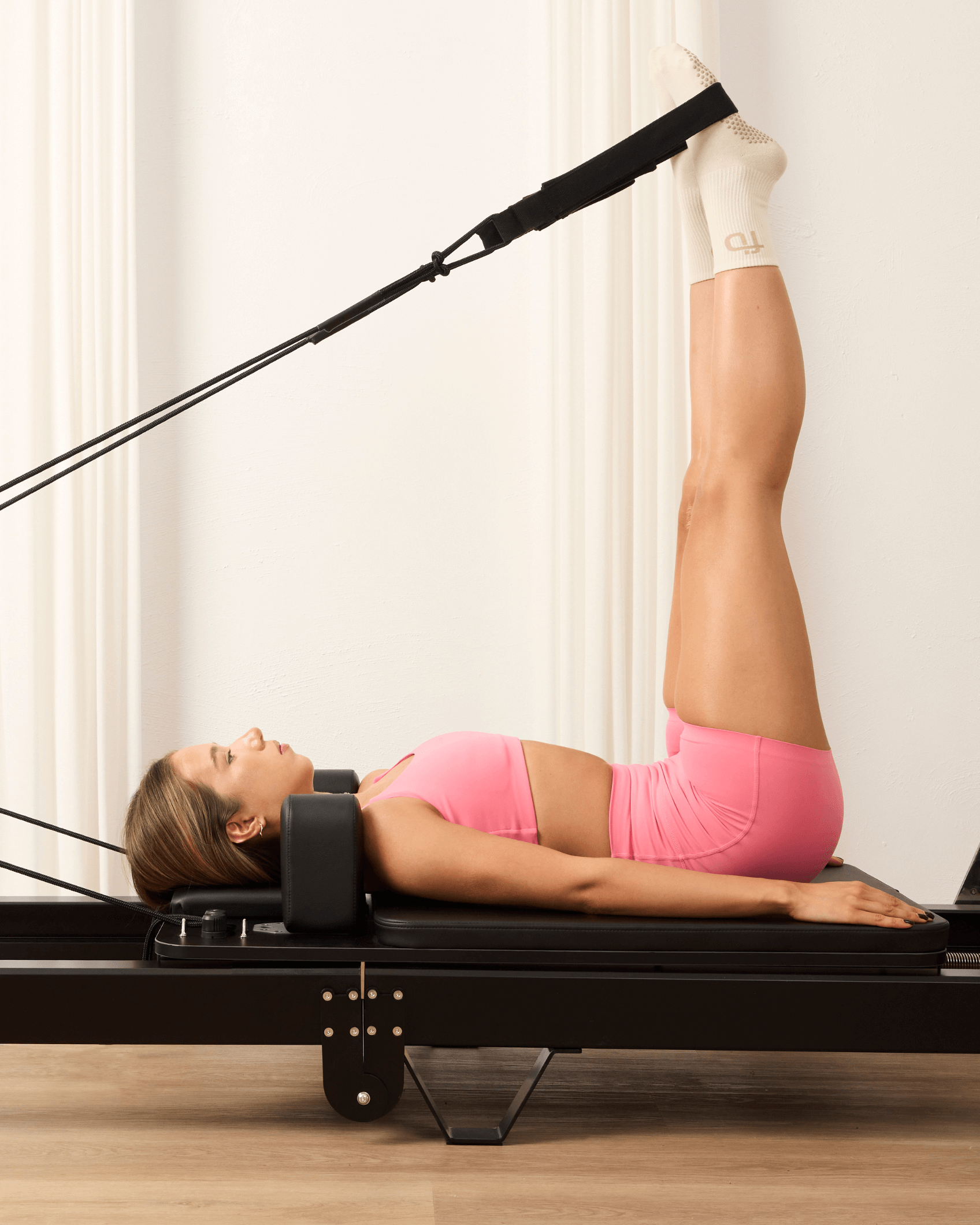
Every reformer exercise is a core exercise, because the carriage is unstable and something has to hold you steady while your arms and legs move. That is the actual mechanism, and it is why people who have never done an abdominal exercise in their life get sore through the middle after their first session.
The muscles involved are the rectus abdominis at the front, the obliques down the sides for rotation and side bending, the transverse abdominis wrapping underneath like a belt, and the multifidus and erector spinae running up the back of the spine. That last pair is the half everyone forgets. Your core is not the front of your body, it is a cylinder, and training only the front of a cylinder is how people end up with a strong six pack and a sore lower back.
The hundred is the exercise people name here, and it does the job. But the honest version is that a good long stretch or a slow single leg footwork sequence asks more of your deep core than the hundred does, because the load is unpredictable and your body has to respond rather than just hold.
Legs and glutes
Footwork is the biggest lower body driver on the machine, and it hits the quadriceps at the front of the thigh, the hamstrings at the back, the adductors and abductors on the inside and outside, and all 3 glutes.
Worth separating those glutes out, because people treat them as one muscle. Gluteus maximus is the big one that extends the hip and does the obvious work. Medius and minimus sit higher and to the side, and their job is keeping your pelvis level. They are small, they are unglamorous, and they are the reason a single leg exercise feels wobbly rather than heavy. If your knees track inwards during footwork, that is usually a medius problem rather than a quad problem.
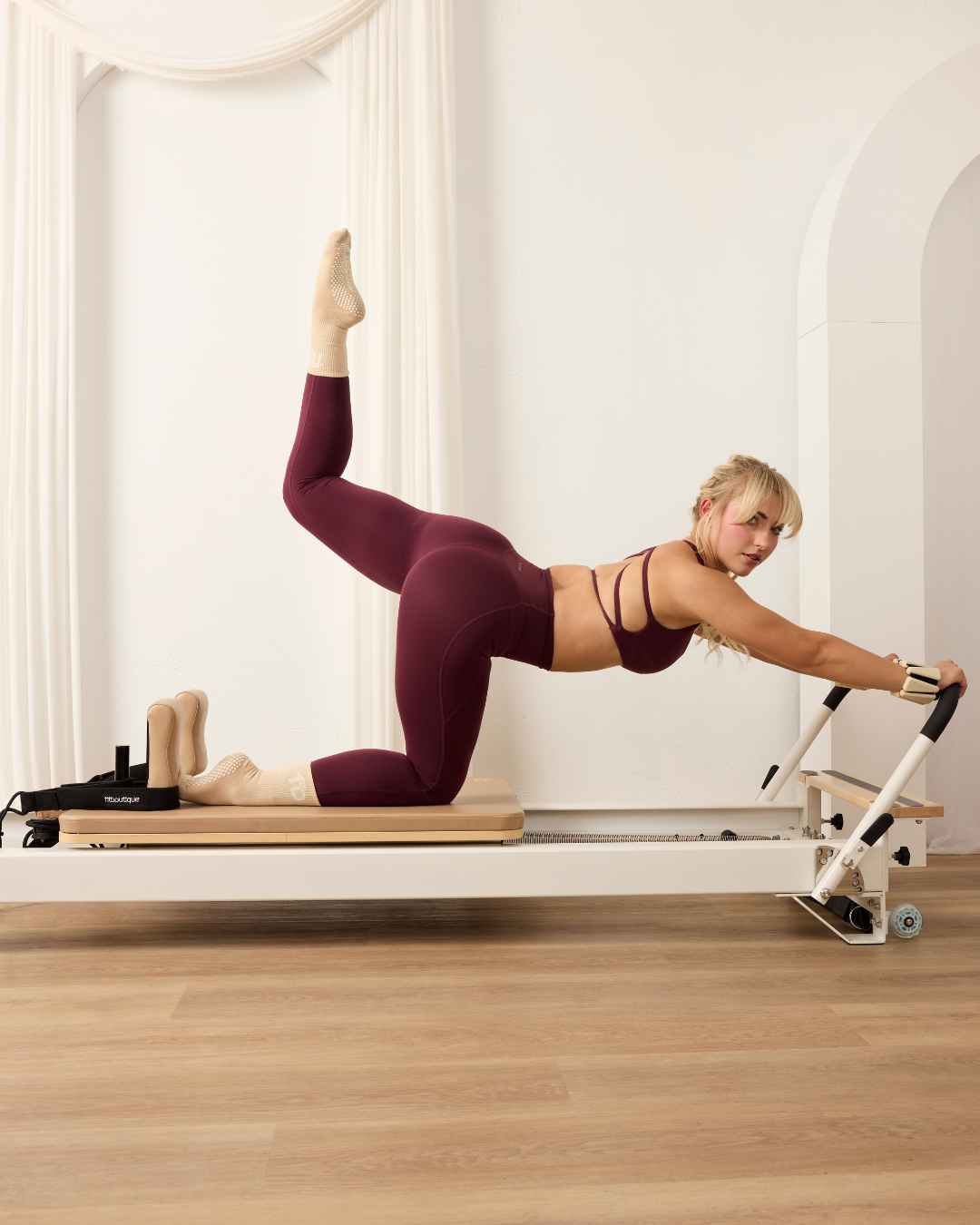
The reformer is unusually good at this because the carriage will not let you cheat sideways. On a leg press you can grind through with your quads and nothing stops you. On a reformer, if your pelvis drops, the carriage tells you immediately.
Arms, shoulders and back
This is the part that surprises people, because reformer work does not look like upper body training.
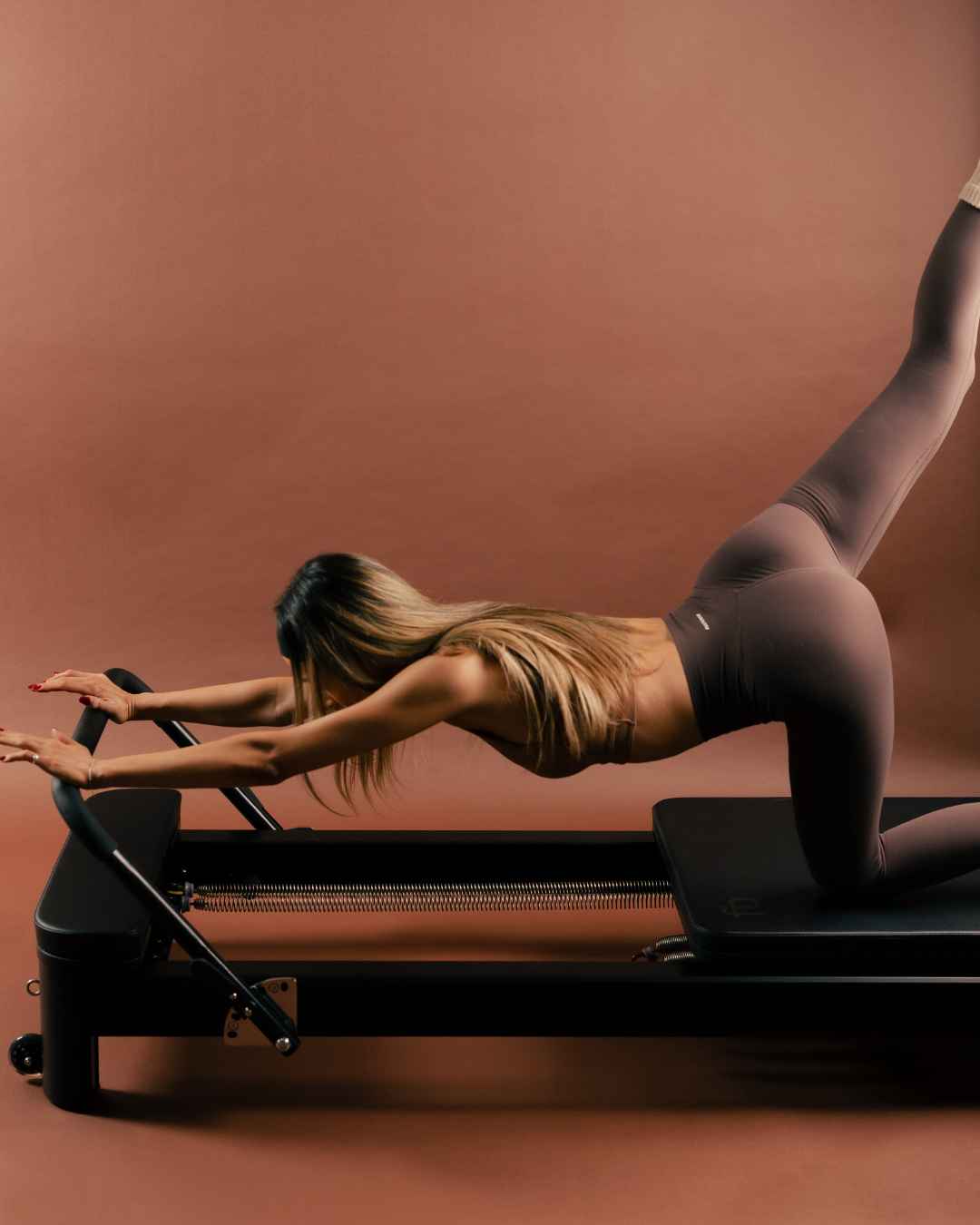
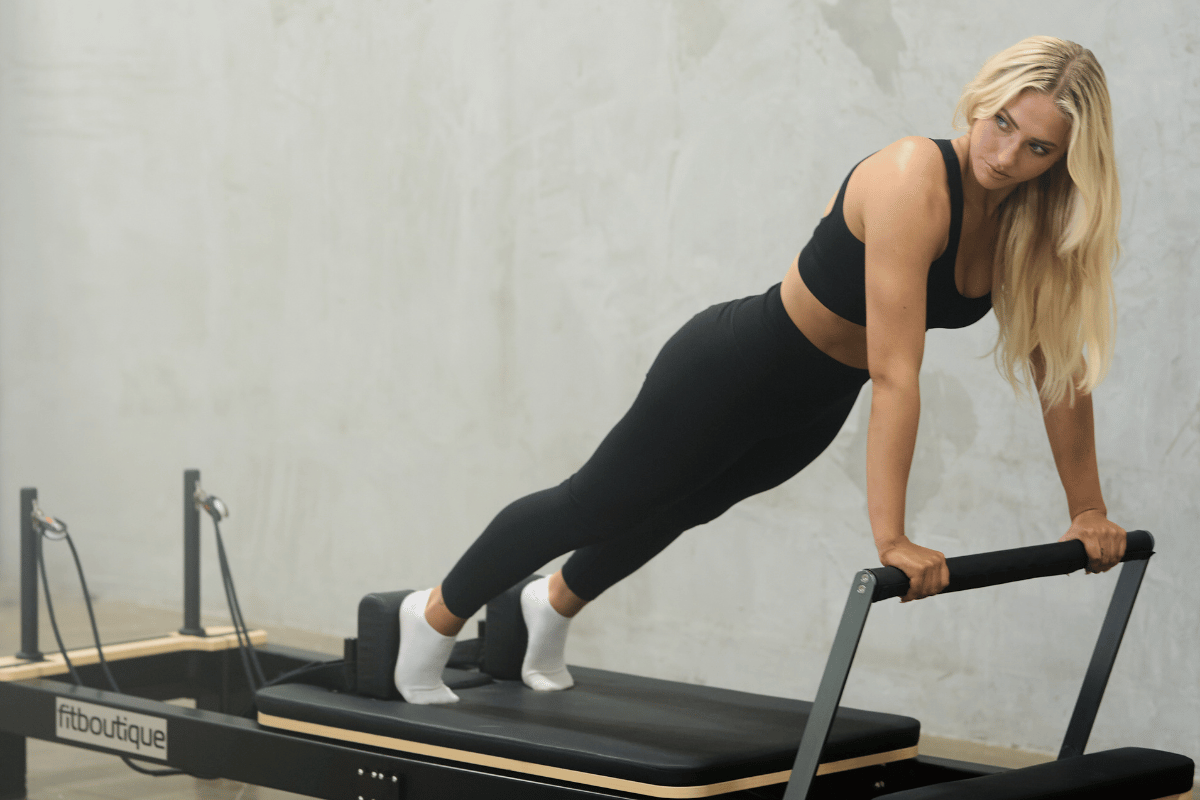
The straps bring in the latissimus dorsi across the back, the deltoids and the rotator cuff group around the shoulder, biceps and triceps in the arms, and the trapezius and rhomboids between the shoulder blades. Plank and long stretch positions add the serratus anterior, which holds your shoulder blade against your ribs and is the difference between a plank that feels stable and one that feels like your shoulders are sinking.
What reformer work does not do is build size. The load is not heavy enough and it never will be. What it does instead is train the small stabilisers that hold your shoulder in a good position, which is the thing that goes missing in people who lift and the thing that hurts when it is missing. I have written more about how the 2 compare in my piece on whether reformer is harder than mat Pilates.

The spine, which is also muscle
Spinal articulation is the thing reformer Pilates does that almost nothing else does, and it is worth understanding as muscular work rather than stretching.
Rolling through your spine one vertebra at a time in short spine massage or a bridge is a control exercise for the erector spinae and multifidus, working alongside the abdominals to lower you down in sequence rather than in one piece. Most people cannot do it at first. The middle of the back comes down as a block, and that block is not stiffness, it is a section you have no motor control over.
That control comes back with practice, and it is the change people describe as feeling taller. Nothing lengthened. You simply stopped holding a section of your back rigid because you now have the strength to move it.
Feet and ankles, the ones nobody lists
No muscles worked article ever mentions the feet, and I think that is a genuine oversight.
Every footwork sequence trains the intrinsic muscles of the foot, the arch, the ankle stabilisers and the calves, through a full range under load. Toes on the bar, heels on the bar, arches on the bar, each position asks something different of the ankle. For anyone who spends the day in shoes, that is a large amount of work for a part of the body that gets almost none.
People notice this before they notice anything else, usually as their balance improving on one leg without them having trained balance directly.
Where you feel it is not where the work is
This is the part I actually want you to take away.
Feeling a muscle burn tells you it is fatiguing. It does not tell you it is the muscle the exercise was designed for, and very often it is the opposite. When something small and superficial screams, it is frequently because something large and deep is not doing its share, so the small muscle is covering.
Three common examples. Neck aching in the hundred means your deep abdominals are not holding your head, so your neck is. Quads burning through everything in footwork means you are pushing from the front of the leg and your glutes and hamstrings are asleep. Forearms cramping in strap work means you are gripping the handles instead of pulling from your back.
None of those are fixed by working harder. They are fixed by changing where you initiate the movement from, which is a cue, not an effort.
What the springs change
The spring setting changes which muscles do the work, which is why the same exercise appears on two different muscle lists depending on who wrote it.
- Heavier springs load the big movers. More tension to push against means more quad, glute and lat. It feels like strength work and it is.
- Lighter springs load the stabilisers. With less spring holding the carriage steady, the small deep muscles have to control it, and the exercise becomes about precision rather than power.
- This is why lighter is harder. It catches out everyone who buys a machine and assumes the spring dial works like a weight stack.
- Slower is a third dial. The same exercise at half speed removes momentum, and momentum is the thing that lets your big muscles do a job your small ones should be sharing.
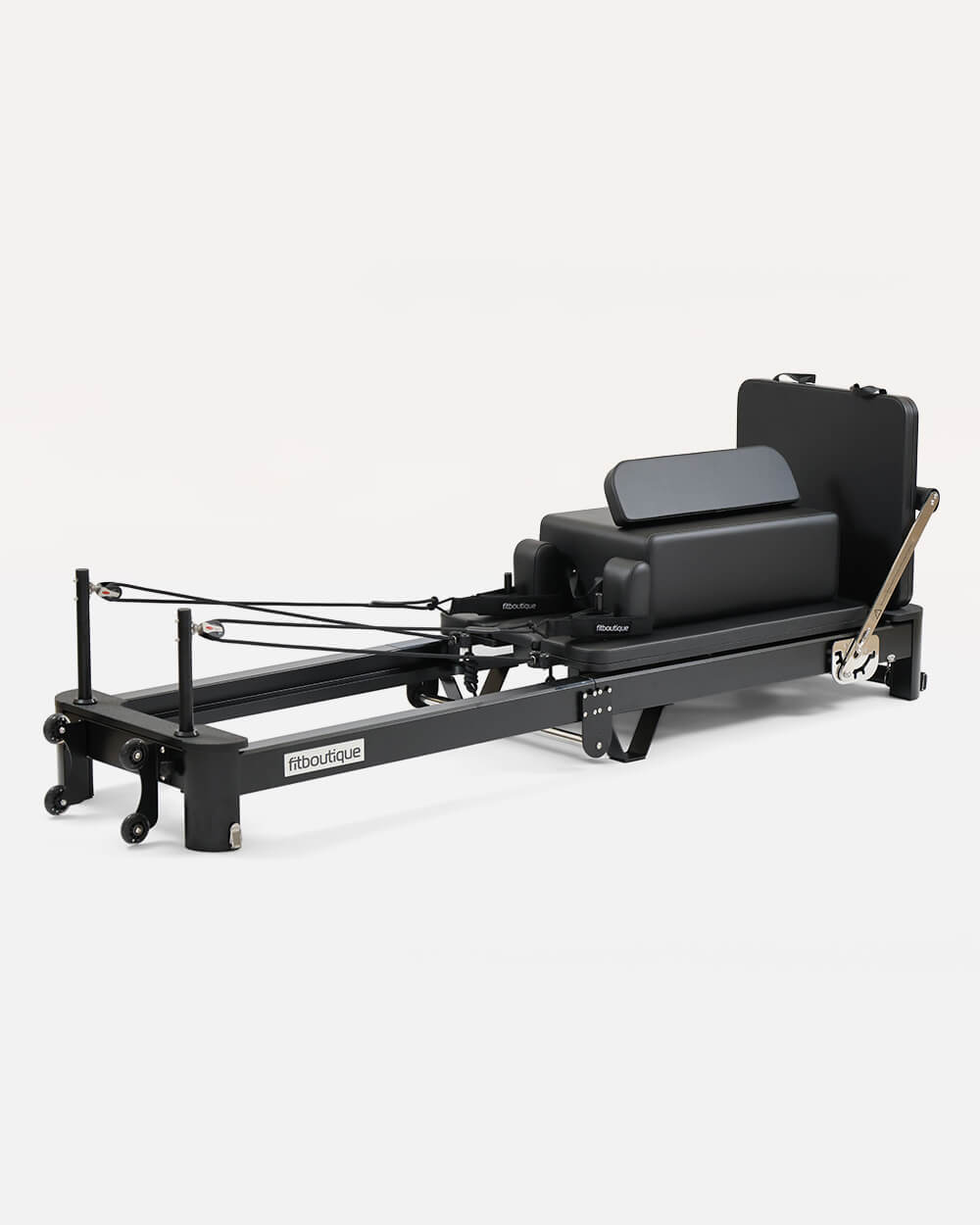
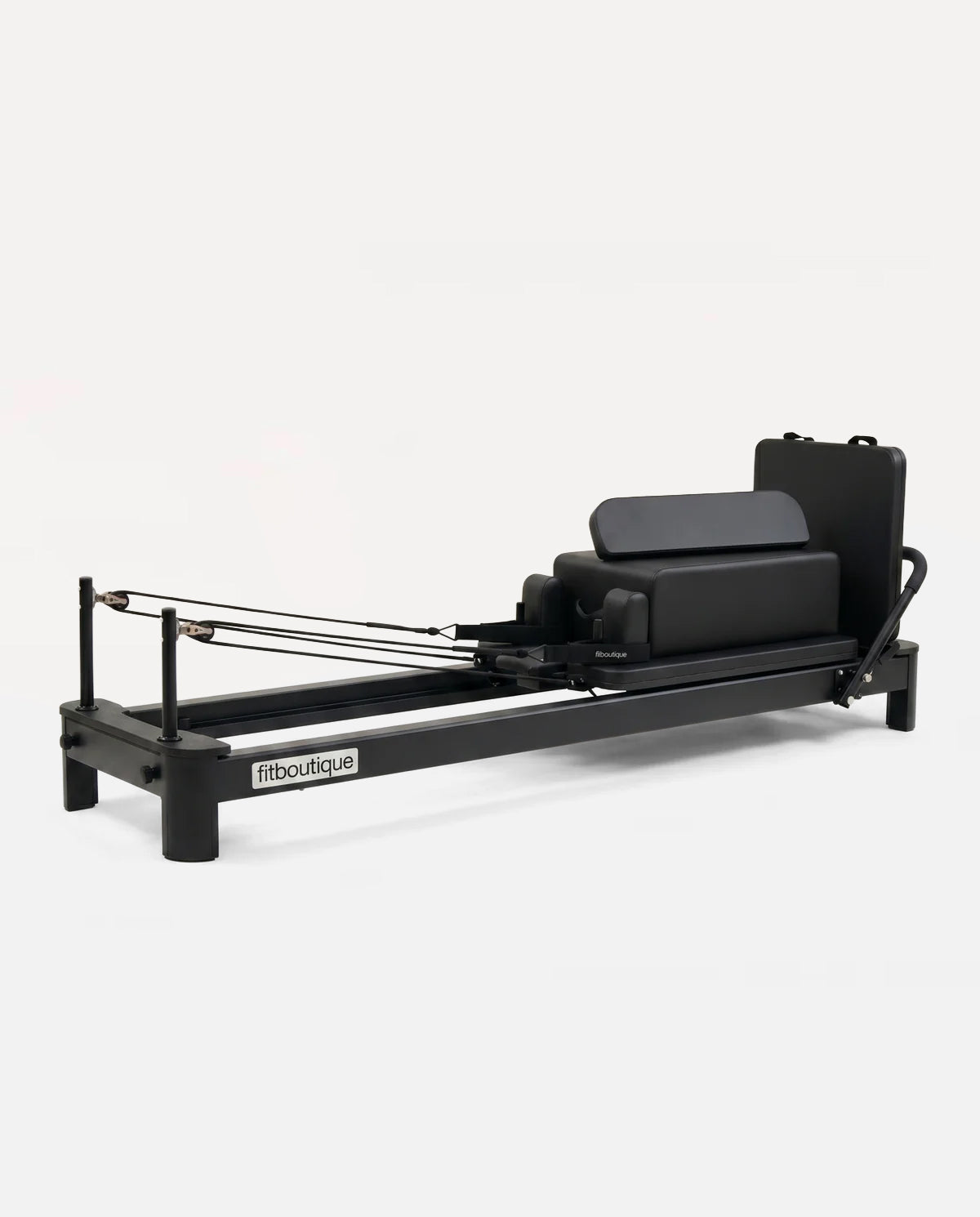
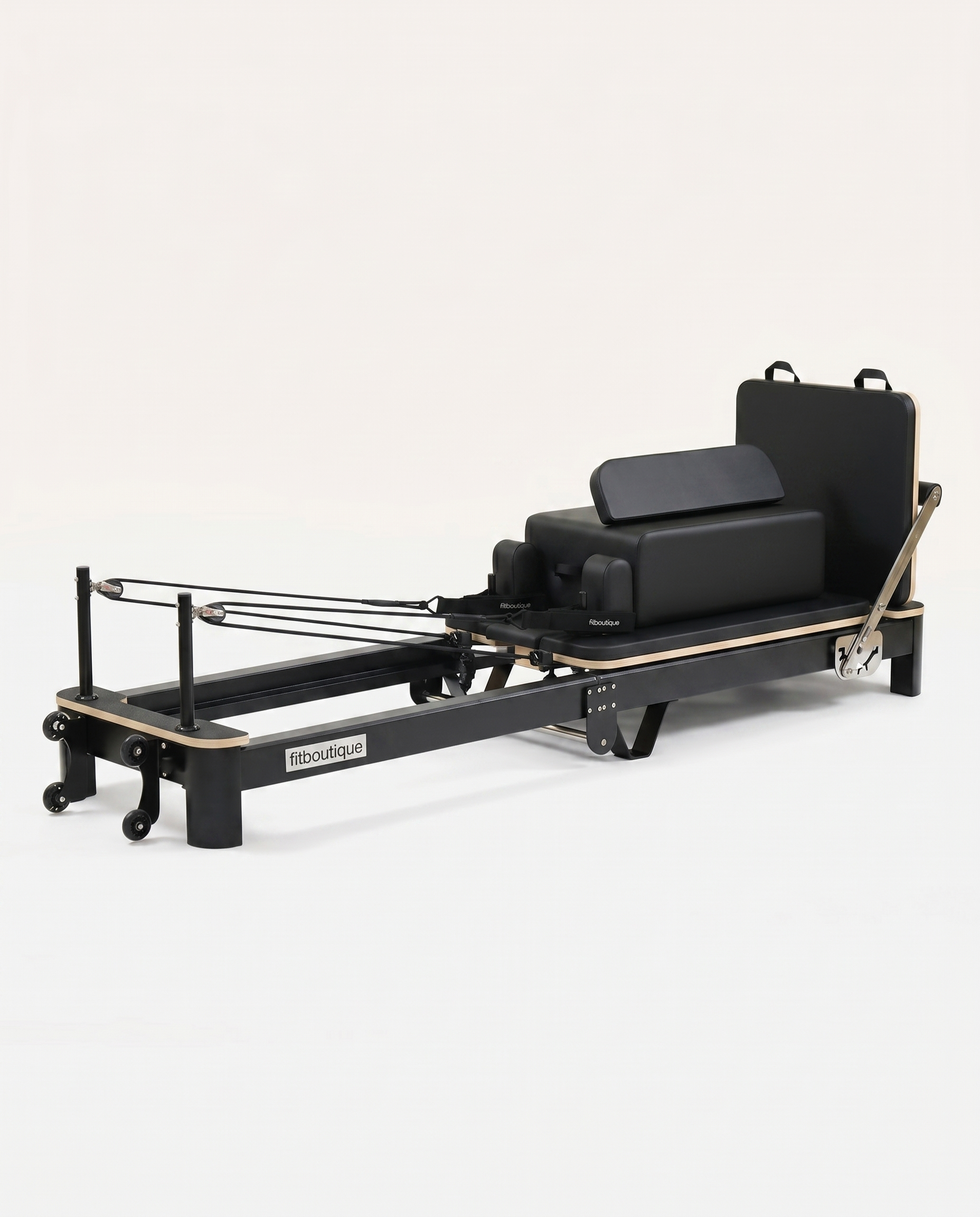
Our foldable machines carry 6 German made springs on a two tiered bar, 2 heavy, 2 medium and 2 light, and the reason that spread matters is exactly this. A machine with 3 springs gives you 3 versions of an exercise. A machine with 6 gives you years of them.
A Note From Ayrah
I did footwork wrong for about 2 years and the muscle list would never have told me.
An instructor watched me for one set and said, stop pushing with your feet, push from underneath your backside. Same exercise, same springs, same foot position. The carriage went out the same distance. And it was a completely different piece of work, in a place I had genuinely never felt before.
What I had actually been doing all that time was extending my knees with my quads and letting the hip come along for the ride. The list said footwork trains quads, hamstrings and glutes, and the list was right. My glutes were just not participating and nothing about the exercise forced them to.
My knees had been aching after sessions and I had put it down to the springs being too heavy. It was not the springs. Once I moved where I was pushing from, that stopped, and it has not come back.
So I would take any list of muscles, including the one above, as a description of what an exercise can train rather than what it is training in you today. The difference between those 2 things is usually one cue, and it is worth getting someone to watch you for a single set to find out which one you need.

Our reformer range
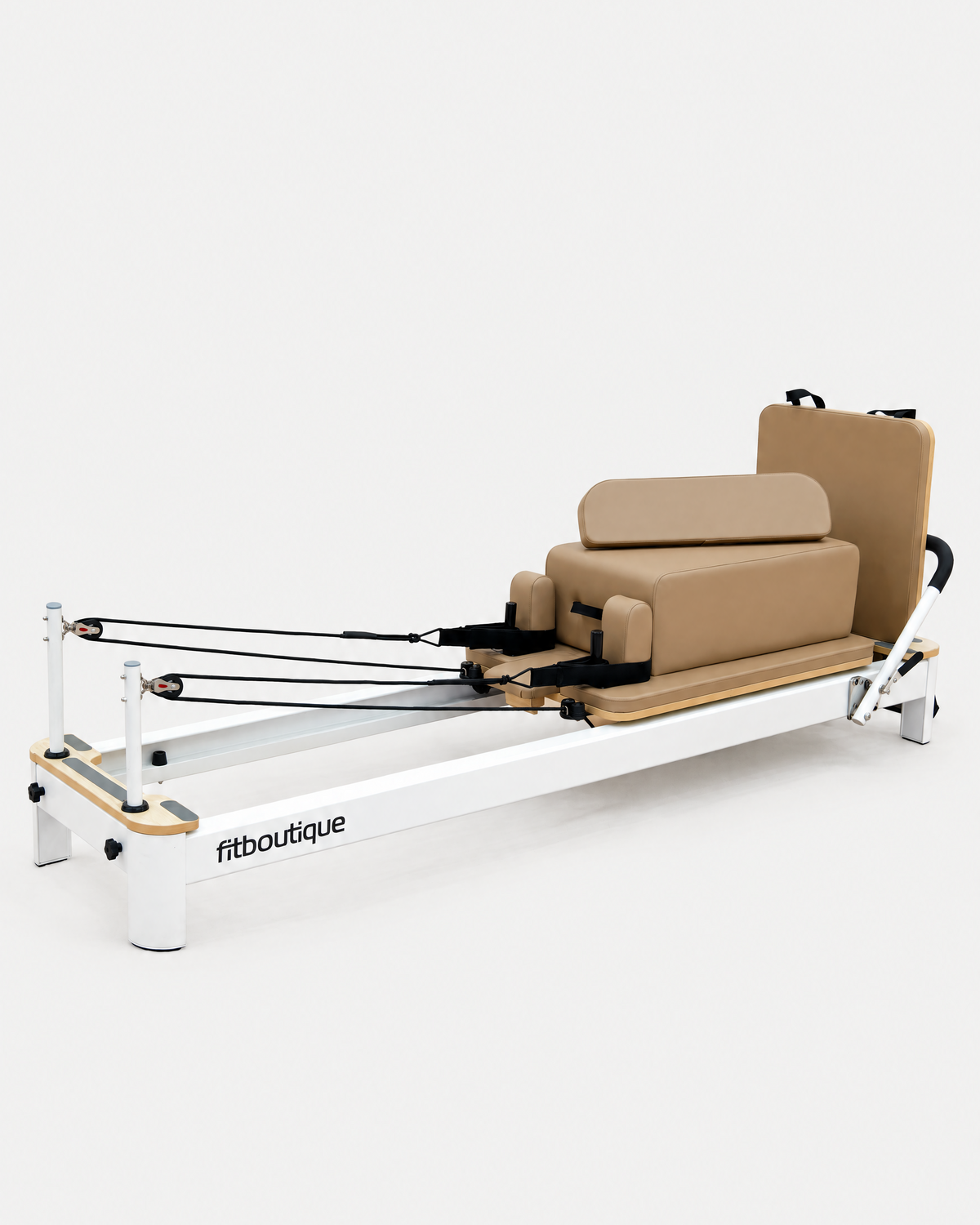
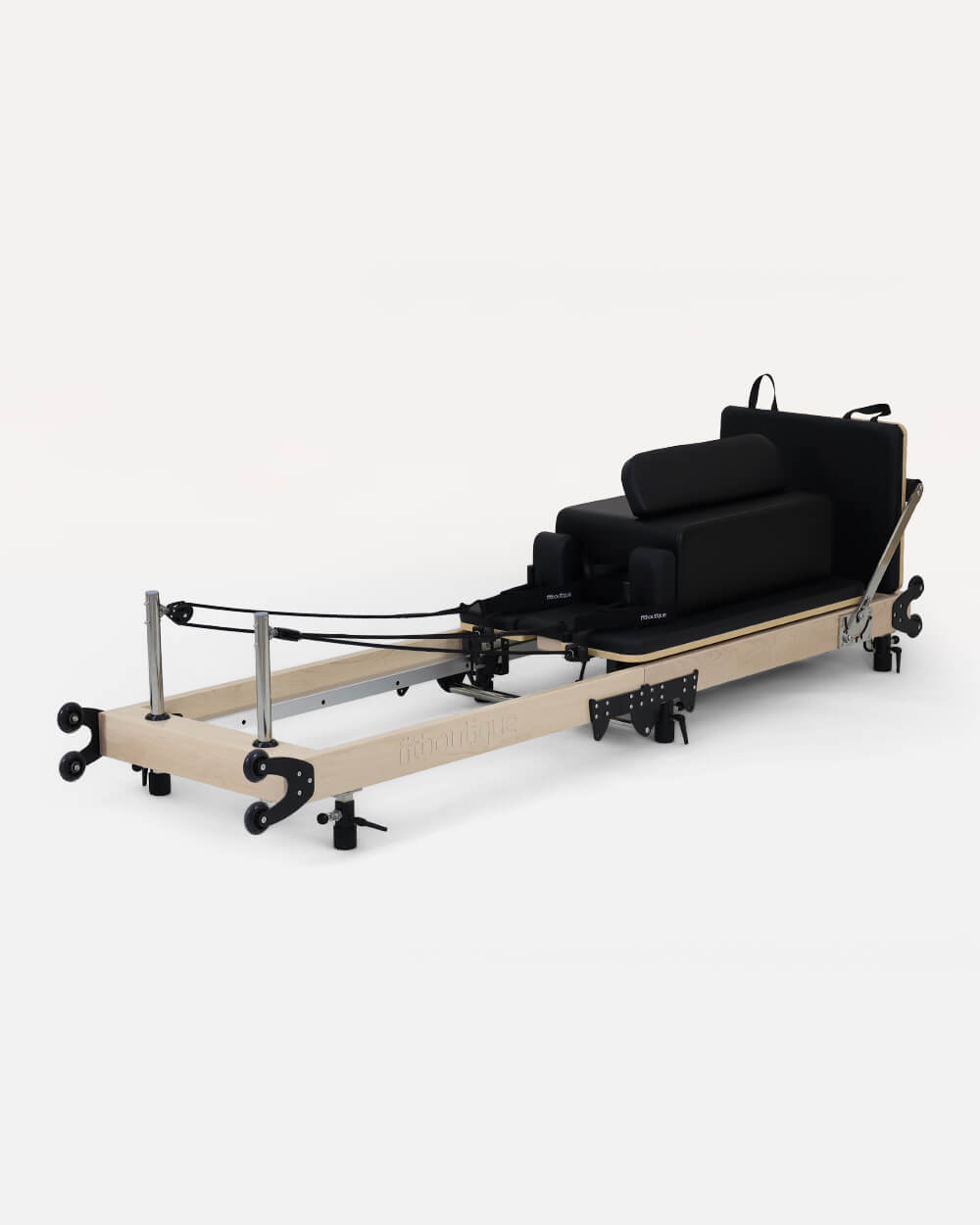
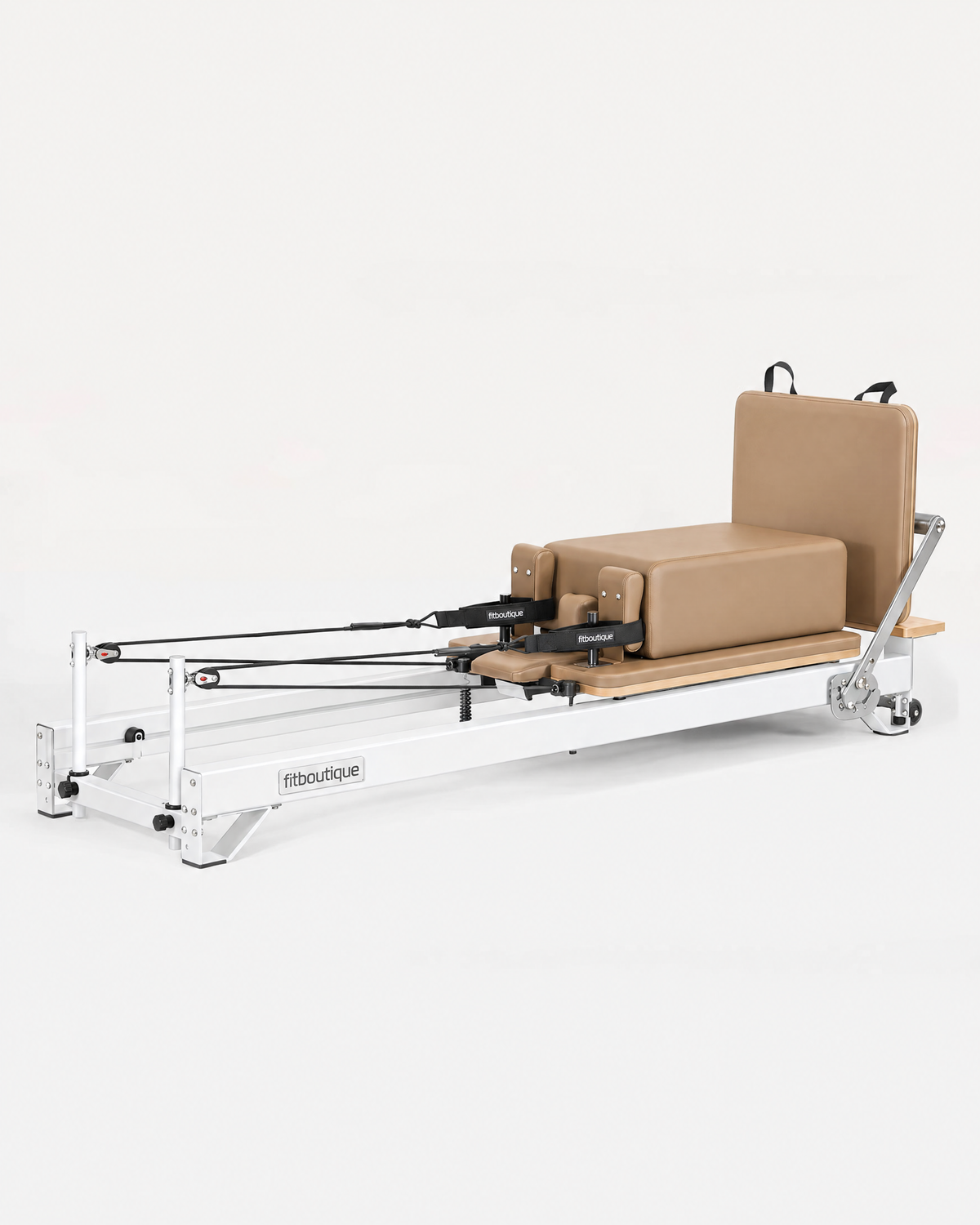
Every machine we build runs the same German made springs and the same commercial standard, so you are choosing a format and a finish rather than a quality tier. The Ivory Reformer has been our best seller for years and is the one most first time buyers take. The Onyx Fold Reformer is the all black foldable, and the White Edition Reformer the crisp bright one for a light room. The timber Maple Crest Reformer is the one people are happiest leaving out in a living space. For a dedicated room, The Studio Reformer and the Space Black Reformer are the fixed frame studio machines.
Compare them in the full reformer range, look at the foldable models if space is tight, or the commercial range if you are fitting out a studio.
Frequently Asked Questions
What muscles does reformer Pilates work?
Effectively all of them, because the carriage is unstable and your core has to stabilise while your limbs move. The main groups are the abdominals and deep spinal muscles, the glutes, quadriceps, hamstrings, adductors and abductors, the lats, deltoids, rotator cuff, traps and rhomboids through the straps, and the intrinsic muscles of the feet and ankles during footwork.
Does reformer Pilates work your core in every exercise?
Essentially yes. The carriage moves, so something has to hold your torso steady against it whatever your arms and legs are doing. That is why people get sore through the middle after their first session even if they never did an exercise that looked like an abdominal one.
Which muscles does footwork actually target?
Quadriceps, hamstrings, adductors, abductors and all 3 glutes, plus the calves and the stabilising muscles of the foot and ankle. Which of those does the most work depends on where you push from. Pushing through the front of the leg loads the quads, initiating from the hip brings the glutes and hamstrings in.
Does reformer Pilates build muscle?
It builds strength and definition, particularly in the deep stabilising muscles that most training misses, but it will not build size the way heavy lifting does because the load is not high enough. What it gives you instead is control, posture and the small muscles that hold your joints in a good position.
Why do I feel it in my neck during the hundred?
Because your deep abdominals are not yet holding your head up, so your neck is doing it instead. It is a signal to regress the exercise rather than push through. Lower your head, or keep it down entirely, until the front of your torso can take the job.
Are lighter springs easier or harder?
Harder. Heavier springs steady the carriage and give the big muscles something solid to push into. Take springs away and the deep stabilisers have to control the movement themselves, so the exercise becomes about precision instead of power. This is the single most counterintuitive thing about a reformer.
Does reformer Pilates work the back?
Yes, more than people expect. The erector spinae and multifidus work in every stabilising position, the lats and rhomboids work through the straps, and spinal articulation exercises train the back as controlled movement rather than as a stretch. The back half of your core gets as much work as the front.
Which muscles improve fastest?
The deep stabilisers, though you will not feel them changing. What people notice first is usually indirect, such as standing on one leg without wobbling, or reaching the end of a day without the usual back ache, both of which are stabiliser changes showing up somewhere else.
Do I need an instructor to work the right muscles?
Not permanently, but a set of eyes early on is worth a great deal. Most of the common faults come from initiating a movement in the wrong place, and that is very difficult to spot in yourself and very quick for someone else to correct. One session that fixes where you push from is worth months of repetition.
Train It On Your Own Machine
Reformers with 6 German made springs, a jumpboard and box included, delivered assembled anywhere in Australia with a 5 year warranty.
Compare Every Reformer
Written by Ayrah Yuso
I'm part of the FitBoutique team and have a solid passion (and love) for all things exercise related, including Reformer Pilates















Leave a comment